Coffee Grind Size Chart: Find the Perfect Grind for Every Brew Method
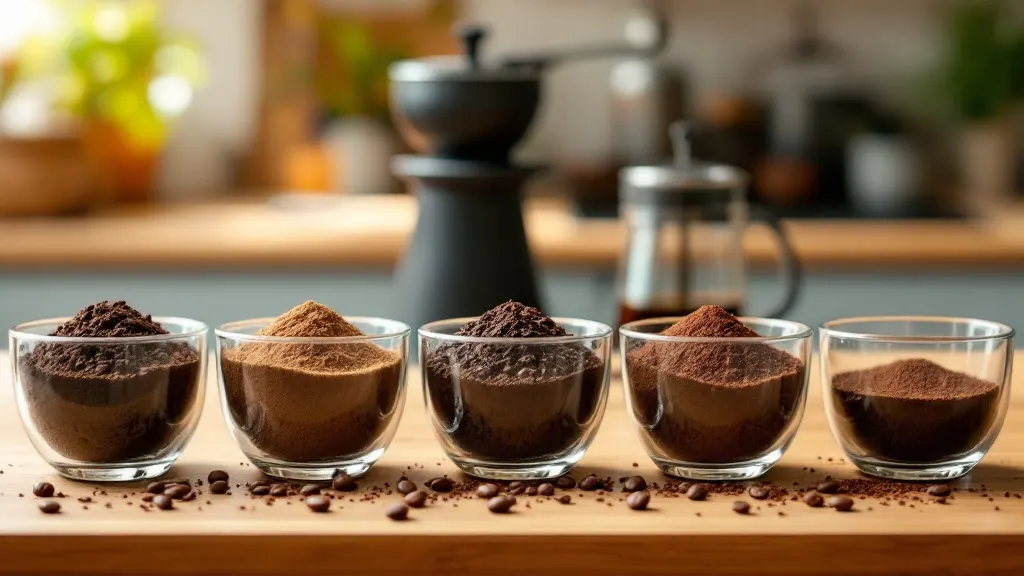
Short answer
A coffee grind size chart matches grind to contact time: extra fine for Turkish coffee, fine for espresso, medium-fine for pour-over, medium for drip, and coarse for French press and cold brew. If your cup tastes sour, grind finer; if it tastes bitter, grind coarser.
Barista tip
Make a tiny grind library. Grind a spoonful at three settings (your espresso, pour-over and French press settings), put each in a small labeled jar, and keep them by your grinder. When a cup tastes off, pinch the jar and your fresh grounds side by side. Your fingers learn the textures fast, and dialing in becomes a happy, two-second check.
Grind size is the quiet hero of every good cup. This coffee grind size chart shows the right grind for each brew method, from powder-fine Turkish coffee to chunky cold brew, plus easy ways to tell when you need to go finer or coarser. Keep it open next to your grinder, and your next bag of beans will taste sweeter from the first brew.
The simple rule: the shorter the contact time between water and coffee, the finer the grind. Espresso meets water for a short, pressurized burst, so it needs a fine grind. French press steeps for minutes, so it needs a coarse one.
Coffee grind size chart
| Brew method | Grind size | Feels like | Why this size |
|---|---|---|---|
| Turkish coffee | Extra fine | Flour or powdered sugar | Coffee is simmered and served with the grounds |
| Espresso | Fine | Fine table salt, slightly clumpy | Short, pressurized contact needs lots of surface area |
| Moka pot | Fine to medium-fine | Table salt | A little coarser than espresso so water can pass through |
| AeroPress | Fine to medium | Table salt to fine sand | Flexible: finer for short brews, coarser for longer ones |
| Pour-over (cone) | Medium-fine | Fine sand | Flow rate through the bed controls the brew time |
| Drip coffee maker | Medium | Regular sand | Steady flow through a flat or cone basket |
| Chemex | Medium-coarse | Coarse sand | Thick paper filter slows the flow |
| French press | Coarse | Coarse sea salt | Long immersion, and the metal mesh needs big particles |
| Cold brew | Coarse to extra coarse | Cracked pepper | Many hours of steeping in cool water |
These are starting points, not laws. Your grinder, beans and taste all shift the sweet spot, so use the chart to get close, then adjust by taste.
Why grind size changes flavor
Ground coffee gives up its flavor from the surface of each particle. Finer grounds have more surface area, so they extract faster; coarser grounds extract more slowly. Match the grind to the contact time and you get a balanced cup. Get it wrong and the cup tells you right away:
- Too coarse (under-extracted): sour, thin, salty, watery, finishes quickly.
- Too fine (over-extracted): bitter, harsh, dry, hollow, and often slow to drain.
Researchers have measured how strong this lever is. In a study of espresso in coffee shops, grinding grade explained 87 to 96% of the variance in the results, and at one grind setting the caffeine per cup still ranged from about 80 to 130 mg because of grind variability 1. In single-serve brewing, decreasing the particle size increased the extraction yield by about 63% 2. Engineers have even proposed new brewing control charts that include grind alongside brew time and flow, because grind shapes both strength and yield 3.
Consistency matters as much as size. A higher share of fines (particles under 100 µm) makes the coffee bed less permeable, so espresso flows more slowly and extraction time stretches 4. That is why an even burr grinder is such a joy to use; see our burr vs blade grinder explainer for the details.
Espresso grind size
Espresso grind size is fine, a little finer than table salt, and slightly clumpy when you pinch it. It is the most sensitive setting on the chart, because the shot runs in a short time under pressure and a small change in grind alters the flow.
In a lab study, espresso brewed from particles of 200 to 300 µm gave more caffeine per cup than espresso from 500 to 1,000 µm particles, for both arabica and robusta 5. You do not need a microscope, though. Use these signs:
- Shot runs fast and tastes sour: grind finer.
- Shot drips slowly and tastes bitter: grind coarser.
- Shot flows like warm honey and tastes sweet: you are there.
Change one thing at a time and keep the dose the same. If you are just starting out, our how to make espresso guide walks through a full recipe, and our best espresso grinder guide covers grinders with fine enough steps.
A static trick for espresso: a tiny spritz of water on whole beans before grinding reduced clumping in one study and raised espresso concentration by at least 15% for darker roasts 6.
Grind size for French press
The grind size for French press is coarse, like coarse sea salt or breadcrumbs. Coarse particles extract evenly over a longer steep and are easy for the metal mesh to hold back, so your cup has less sludge.
If your French press coffee tastes weak or sour, go a few steps finer or steep a little longer. If it tastes bitter and muddy, go coarser. Pre-ground coffee is usually ground for drip, which is too fine for a press, so it tends to taste muddy and over-extracted.
One health note: French press is unfiltered. Coffee beans contain the diterpenes cafestol and kahweol (about 1% of the bean by weight), which hot water extracts and a paper filter holds back. That explains why unfiltered methods like cafetiere, boiled and Turkish coffee can raise cholesterol while filtered coffee does not 7. If your cholesterol is a concern, paper-filtered methods are a gentle swap. Find your perfect press in our best French press picks.
Pour-over and drip grind size
For cone pour-over, start at medium-fine, like fine sand. For a flat-bottom drip machine, start at medium. In pour-over, grind size controls how fast water drains through the bed, so it controls the total brew time too. If water drains too fast and the cup is sour, go finer. If it stalls and tastes bitter, go coarser.
Chemex brewers use a thicker paper, so most people go a step coarser than a standard cone. Our best pour over coffee maker guide compares the popular drippers.
Cold brew grind size
Cold brew uses a coarse to extra-coarse grind. Here is a delightful surprise from the research: in one study comparing medium and coarse grinds for cold brew, grind size did not significantly change the caffeine or chlorogenic acid concentration, and both reached equilibrium within 6 to 7 hours, faster than the 10 to 24 hours many recipes suggest 8. Roast mattered more than grind: medium roasts gave higher concentrations than dark roasts 8.
Taste is a different story. In a study of Colombian specialty coffees, cold brew made with a coarse grind and a 14-hour steep scored highest in tasting, with sweet, fruity and floral notes 9. So go coarse for a clean, easy-to-filter brew, and experiment with steep time to find your favorite.
Moka pot, AeroPress and Turkish coffee
- Moka pot: fine to medium-fine, a touch coarser than espresso. Too fine and the pot struggles and tastes bitter.
- AeroPress: the most flexible brewer. Go finer for short brews and medium for longer steeps.
- Turkish coffee: extra fine, like flour. Most home grinders cannot go this fine; a dedicated Turkish hand mill can.
Grinders that cover the whole chart
To move freely across this chart, you want a burr grinder with enough range and fine enough steps. Two friendly examples:
1Zpresso K-Ultra
conical burr, all-round $$
Best for: pour-over with occasional espresso
What we like
- external adjustment ring, 20 microns per click
- 35-40 g capacity
- foldable handle
Keep in mind
- 700 g weight
- pricier than J-Ultra
- burr type heptagonal conical
- burr material stainless steel
- grind settings 100 clicks per rotation
- espresso capable ✓
- capacity g 35-40
A hand grinder with an external adjustment ring at 20 microns per click, from espresso to pour-over 10.
Baratza Encore ESP
conical burr, espresso + filter $$
Best for: budget espresso setup, espresso plus filter on one grinder
What we like
- M2 burr set with espresso-focused fine range
- quick-release burr mount for cleaning
- includes dosing cup
Keep in mind
- no timer or weight-based dosing
- 40 stepped settings, coarse jumps in filter range
- burr type conical
- burr mm 40
- burr material steel (M2)
- grind settings 40
- espresso capable ✓
An electric conical burr grinder with an espresso-focused fine range and 40 settings, according to Baratza 11.
For more options, see our best coffee grinder and best manual coffee grinder guides.
Common grind mistakes (and easy fixes)
- Using one setting for everything. A drip setting makes espresso gush and French press taste muddy. Note a setting for each brewer you own.
- Changing grind and dose at once. You will not know which change helped. Adjust one thing, taste, then decide.
- Grinding too far ahead. Ground coffee loses aroma quickly, so grind just before you brew whenever you can.
- Ignoring batch size. A bigger pour-over batch drains more slowly through a deeper bed, so you may need to go a step coarser when you brew for two.
- Chasing numbers from someone else's grinder. Setting 12 on one grinder is not setting 12 on another. Use the textures in the chart and your taste buds instead.
Grind size cheat sheet
- Find your method in the chart and start there.
- Brew with your usual dose and ratio. Our coffee to water ratio guide has easy starting numbers.
- Sour or weak? Grind finer. Bitter or harsh? Grind coarser.
- Change only grind size until the cup tastes balanced, then note the setting.
- Grind right before brewing for the most aroma.
When to talk to a doctor
If you have high cholesterol, talk with your doctor about how much unfiltered coffee (French press, boiled or Turkish) suits you.
Frequently asked questions
What grind size is best for drip coffee?
Medium, about the texture of regular sand, is a great starting point for most flat-bottom drip coffee makers. Cone-shaped baskets often like a touch finer, closer to medium-fine. If your drip coffee tastes sour or thin, go one or two steps finer. If it tastes bitter or the basket overflows, go coarser. Small changes make a noticeable difference.
Can I use espresso grind for French press?
It is not a good idea. Espresso grind is fine, so in a French press it over-extracts during the long steep and tastes bitter and muddy. Fine particles also slip through the metal mesh and make the plunger hard to press. Use a coarse grind, like coarse sea salt, for a cleaner, sweeter French press cup.
Does grind size affect caffeine?
It can. In espresso studies, finer particles released more caffeine per cup, and grind variability alone changed caffeine noticeably at the same setting. Cold brew is an interesting exception: one study found medium and coarse grinds gave similar caffeine levels after enough steeping. Brew method, dose and roast all matter too, so grind is one factor among several.
How do I know if my coffee grind is too fine?
Too fine usually shows up as a bitter, harsh or dry taste and a slow brew. Espresso drips slowly, pour-over stalls in the dripper, and a French press is hard to plunge. Go a few steps coarser and brew again. If the cup turns sour or thin, you have gone too far, so step back a little finer.
Should I buy pre-ground coffee or grind at home?
Grinding at home gives you fresher aroma and lets you match the grind to your method. Most pre-ground coffee is ground for drip, which is too fine for French press and too coarse for espresso. If you buy pre-ground, choose the grind labeled for your brewer and store it airtight. A simple burr grinder is the best upgrade when you are ready.
Sources
We link to the original studies and official pages so you can check every claim.
- Severini C, Derossi A, Fiore AG et al. (2015). How the variance of some extraction variables may affect the quality of espresso coffees served in coffee shops. J Sci Food Agric.
- Wang X, William J, Fu Y, Lim LT (2016). Effects of capsule parameters on coffee extraction in single-serve brewer. Food Res Int.
- Melrose J, Roman-Corrochano B, Montoya-Guerra M, Bakalis S (2018). Toward a New Brewing Control Chart for the 21st Century. J Agric Food Chem.
- Smrke S, Eiermann A, Yeretzian C (2024). The role of fines in espresso extraction dynamics. Sci Rep.
- Khamitova G, Angeloni S, Borsetta G et al. (2020). Optimization of espresso coffee extraction through variation of particle sizes, perforated disk height and filter basket aimed at lowering the amount of ground coffee used. Food Chem.
- Harper JM, Bumbaugh RE, Hendon CH (2024). Strategies to mitigate electrostatic charging during coffee grinding. iScience.
- Urgert R, Katan MB (1997). The cholesterol-raising factor from coffee beans. Annu Rev Nutr.
- Fuller M, Rao NZ (2017). The Effect of Time, Roasting Temperature, and Grind Size on Caffeine and Chlorogenic Acid Concentrations in Cold Brew Coffee. Sci Rep.
- Cordoba N, Pataquiva L, Osorio C et al. (2019). Effect of grinding, extraction time and type of coffee on the physicochemical and flavour characteristics of cold brew coffee. Sci Rep.
- 1Zpresso. K-Ultra manual coffee grinder product page. 1Zpresso official site.
- Baratza. Encore ESP coffee grinder product page. Baratza official site.

About the author
Petr Hess, Founder, chemical engineer. Petr Hess studied chemical engineering and loves exploring how substances act on the human body. Coffee is his favorite of them: he reads the studies on caffeine, enzymes and digestion, compares the spec sheets of machines and grinders, and brews more coffee than is strictly reasonable, so you can choose well and enjoy every cup. How we choose.
Keep reading
 GrindersThe Best Coffee Grinder: The Upgrade That Makes Every Cup Taste BrighterThe best coffee grinder for most homes is the Baratza Encore ESP: a 40 mm conical burr grinder that handles both espresso and filter coffee and is among the most common best-overall picks in 2026 roundups.
 GrindersThe Best Espresso Grinder: Sweet, Syrupy Shots Start HereThe best espresso grinder for most home baristas is the Eureka Mignon Specialita: 55 mm flat burrs, stepless micrometric adjustment and timed doses on a touch display.
 GrindersThe Best Manual Coffee Grinders for Fresh, Fragrant Coffee AnywhereThe best manual coffee grinder for most people is the 1Zpresso K-Ultra, with an external adjustment ring at 20 microns per click and a 35 to 40 g capacity.
 Beans & subscriptionsThe Best Coffee Beans for Joyful Cups at HomeThe best coffee beans for most home brewers are Stumptown Hair Bender, a roast-dated specialty blend that works for espresso and filter.