The Best Pour Over Coffee Maker: Slow Mornings, Bright and Sweet Cups
We may earn a commission when you buy through links on this page, at no extra cost to you. It never changes what we recommend. How we make money
Short answer
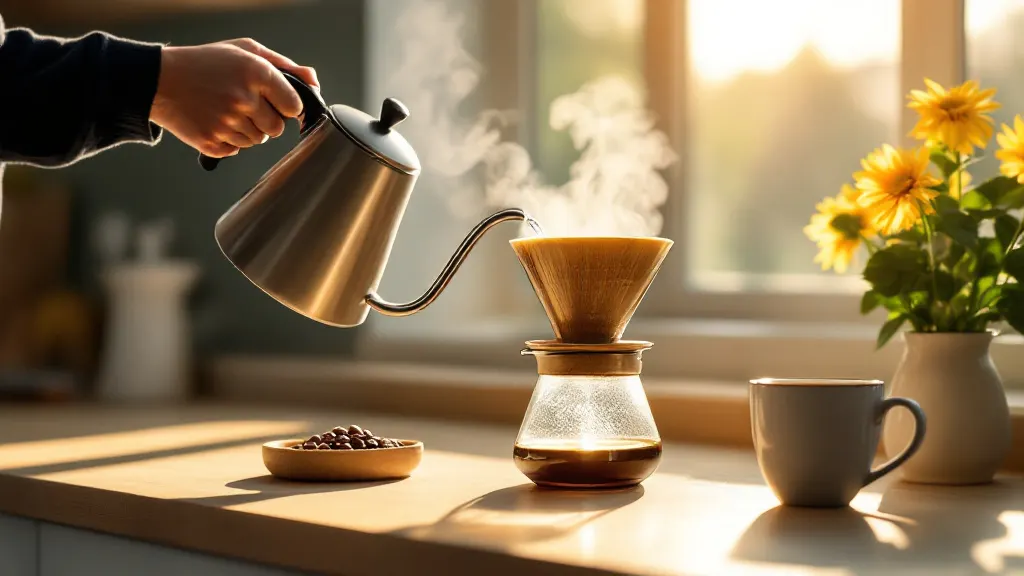
The best pour over coffee maker for most people is the Hario V60 02: it is inexpensive, light and rewards good technique with a bright, clear cup. Choose the Kalita Wave 185 if you want more forgiving, even extraction, the Chemex if you brew for two to four people, and the Clever Dripper if you want pour over coffee with no pouring skill at all.
Our top picks
- 1Best pour over coffee maker overallHario V60 02 Dripper (Plastic)A low-cost, light cone with spiral ribs and one large hole that lets you steer flavor with your pour.See on brand site
- 2Most forgiving dripperKalita Wave 185 Stainless Steel DripperA flat bed and three small holes make even extraction easier, in a stainless body that is hard to break.See on brand site
- 3Best for sharingChemex Six Cup Classic (CM-6A)Brewer and serving carafe in one glass piece, with thick bonded filters for a very clean cup.See on brand site
- 4Easiest for beginnersClever Coffee Dripper (Large, 18 oz)Steep-and-release immersion with a valve, so you get a great cup without any pouring technique.See on brand site
- 5Best kettle to pair with any dripperFellow Stagg EKG ProA precise gooseneck spout and adjustable temperature make every dripper here easier to use.See on brand site
Barista tip
Before you brew, pour hot water through the empty paper filter and let it run into your mug. This rinses away any papery taste and warms the dripper and the cup at the same time. Tip that water out, add your coffee, and your pour over starts at a happy, steady temperature. It takes ten seconds and makes the first sip noticeably sweeter.
How we chose
We compared pour over drippers on their makers' published specs, the details in our product catalog and what owners commonly report about learning curve, cleaning and filter availability. We did not test these brewers hands-on for this guide. We looked at four things: how forgiving each design is, how many cups it makes, which filters it needs and how easy the filters are to buy, and whether it pairs well with a basic kettle or needs a gooseneck.
What makes the best pour over coffee maker
Pour over coffee is one of the quiet joys of a slow morning. You pour hot water over ground coffee in a paper filter, it trickles through, and you get a cup that tastes bright, clear and sweet. The brewer you pick shapes how much control you have and how much skill the cup asks of you.
There are three main designs:
- Cone drippers like the Hario V60 have one large hole. Water flows fast, so the speed of your pour does a lot of the work. Huge flavor range, steeper learning curve.
- Flat-bottom drippers like the Kalita Wave have a flat coffee bed and small holes. Flow is slower and more even, which makes them forgiving 1.
- Immersion drippers like the Clever let the coffee steep before a valve releases it. Pouring technique barely matters.
The Chemex sits between cone and carafe: a big glass cone with a thick bonded filter that gives a very clean cup 2.
A nice health footnote: paper filters hold back cafestol and kahweol, the coffee oils that raise LDL cholesterol in unfiltered brews such as boiled or French press coffee 3. Lab analysis found drip-filtered coffee contained negligible amounts of cafestol 4. So every brewer in this guide gives you a paper-filtered cup.
If you are still deciding between pour over, drip or espresso, our quiz can help.
Our picks for the best pour over coffee maker
Hario V60 02: best pour over coffee maker overall
The V60 is the dripper many coffee lovers learn on, and for good reason. According to our catalog, the plastic 02 size brews 1 to 4 cups, has spiral ribs and a single large hole, and weighs about 200 g (7 oz). Plastic holds little heat, so the dripper itself does not steal warmth from your brew. Size 02 paper filters are sold almost everywhere.
That big hole is the fun part and the tricky part. A slow, steady pour gives a sweeter, fuller cup; a fast pour gives a lighter, brighter one. You will get the most from it with a gooseneck kettle and a scale. If you enjoy tinkering, the V60 grows with you for years.
Hario V60 02 Dripper (Plastic)
pour-over cone $
Best for: learning pour-over, light, travel-friendly dripper
What we like
- Very low cost entry to pour-over
- Plastic body is light (about 200 g) and holds little heat
- Size 02 filters are sold almost everywhere
Keep in mind
- Fast flow rewards a gooseneck kettle and steady technique
- Needs cone-specific V60 paper filters
- type pour-over cone, spiral ribs, single large hole
- capacity 1-4 cups (size 02)
- material plastic (BPA-free)
- filter V60 02 conical paper filters
Kalita Wave 185: most forgiving dripper
The Wave is the calm friend of pour over. Kalita lists a flat-bottom design with three small holes, a 2 to 4 cup capacity (500 to 700 ml, about 17 to 24 fl oz) and a stainless steel body made in Japan 1. The flat bed means water passes through the coffee more evenly, so small wobbles in your pour matter less.
The trade-offs: it needs Kalita Wave 185 fluted filters, which are less widely stocked than V60 or #4 filters, and a metal body loses heat faster than ceramic. Preheat it with hot water and it brews beautifully.
Kalita Wave 185 Stainless Steel Dripper
flat-bottom pour-over $
Best for: consistent pour-over, beginners who want forgiving flow
What we like
- Flat bed and three small holes make extraction more forgiving
- Stainless steel is hard to break
- Made in Japan
Keep in mind
- Needs proprietary Wave 185 filters, which are less widely stocked
- Metal body loses heat faster than ceramic
- type flat-bottom pour-over, three holes
- capacity 2-4 cups (500-700 ml)
- material stainless steel
- filter Kalita Wave 185 fluted paper filters
Chemex Six Cup Classic: best for sharing
The Chemex is the brewer people photograph. Chemex lists the Six Cup Classic at 30 oz (about 890 ml), counted as six 5 oz cups, made of borosilicate glass with a wood collar and leather tie 2. Brewer and serving carafe are one piece, so you brew and pour at the table.
It uses Chemex bonded paper filters (FP-1, FC-100 or FS-100), which are thicker than standard cones 2. The result is a very clean, tea-like cup. The filters cost more than generic ones, the glass is fragile, and the wood collar comes off for washing. Chemex also notes compatibility with its Ottomatic 2.0 automatic brewer if you ever want to automate 2.
Chemex Six Cup Classic (CM-6A)
pour-over carafe $
Best for: brewing for 2-4 people, clean, paper-filtered cup
What we like
- Brewer and serving carafe in one piece
- Non-porous borosilicate glass does not hold odors
- Compatible with the Chemex Ottomatic 2.0 automatic brewer
Keep in mind
- Requires proprietary Chemex filters, pricier than standard cones
- Wood collar must be removed for washing; glass is fragile
- type pour-over carafe with integrated cone
- capacity 30 oz (6 cups of 5 oz)
- material borosilicate glass, wood collar with leather tie
- filter Chemex bonded paper filters (FP-1, FC-100, FS-100)
Clever Coffee Dripper: easiest for beginners
The Clever makes pour over coffee almost effortless. Our catalog lists the large model at 18 oz (about 16 oz brewed) with a shut-off valve. You add coffee and water, let it steep, then set it on your mug and the valve releases the coffee. It uses cheap, standard #4 cone filters.
Because it steeps, pouring skill hardly matters, which makes it great for sleepy mornings. Check your mug first: the valve only opens on cups or carafes about 1.5 to 3.75 in (4 to 9.5 cm) across.
Clever Coffee Dripper (Large, 18 oz)
immersion dripper with valve $
Best for: easy hands-off pour-over, beginners
What we like
- Immersion brewing needs no pouring technique
- Uses cheap, standard #4 filters
- Valve releases only when set on a cup
Keep in mind
- Fits only cups/carafes 1.5-3.75 in. across
- Plastic body
- type steep-and-release immersion with shut-off valve
- capacity 18 oz (about 16 oz brewed)
- material BPA-free plastic
- filter #4 cone paper filters
Fellow Stagg EKG Pro: best kettle to pair with any dripper
A gooseneck kettle is the single biggest upgrade for a cone dripper. Fellow lists the Stagg EKG Pro with temperature control from 104 to 212 °F (40 to 100 °C) in 0.5 °F steps, a hold mode of 15 to 60 minutes, scheduling, an altitude setting, a built-in stopwatch and a 0.9 L capacity 5. Its base does not work with the original EKG. For more kettle options, see our best gooseneck kettle guide.
Fellow Stagg EKG Pro
electric gooseneck, scheduling $$
Best for: pour-over and tea, schedule-ahead mornings
What we like
- Scheduling and adjustable hold
- Altitude setting and stopwatch
- 2-year warranty
Keep in mind
- Base not compatible with original EKG
- 0.9 L capacity
- capacity l 0.9
- temp control 104-212 F, 0.5 F steps
- hold 15/30/45/60 min
- gooseneck ✓
- wattage 1000-1200
Pour over coffee makers compared
| Model | Hario V60 02 Dripper (Plastic) | Kalita Wave 185 Stainless Steel Dripper | Chemex Six Cup Classic (CM-6A) | Clever Coffee Dripper (Large, 18 oz) |
|---|---|---|---|---|
| Price | $ | $ | $ | $ |
| Type | pour-over cone | flat-bottom pour-over | pour-over carafe | immersion dripper with valve |
| type | pour-over cone, spiral ribs, single large hole | flat-bottom pour-over, three holes | pour-over carafe with integrated cone | steep-and-release immersion with shut-off valve |
| capacity | 1-4 cups (size 02) | 2-4 cups (500-700 ml) | 30 oz (6 cups of 5 oz) | 18 oz (about 16 oz brewed) |
| material | plastic (BPA-free) | stainless steel | borosilicate glass, wood collar with leather tie | BPA-free plastic |
| filter | V60 02 conical paper filters | Kalita Wave 185 fluted paper filters | Chemex bonded paper filters (FP-1, FC-100, FS-100) | #4 cone paper filters |
| See on brand site | See on brand site | See on brand site | See on brand site |
How to make pour over coffee
Here is a simple, cheerful recipe for one mug that works on any dripper in this guide.
- Weigh 15 g (about 0.5 oz) of coffee and grind it medium-fine, like coarse sand. Our coffee grind size chart shows what that looks like.
- Heat 250 g (about 8.5 fl oz) of water to just off the boil. A ratio around 1:16 is a common starting point; our coffee to water ratio guide explains how to adjust it.
- Rinse the filter with hot water and pour that water away.
- Bloom: pour about twice the coffee weight in water (30 g), enough to wet all the grounds, and wait 30 to 45 seconds while the coffee bubbles.
- Pour the rest slowly in small circles, keeping the water level steady, until you reach 250 g.
- Let it drain and taste. Sour or thin? Grind a little finer. Bitter or dry? Grind a little coarser.
A scale makes this easy and repeatable. Our best coffee scale guide has options from basic to app-connected.
Buying guide: what matters in a pour over dripper
Flow design. One big hole (V60) gives control and speed. Several small holes and a flat bed (Kalita Wave) give consistency. A valve (Clever) removes technique from the equation.
Batch size. Single-mug drippers suit solo mornings. The Chemex makes up to 30 oz for sharing 2. If you regularly brew a full carafe for a household, an automatic machine may suit you better; see our best drip coffee maker guide. The drip brewer is still the most-used home method in the US, at 38% of past-day drinkers in a 2025 National Coffee Association survey 6.
Filters. Check how easy the filters are to buy where you live. #4 and V60 02 filters are the most common. Chemex and Kalita Wave filters are specific to those brewers.
Material. Plastic is light, cheap and holds little heat. Glass looks lovely and stays neutral in taste but can break. Stainless steel is tough but loses heat faster, so preheat it.
The grinder. Fresh, even grinding matters more than the dripper. A burr grinder gives you even particles, so the cup tastes sweet and balanced. See our best coffee grinder guide.
Strength and caffeine. Strength depends on your ratio and beans more than on the brewer. Caffeine varies a lot from cup to cup: lab tests of 16 oz specialty brewed coffees found anywhere from 58 to 259 mg per serving 7.
Small upgrades that make pour over coffee sing
Once you have a dripper you love, a few tiny habits lift every cup:
- Use fresh beans. Coffee roasted within the last few weeks blooms more and tastes livelier. Buy smaller bags more often and keep them sealed, away from light and heat. Our best coffee beans guide has bright, fruity and chocolatey picks that shine in pour over.
- Grind right before brewing. Ground coffee loses aroma quickly, so grinding just before you pour keeps the cup fragrant.
- Mind your water. Coffee is mostly water, so if your tap water tastes of chlorine, filtered water makes a clear difference.
- Change one thing at a time. If a cup tastes off, adjust only grind, ratio or water temperature, then taste again. It turns brewing into a small, happy experiment.
- Write down the winner. A note on your phone with dose, water and grind setting means tomorrow's cup can be just as good.
Who should skip a pour over coffee maker
Pour over rewards a few calm minutes each morning. If you want coffee at the press of a button, or brew 8 to 10 cups at once, an automatic drip brewer will make you happier. If you love strong, syrupy coffee or milk drinks, look at a moka pot or espresso machine instead. And if you want full body with zero technique, a French press or the Clever above is the gentle way in.
Not sure yet? Try the free tool
Machine MatchmakerAnswer 6 quick questions and get the machine type and models that fit your drinks, budget and patience, with a 3-year cost-per-cup comparison.Price bands: $ under $100 · $$ $100–299 · $$$ $300–799 · $$$$ $800–1,999 · $$$$$ $2,000+. Prices change, so check the retailer.
Frequently asked questions
Is pour over coffee better than drip?
Pour over gives you more control over water temperature, flow and timing, so many people find the cup brighter and more nuanced. A good automatic drip brewer can come close and is far more convenient for big batches. Both use paper filters, which hold back the cholesterol-raising oils found in unfiltered coffee. The better choice depends on whether you enjoy the ritual or want hands-off brewing.
Do I need a gooseneck kettle for pour over coffee?
Not for every dripper. A gooseneck helps most with fast cone drippers like the Hario V60, where pouring speed changes the flavor. Flat-bottom drippers like the Kalita Wave are more forgiving, and immersion drippers like the Clever need no special pour at all. If you start with a regular kettle and enjoy pour over, a gooseneck is a lovely next upgrade.
What grind size is best for pour over?
Start with a medium-fine grind, roughly like coarse sand or sea salt, and adjust by taste. If the brew drains very fast and tastes sour or thin, go a little finer. If it drains slowly and tastes bitter or dry, go a little coarser. A Chemex usually likes slightly coarser coffee than a V60 because its thick filter slows the flow.
How much coffee do I use for pour over?
A ratio of about 1:16 is a common starting point: 15 g of coffee to 250 g of water makes one generous mug. For a stronger cup move toward 1:15, for a lighter cup toward 1:17. Weighing both coffee and water with a scale is the easiest way to get a great cup every day and to repeat it once you find your favorite.
Which is easier to use, Chemex or V60?
The Chemex is a little more forgiving because its thick bonded filter slows the flow, and it brews more coffee at once. The V60 flows faster, so it responds more to your pouring speed and grind, which is great for experimenting but takes practice. For the easiest start of all, an immersion dripper like the Clever needs almost no technique.
Sources
We link to the original studies and official pages so you can check every claim.
- Kalita USA (2026). Kalita Wave 185 Stainless Steel Coffee Dripper. Official product page.
- Chemex (2026). Six Cup Classic Chemex. Official product page.
- Urgert R, Katan MB (1997). The cholesterol-raising factor from coffee beans. Annu Rev Nutr.
- Gross G, Jaccaud E, Huggett AC (1997). Analysis of the content of the diterpenes cafestol and kahweol in coffee brews. Food Chem Toxicol.
- Fellow (2026). Stagg EKG Pro Electric Kettle. Official product page.
- National Coffee Association USA (2025). Grounds for celebration: Americans remain committed to coffee (NCDT Fall 2025). NCA Newsroom.
- McCusker RR, Goldberger BA, Cone EJ (2003). Caffeine content of specialty coffees. J Anal Toxicol.

About the author
Petr Hess, Founder, chemical engineer. Petr Hess studied chemical engineering and loves exploring how substances act on the human body. Coffee is his favorite of them: he reads the studies on caffeine, enzymes and digestion, compares the spec sheets of machines and grinders, and brews more coffee than is strictly reasonable, so you can choose well and enjoy every cup. How we choose.
Keep reading
 Coffee makersThe Best French Press: Rich, Cozy Coffee With Less SludgeThe best French press for most coffee lovers is the Espro P7: its double micro-filter catches far more sediment than a standard mesh (brand claim), its insulated steel body keeps coffee hot, and an optional paper filter gives you a cleaner cup.
 Coffee makersThe Best Moka Pot: Strong, Happy Stovetop Coffee the Italian WayThe best moka pot for most kitchens is the Bialetti Moka Express: a simple, durable aluminum stovetop brewer made since 1933 that turns out strong, rich coffee with no paper filters or electricity.
 Coffee makersThe Best Cold Brew Coffee Maker: Smooth, Chilled Coffee Waiting in Your FridgeThe best cold brew coffee maker for most people is the Hario Mizudashi: an inexpensive glass pitcher with a built-in filter that fits in a fridge door and makes 1 liter of ready-to-drink cold brew.
 Beans & subscriptionsThe Best Espresso Beans for Sweet, Creamy Shots at HomeThe best espresso beans for most home baristas are Stumptown Hair Bender, a roast-dated specialty blend that pulls sweet, balanced shots.