Burr vs Blade Grinder: Why Even Grinds Make Happier Coffee
We may earn a commission when you buy through links on this page, at no extra cost to you. It never changes what we recommend. How we make money
Short answer
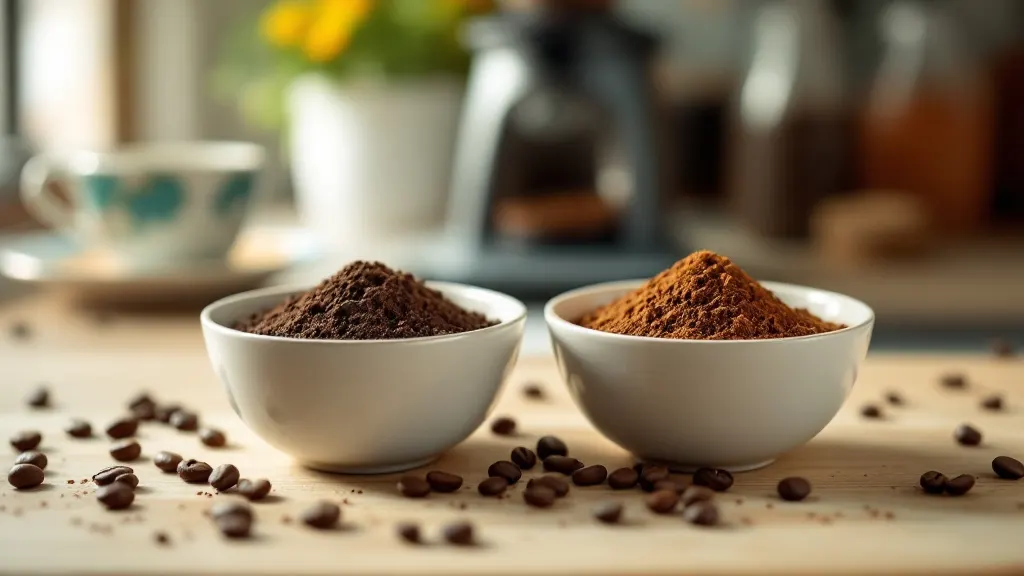
In the burr vs blade grinder debate, burr grinders win for flavor because they crush beans between two burrs at a set gap, giving an even, adjustable grind. Blade grinders chop beans unevenly, mixing dust and chunks, which leads to bitter and sour notes in the same cup. Blades are cheaper and fine for spices or French press in a pinch.
Our top picks
- 1Best first burr grinderBaratza Encore40 mm conical burrs and 40 settings for drip and pour-over, with parts sold by Baratza.See on brand site
- 2Best for espresso and filterBaratza Encore ESPAn M2 burr set with an espresso-focused fine range in the familiar Encore body.See on brand site
- 3Best budget electric burr grinderOXO Brew Conical Burr Coffee GrinderA low-cost step up from blades to conical burrs, with one-touch start.See on brand site
- 4Best flat burr for filter coffeeFellow Ode Brew Grinder Gen 264 mm flat burrs, anti-static tech and single-dose design for pour-over.See on brand site
- 5Best flat burr for espressoEureka Mignon Specialita55 mm flat burrs with stepless adjustment and timed doses.See on brand site
Barista tip
Upgrading from blades? Grind the same beans both ways once and brew them side by side with the same recipe. Sip the blade cup, then the burr cup, while both are still warm. Most people taste the difference right away: fewer harsh edges, more sweetness. It is a fun little tasting party that shows you exactly what you paid for.
Burr vs blade grinder comes down to one word: control. A burr grinder crushes beans between two burrs set at a fixed gap, so you choose the grind size and get a more even result. A blade grinder chops beans with a spinning blade, so the grind depends on how long you hold the button. If you want coffee that tastes the same lovely way every morning, burrs win. Here is why, plus the conical vs flat burr question and the grinders we would shortlist.
How we chose
We did not test these grinders hands-on. We compared burr type, burr size, adjustment and capacity from each maker's spec sheet or a major retailer 1, 2, 3, 4, looked at which models current roundups pick most often 5, and read the research on why grind consistency changes what ends up in your cup 6, 7, 8, 9. Price bands: $ is under $100, $$ is $100 to $299 and $$$ is $300 to $799.
Burr vs blade grinder: the short version
| Burr grinder | Blade grinder | |
|---|---|---|
| How it works | Crushes beans between two burrs at a set gap | Chops beans with a spinning blade |
| Grind size control | A dial or ring with stepped or stepless adjustment | Only by how long you grind |
| Consistency | More even particle sizes | Mix of dust and chunks |
| Espresso | Possible with espresso-capable models | Not suitable |
| Price | From $ for manual or electric models | Usually the cheapest option |
| Best for | Anyone who wants repeatable, tasty cups | Spices, or coffee on a very tight budget |
Why grind consistency matters so much
When water meets ground coffee, it dissolves flavor from the surface of every particle. Small particles give up their flavor fast; big ones slowly. A mix of very fine dust and large chunks means part of your coffee is over-extracted (bitter, harsh) while part is under-extracted (sour, thin), all in the same cup.
The research backs up how big a lever grinding is. In a study of espresso served in coffee shops, grinding grade explained 87 to 96% of the variance in the measured results, and the authors called standardized grinding crucial for consistent quality 6. Finer particles also release more: in espresso tests, caffeine per cup rose when the particle size moved from 500-1,000 µm down to 200-300 µm, for both arabica and robusta 8. In single-serve brewing, smaller particle sizes increased the extraction yield by about 63% 9.
Fines matter too. Researchers found that coffee grounds with a larger share of fines (particles under 100 µm) made the coffee bed less permeable, which slowed espresso flow and stretched extraction time 7. They also noted that different grinding technologies can produce a different share of fines at the same median grind size 7. That is the heart of the burr advantage: a fixed gap gives you a predictable spread of particle sizes.
How a blade grinder works (and where it falls short)
A blade grinder is basically a small motor with a propeller. Beans bounce around the chamber and get hit again and again. Pieces that sit near the blade turn to powder, while pieces that stay out of the way stay chunky. Grind longer and you get finer on average, but the spread stays wide.
We could not find a peer-reviewed head-to-head study of blade and burr grinders in PubMed, so we will not quote a number. The case against blades rests on how they work plus the research above on why particle spread changes extraction.
Blade grinders still have honest uses. They are inexpensive, compact and fine for grinding spices. If you use one for coffee, pulse in short bursts, shake the grinder between pulses and brew with a forgiving method such as French press or drip.
How a burr grinder works
Two burrs, one fixed and one turning, crush beans as they pass through a gap you set. Particles cannot leave until they are small enough to fit through that gap, so the result is far more even. Change the setting and the gap changes with it, which makes dialing in a new bag simple and repeatable.
Burr grinders come in two shapes, and that brings us to the most common follow-up question.
Conical vs flat burr: what changes?
Conical burrs use a cone-shaped inner burr inside a ring-shaped outer burr. They are common in hand grinders and entry-level electric models, often run at lower speeds and are usually more affordable. The Baratza Encore, for example, uses 40 mm conical burrs at 550 RPM with gear reduction 1.
Flat burrs use two parallel rings facing each other. They are common in many enthusiast grinders. The Fellow Ode Gen 2 uses 64 mm flat burrs 3 and the Eureka Mignon Specialita uses 55 mm flat hardened steel burrs 4.
So which tastes better? There is a lot of opinion online and very little controlled evidence. Many enthusiasts describe flat burrs as producing clearer, more separated flavors and conical burrs as giving a rounder, heavier body, but we did not find peer-reviewed sensory studies that settle it. Treat it as a matter of taste. Burr quality, alignment and the right setting for your brew method matter more than the shape.
A practical rule: pick the grinder that suits your brew method and budget first, and let the burr shape be a tie-breaker.
The best burr grinders to replace a blade grinder
Best first burr grinder: Baratza Encore
Baratza Encore
conical burr, entry-level $$
Best for: first burr grinder, pour-over and drip
What we like
- 40 mm M3 conical burrs at 550 RPM with gear reduction
- 300 g hopper and 120 g grounds bin
- widely serviceable, parts sold by Baratza
Keep in mind
- 40 stepped settings, not intended for espresso
- manual on/off only, no timer
- burr type conical
- burr mm 40
- burr material steel (M3)
- grind settings 40
- hopper g 300
If you are upgrading from a blade grinder for drip or pour-over, the Encore is a friendly first step. Baratza lists 40 mm M3 conical burrs at 550 RPM with gear reduction, 40 settings, a 300 g hopper and a 120 g grounds bin, plus replacement parts sold by Baratza 1. It is not intended for espresso.
Best for espresso and filter: Baratza Encore ESP
Baratza Encore ESP
conical burr, espresso + filter $$
Best for: budget espresso setup, espresso plus filter on one grinder
What we like
- M2 burr set with espresso-focused fine range
- quick-release burr mount for cleaning
- includes dosing cup
Keep in mind
- no timer or weight-based dosing
- 40 stepped settings, coarse jumps in filter range
- burr type conical
- burr mm 40
- burr material steel (M2)
- grind settings 40
- espresso capable ✓
The Encore ESP keeps the familiar Encore body but uses an M2 burr set with an espresso-focused fine range and a quick-release burr mount for cleaning 2. Roundups name it the most common beginner pick for 2026 5. The 40 steps are coarse jumps in the filter range, so fussy pour-over fans may want more resolution.
Best budget electric burr grinder: OXO Brew Conical Burr Grinder
OXO Brew Conical Burr Coffee Grinder
conical burr, entry-level $
Best for: budget drip and pour-over
What we like
- conical stainless burrs at entry price
- one-touch start remembers last setting
Keep in mind
- not intended for espresso
- official specs not confirmed in this check
- burr type conical
- burr material stainless steel
The OXO is a simple, low-cost way to move from blades to conical burrs, with one-touch start that remembers your last setting. The official site blocked our spec check, so we have not confirmed its settings or hopper size. It is not intended for espresso.
Best flat burr for filter coffee: Fellow Ode Gen 2
Fellow Ode Brew Grinder Gen 2
flat burr, single-dose filter $$$
Best for: pour-over and filter, single dosing
What we like
- 64 mm flat burrs, upgradable to SSP
- anti-static tech and grounds knocker
- auto-stop when hopper is empty
Keep in mind
- not an espresso grinder (finest ~250 microns)
- 31 stepped settings only
- burr type flat
- burr mm 64
- burr material stainless steel
- grind settings 31
- hopper g 100
For pour-over lovers, the Ode Gen 2 pairs 64 mm flat burrs with 31 settings, anti-static technology, a grounds knocker and auto-stop when the hopper is empty, according to a major retailer's spec sheet 3. Its finest setting is about 250 microns, so it is not an espresso grinder.
Best flat burr for espresso: Eureka Mignon Specialita
Eureka Mignon Specialita
flat burr, on-demand espresso $$$
Best for: home espresso, quiet grind-on-demand
What we like
- stepless micrometric adjustment
- 55 mm flat hardened steel burrs
- timed doses via touch display
Keep in mind
- 300 g hopper suits hopper workflow more than single dosing
- heavier at 5.6 kg
- burr type flat
- burr mm 55
- burr material hardened steel
- grind settings stepless
- stepless ✓
Eureka lists 55 mm flat hardened steel burrs, stepless micrometric adjustment, a 300 g hopper, a 310 W motor and a touch display with two timed doses 4. At 5.6 kg it is heavy and built to stay put. Pair it with a machine from our best espresso machine for home guide.
| Model | Baratza Encore | Baratza Encore ESP | OXO Brew Conical Burr Coffee Grinder | Fellow Ode Brew Grinder Gen 2 | Eureka Mignon Specialita |
|---|---|---|---|---|---|
| Price | $$ | $$ | $ | $$$ | $$$ |
| Type | conical burr, entry-level | conical burr, espresso + filter | conical burr, entry-level | flat burr, single-dose filter | flat burr, on-demand espresso |
| burr type | conical | conical | conical | flat | flat |
| burr mm | 40 | 40 | – | 64 | 55 |
| burr material | steel (M3) | steel (M2) | stainless steel | stainless steel | hardened steel |
| grind settings | 40 | 40 | – | 31 | stepless |
| stepless | – | – | – | – | ✓ |
| espresso capable | – | ✓ | – | – | ✓ |
| hopper g | 300 | 300 | – | 100 | 300 |
| See on brand site | See on brand site | See on brand site | See on brand site | See on brand site |
Prefer to grind by hand? Hand grinders give you burr quality at a lower price. See our best manual coffee grinder picks.
Which grinder fits your brewing?
- French press or cold brew: a burr grinder with good coarse settings. A blade grinder can work in a pinch.
- Drip and pour-over: any entry burr grinder makes a clear difference. Check our best drip coffee maker guide to complete the setup.
- Espresso: an espresso-capable burr grinder is essential. Blade grinders cannot give you the fine, even grind a shot needs. Our best espresso grinder guide goes deeper.
Not sure what size to aim for? Our coffee grind size chart shows the target for each method.
Who can keep their blade grinder?
If you brew mostly French press, drink milky coffee where small flavor differences fade, or only make coffee now and then, your blade grinder is fine for now. Fresh beans ground in a blade grinder can still taste brighter than old pre-ground coffee. The day you start chasing a sweeter cup or buy an espresso machine, a burr grinder is the upgrade that changes the most.
One small trick for any grinder: a tiny spritz of water on the beans before grinding can reduce static and clumping. In one lab study, it shifted the particle size distribution and raised espresso concentration for darker roasts 10.
Not sure yet? Try the free tool
Grinder FitTell us your brew methods, budget and space. Get the grinder type, burr style and models that fit, plus a grind size cheat sheet for your methods.Price bands: $ under $100 · $$ $100–299 · $$$ $300–799 · $$$$ $800–1,999 · $$$$$ $2,000+. Prices change, so check the retailer.
Frequently asked questions
Is a burr grinder really worth it?
For most coffee lovers, yes. A burr grinder gives you a more even grind and a setting you can repeat, which means fewer bitter or sour surprises. Research on espresso found grinding grade explained most of the variation in the cup. If you brew pour-over, drip or espresso regularly, a burr grinder is one of the best value upgrades you can make for flavor.
Can you use a blade grinder for espresso?
Not really. Espresso needs a fine, even grind, and small changes alter how fast the shot runs. A blade grinder produces a wide mix of dust and chunks, so shots run unevenly and taste harsh or sour. Choose an espresso-capable burr grinder, electric or manual, if you own an espresso machine or plan to buy one.
Which is better, conical or flat burrs?
Neither is clearly better. Conical burrs are common in hand grinders and entry electric grinders and are usually more affordable. Flat burrs are common in many enthusiast grinders. Enthusiasts often describe flat burrs as giving clearer flavors and conical burrs as giving more body, but controlled sensory studies are scarce. Choose by brew method, build quality and adjustment first.
How do I get a better grind from a blade grinder?
Grind in short pulses instead of one long run, and shake the grinder between pulses so bigger pieces move toward the blade. Grind only what you need right before brewing. Choose forgiving methods like French press or drip, where small inconsistencies matter less. These steps help, though a burr grinder will still give you a more even, repeatable result.
Do burr grinders need much maintenance?
Very little. Brush out old grounds regularly and clean the burrs every few weeks, following the maker's instructions. Some models, like the Baratza Encore ESP, have a quick-release burr mount that makes this easier. Keep oily, very dark beans in mind, since they can leave more residue. Burrs eventually wear out, and many brands sell replacement burr sets.
Sources
We link to the original studies and official pages so you can check every claim.
- Baratza. Encore conical burr coffee grinder product page. Baratza official site.
- Baratza. Encore ESP coffee grinder product page. Baratza official site.
- Prima Coffee. Fellow Ode Brew Grinder Gen 2 product listing. Prima Coffee Equipment.
- Eureka. Mignon Specialita product page. Eureka official site.
- FrontDeskReview (2026). Baratza Encore ESP price tracker and roundup picks. FrontDeskReview.
- Severini C, Derossi A, Fiore AG et al. (2015). How the variance of some extraction variables may affect the quality of espresso coffees served in coffee shops. J Sci Food Agric.
- Smrke S, Eiermann A, Yeretzian C (2024). The role of fines in espresso extraction dynamics. Sci Rep.
- Khamitova G, Angeloni S, Borsetta G et al. (2020). Optimization of espresso coffee extraction through variation of particle sizes, perforated disk height and filter basket aimed at lowering the amount of ground coffee used. Food Chem.
- Wang X, William J, Fu Y, Lim LT (2016). Effects of capsule parameters on coffee extraction in single-serve brewer. Food Res Int.
- Harper JM, Bumbaugh RE, Hendon CH (2024). Strategies to mitigate electrostatic charging during coffee grinding. iScience.

About the author
Petr Hess, Founder, chemical engineer. Petr Hess studied chemical engineering and loves exploring how substances act on the human body. Coffee is his favorite of them: he reads the studies on caffeine, enzymes and digestion, compares the spec sheets of machines and grinders, and brews more coffee than is strictly reasonable, so you can choose well and enjoy every cup. How we choose.
Keep reading
 GrindersCoffee Grind Size Chart: Find the Perfect Grind for Every Brew MethodA coffee grind size chart matches grind to contact time: extra fine for Turkish coffee, fine for espresso, medium-fine for pour-over, medium for drip, and coarse for French press and cold brew.
 GrindersThe Best Coffee Grinder: The Upgrade That Makes Every Cup Taste BrighterThe best coffee grinder for most homes is the Baratza Encore ESP: a 40 mm conical burr grinder that handles both espresso and filter coffee and is among the most common best-overall picks in 2026 roundups.
 GrindersThe Best Espresso Grinder: Sweet, Syrupy Shots Start HereThe best espresso grinder for most home baristas is the Eureka Mignon Specialita: 55 mm flat burrs, stepless micrometric adjustment and timed doses on a touch display.
 Espresso machinesBreville Barista Express vs Pro: The Friendly Classic or the Faster Upgrade?In the Breville Barista Express vs Pro choice, the Express is the better value: a 16-setting grinder, PID and thermocoil heating at a $699.95 list price that is often discounted.