The Best Manual Coffee Grinders for Fresh, Fragrant Coffee Anywhere
We may earn a commission when you buy through links on this page, at no extra cost to you. It never changes what we recommend. How we make money
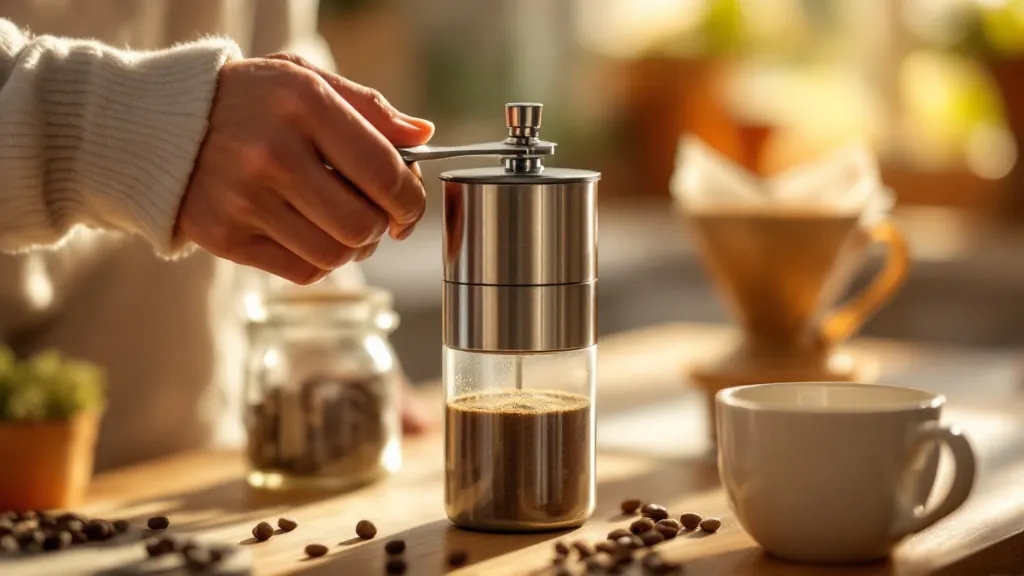
Short answer
The best manual coffee grinder for most people is the 1Zpresso K-Ultra, with an external adjustment ring at 20 microns per click and a 35 to 40 g capacity. For espresso, the 1Zpresso J-Ultra adds 8-micron steps, and the KINGrinder K6 is the best hand grinder on a budget.
Our top picks
- 1Best overall1Zpresso K-UltraExternal adjustment at 20 microns per click covers pour-over and espresso.See on brand site
- 2Best for espresso1Zpresso J-Ultra8-micron steps and 48 mm coated burrs make dialing in shots easier.See on brand site
- 3Best budget all-rounderKINGrinder K6External adjustment at 16 microns per click and a metal body at a low price band.See on brand site
- 4Best for travel1Zpresso Q2 SAt 465 g with tool-free disassembly, it slips easily into a bag.See on brand site
- 5Best for pour-over puristsComandante C40 MK4 Nitro BladeA long-time filter favorite with Nitro Blade burrs and glass jars included.See on brand site
Barista tip
Weigh your beans before you grind, then count the clicks from zero and write that number on your bag. Next time, start from that exact setting and change only one or two clicks if the cup tastes sour (go finer) or bitter (go coarser). A two-minute habit, and every bag of the same coffee tastes great from the very first brew.
A good hand grinder turns whole beans into an even, fragrant grind with nothing but a few relaxed turns of your wrist. The best manual coffee grinder for most people is the 1Zpresso K-Ultra, with fine external adjustment that covers pour-over and espresso. Below you will find five hand grinders we would happily keep on the counter, what each one is best at, and how to pick yours.
How we chose
We did not test these grinders hands-on. We compared what each maker publishes about burr design, adjustment steps, capacity and weight 1, 2, 3, 45, and we looked at which models current roundups return to most often 6. Grind consistency matters because it shapes extraction: in one espresso study, grind setting explained most of the variation in the cup 7. Price bands: $ is under $100, $$ is $100 to $299 and $$$ is $300 to $799.
The best manual coffee grinders at a glance
- Best overall: 1Zpresso K-Ultra
- Best for espresso: 1Zpresso J-Ultra
- Best budget all-rounder: KINGrinder K6
- Best for travel: 1Zpresso Q2 S
- Best for pour-over purists: Comandante C40 MK4 Nitro Blade
Best overall: 1Zpresso K-Ultra
1Zpresso K-Ultra
conical burr, all-round $$
Best for: pour-over with occasional espresso
What we like
- external adjustment ring, 20 microns per click
- 35-40 g capacity
- foldable handle
Keep in mind
- 700 g weight
- pricier than J-Ultra
- burr type heptagonal conical
- burr material stainless steel
- grind settings 100 clicks per rotation
- espresso capable ✓
- capacity g 35-40
The K-Ultra is the hand grinder we would hand to a friend who brews a bit of everything. 1Zpresso lists a heptagonal conical burr, an external adjustment ring with more than 100 clicks and 20 microns per step, a 35 to 40 g capacity and a weight of 700 g 1. The external ring sits right under your fingers, so you can switch from a fine espresso setting to a pour-over setting without taking anything apart.
It is a lovely fit for pour-over with occasional espresso. The trade-offs: 700 g is substantial for a backpack, and it costs more than the J-Ultra.
Best for espresso: 1Zpresso J-Ultra
1Zpresso J-Ultra
conical burr, espresso $$
Best for: manual espresso, fine dialing
What we like
- 8-micron steps, finest 1Zpresso adjustment
- 48 mm coated burrs
- external adjustment ring
Keep in mind
- espresso-tuned, slower for coarse filter
- 700 g is heavy for travel
- burr type conical
- burr mm 48
- burr material coated steel
- espresso capable ✓
- capacity g 35-40
Espresso rewards tiny grind changes, and the J-Ultra is built for exactly that. 1Zpresso lists 48 mm coated conical burrs, an external adjustment ring with 8 microns per click (its finest adjustment), a 35 to 40 g capacity and a weight of 700 g 2. Those small steps make it easier to nudge a shot from sour to sweet.
Because it is tuned for espresso, grinding a large coarse batch for French press takes longer. If you mostly brew filter coffee, the K-Ultra is the friendlier choice.
Best budget all-rounder: KINGrinder K6
KINGrinder K6
conical burr, external adjust $
Best for: budget all-rounder, espresso on a budget
What we like
- external adjustment, 16 microns per click
- full-metal aluminum body
Keep in mind
- 25-30 g capacity
- official UK listing in GBP, US price unconfirmed
- burr type conical
- burr material stainless steel
- espresso capable ✓
- capacity g 25-30
- microns per click 16
The K6 brings features you usually see at higher prices. KINGrinder lists stainless steel conical burrs, an external adjustment with 16 microns per click, a full-metal aluminum body and a 25 to 30 g capacity 3. That is enough for one big mug of pour-over or a double espresso.
The official listing we checked was in British pounds, so confirm the US price before you buy. For a first good grinder on a small budget, it is a cheerful place to start.
Best for travel: 1Zpresso Q2 S
1Zpresso Q2 S
conical burr, compact $
Best for: travel, single cups of filter
What we like
- under 500 g, very portable
- tool-free disassembly keeps calibration
Keep in mind
- 15-20 g capacity limits batch size
- coarse steps for espresso
- burr type conical
- burr material 420 stainless steel
- grind settings 30 clicks per rotation
- espresso capable ✓
- capacity g 15-20
The Q2 S is the grinder you can slip into a weekend bag. 1Zpresso lists a weight of 465 g, 420 stainless steel burrs, 30 clicks per rotation and a 15 to 20 g capacity, plus tool-free disassembly that keeps calibration 4. It is ideal for single cups of filter coffee on the road.
The small chamber means one cup at a time, and the steps are coarse for dialing in espresso.
Best for pour-over purists: Comandante C40 MK4 Nitro Blade
Comandante C40 MK4 Nitro Blade
conical burr, stepped $$$
Best for: pour-over purists, travel and home
What we like
- Nitro Blade high-nitrogen steel burrs
- glass and polymer bean jars included
Keep in mind
- stepped clicks coarse for espresso without upgrade
- wide body, slower than larger-burr rivals
- burr type conical
- burr mm 39
- burr material high-nitrogen stainless steel (Nitro Blade)
- espresso capable ✓
- capacity g 40
The Comandante is a long-time favorite among filter coffee fans. The MK4 Nitro Blade model ships with glass and polymer bean jars, according to the product listing 5. The official site was rate-limited during our check, so we have not confirmed its burr size or capacity and do not list them here.
Its adjustment uses stepped clicks that are on the coarse side for espresso without an aftermarket upgrade, and it sits in the $$$ band, well above the 1Zpresso models.
Compare the hand grinders
| Model | 1Zpresso K-Ultra | 1Zpresso J-Ultra | KINGrinder K6 | 1Zpresso Q2 S | Comandante C40 MK4 Nitro Blade |
|---|---|---|---|---|---|
| Price | $$ | $$ | $ | $ | $$$ |
| Type | conical burr, all-round | conical burr, espresso | conical burr, external adjust | conical burr, compact | conical burr, stepped |
| burr type | heptagonal conical | conical | conical | conical | conical |
| burr material | stainless steel | coated steel | stainless steel | 420 stainless steel | high-nitrogen stainless steel (Nitro Blade) |
| grind settings | 100 clicks per rotation | – | – | 30 clicks per rotation | – |
| stepless | – | – | – | – | – |
| espresso capable | ✓ | ✓ | ✓ | ✓ | ✓ |
| capacity g | 35-40 | 35-40 | 25-30 | 15-20 | 40 |
| weight kg | 0.7 | 0.7 | – | 0.465 | – |
| See on brand site | See on brand site | See on brand site | See on brand site | See on brand site |
Why choose a manual grinder at all?
A hand grinder gives you burr quality for less money than a comparable electric grinder, because you are the motor. It is quiet, needs no outlet, and works just as well in a cabin as on your kitchen counter. The manual models in our catalog span the $ to $$$ price bands, with options for filter coffee and espresso.
There is a small cost in effort. Grinding a large batch for a full carafe takes time, and very fine espresso grinding asks for more turns. If you brew for a crowd every morning, look at our best coffee grinder guide for electric options.
Your first week with a hand grinder
The first few brews are part of the fun. Here is a gentle way to find your sweet spot:
- Find zero. Turn the adjustment until the burrs just touch, then count clicks outward from there. Every setting you note later starts from this point.
- Start in the middle of the range for your method. Use the maker's suggested starting point if one is printed in the manual, or begin a little coarser than you think and work finer.
- Brew, taste, adjust. Sour, thin or watery cups usually mean the grind is too coarse. Harsh, bitter or slow-draining cups usually mean it is too fine. Move a few clicks at a time.
- Keep everything else steady. Same dose, same water, same ratio. Our coffee to water ratio guide gives easy starting numbers.
- Write it down. A note on the bag or in your phone turns a lucky cup into a repeatable one.
Different roasts can feel quite different under the crank. When you change beans, expect to move a few clicks. That small ritual of tasting and tweaking is where a lot of the joy of a hand grinder lives.
Best hand grinder buying guide
1. Burr type and size
Every model on this list uses conical burrs, which crush and cut beans between two rings for an even grind. Larger burrs generally grind faster per turn. If you are new to the difference between burr and blade grinders, our burr vs blade grinder explainer covers it.
Even grind matters most for espresso. Researchers found that a higher share of fines (particles under 100 µm) lowers how easily water flows through the coffee bed, which slows the shot 8. A well-aligned burr set keeps that share predictable from cup to cup.
2. Adjustment: microns per click
This is the spec that separates good hand grinders from great ones. Smaller steps let you make finer changes:
- 8 microns per click (J-Ultra): best for espresso dialing 2
- 16 microns per click (K6): a balance of espresso and filter 3
- 20 microns per click (K-Ultra): broad range, quick moves between methods 1
External adjustment rings, found on the K-Ultra, J-Ultra and K6, let you change settings without emptying the grinder. Keep our coffee grind size chart nearby while you learn your settings.
3. Capacity and weight
Capacity tells you how much coffee you can grind in one go. 35 to 40 g covers two cups of pour-over; 15 to 20 g covers one. Weight matters for travel: the Q2 S is 465 g 4, while the K-Ultra and J-Ultra are 700 g each 1, 2.
4. What you brew most
- Mostly espresso: J-Ultra, paired with a machine from our best espresso machine for beginners list.
- Mostly pour-over, some espresso: K-Ultra.
- Pour-over on a budget: K6.
- Travel or one cup at a time: Q2 S, with a dripper from our best pour over coffee maker guide.
5. Small things that make you smile
A foldable handle, a magnetic catch cup and tool-free cleaning are not headline specs, yet they make the daily ritual smoother. A tiny spritz of water on your beans before grinding can also reduce static and clumping; in one study it shifted the grind distribution and raised espresso strength for darker roasts 9.
Who should skip a manual grinder?
Skip a hand grinder if you brew large batches for several people each morning, if you have wrist or hand pain, or if you want grinding to be a one-button job. A timed electric grinder will serve you better. If you are building a full espresso setup, our best espresso grinder guide compares stepless electric options.
Also worth knowing: Timemore's Chestnut hand grinders are another popular budget family in current roundups 6, and Hario's Skerton Pro is a long-standing camping favorite. We have not verified their current specs, so they are not in our comparison.
Caring for your hand grinder
Grind fresh for each brew and store whole beans in an airtight container away from light. Brush out old grounds weekly, and avoid washing the burrs with water unless the maker says it is safe. Temperature even changes grinding: beans ground cold produced a narrower spread of particle sizes in one lab study 10, though you do not need to freeze your beans for a delicious cup.
Not sure yet? Try the free tool
Grinder FitTell us your brew methods, budget and space. Get the grinder type, burr style and models that fit, plus a grind size cheat sheet for your methods.Price bands: $ under $100 · $$ $100–299 · $$$ $300–799 · $$$$ $800–1,999 · $$$$$ $2,000+. Prices change, so check the retailer.
Frequently asked questions
Is a manual coffee grinder better than an electric one?
Not better, just different. For the same money, a manual grinder usually gives you higher quality burrs, because there is no motor to pay for. It is quiet and portable too. An electric grinder wins on speed and ease, especially for large batches or several cups each morning. If you brew one or two cups a day, a hand grinder is a delightful, budget-friendly choice.
Can a hand grinder grind fine enough for espresso?
Yes, if it is designed for it. Look for small adjustment steps and an espresso-capable spec. The 1Zpresso J-Ultra lists 8 microns per click and the KINGrinder K6 lists 16, both espresso capable according to their makers. Budget or travel models with coarse steps can reach espresso fineness but make fine-tuning harder, so dialing in a shot takes more patience.
How long does it take to grind coffee by hand?
It depends on the burr size, the grind setting and how much coffee you grind. Coarse grinds for French press go faster than fine espresso grinds, and larger burrs need fewer turns. Makers rarely publish timed figures, so expect it to vary. Most people find a single pour-over dose a pleasant, short part of their morning ritual.
What does microns per click mean?
It is how much the gap between the burrs changes with each click of the adjustment ring. Smaller numbers mean finer control. For espresso, where tiny changes alter how fast the shot runs, 8 to 16 microns per click is very helpful. For pour-over and French press, 20 microns per click is plenty, and it lets you move quickly between brew methods.
Are ceramic or steel burrs better in a hand grinder?
Most current premium hand grinders use stainless or coated steel burrs, which are usually machined more precisely. Ceramic burrs are found on many budget mills and do not rust, but they tend to be less precise. If grind consistency and espresso are priorities, steel burrs are the safer pick. For camping and occasional French press, a ceramic budget mill is fine.
Sources
We link to the original studies and official pages so you can check every claim.
- 1Zpresso. K-Ultra manual coffee grinder product page. 1Zpresso official site.
- 1Zpresso. J-Ultra manual coffee grinder product page. 1Zpresso official site.
- KINGrinder. K6 manual coffee grinder product page. KINGrinder official store.
- 1Zpresso. Q2 manual coffee grinder product page. 1Zpresso official site.
- Comandante. C40 MK4 Nitro Blade product page. Comandante official store.
- KnowledgeLib (2026). Best espresso grinders 2026. KnowledgeLib.
- Severini C, Derossi A, Fiore AG et al. (2015). How the variance of some extraction variables may affect the quality of espresso coffees served in coffee shops. J Sci Food Agric.
- Smrke S, Eiermann A, Yeretzian C (2024). The role of fines in espresso extraction dynamics. Sci Rep.
- Harper JM, Bumbaugh RE, Hendon CH (2024). Strategies to mitigate electrostatic charging during coffee grinding. iScience.
- Uman E, Colonna-Dashwood M, Colonna-Dashwood L et al. (2016). The effect of bean origin and temperature on grinding roasted coffee. Sci Rep.

About the author
Petr Hess, Founder, chemical engineer. Petr Hess studied chemical engineering and loves exploring how substances act on the human body. Coffee is his favorite of them: he reads the studies on caffeine, enzymes and digestion, compares the spec sheets of machines and grinders, and brews more coffee than is strictly reasonable, so you can choose well and enjoy every cup. How we choose.
Keep reading
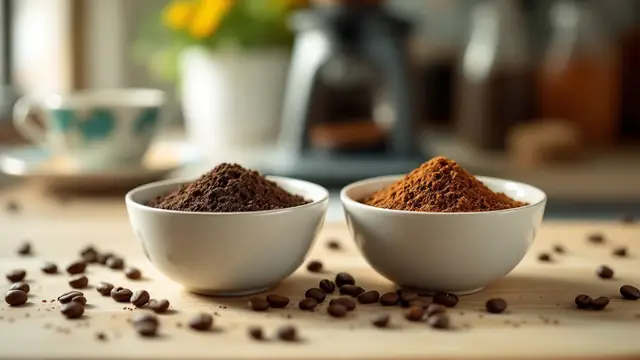 GrindersBurr vs Blade Grinder: Why Even Grinds Make Happier CoffeeIn the burr vs blade grinder debate, burr grinders win for flavor because they crush beans between two burrs at a set gap, giving an even, adjustable grind.
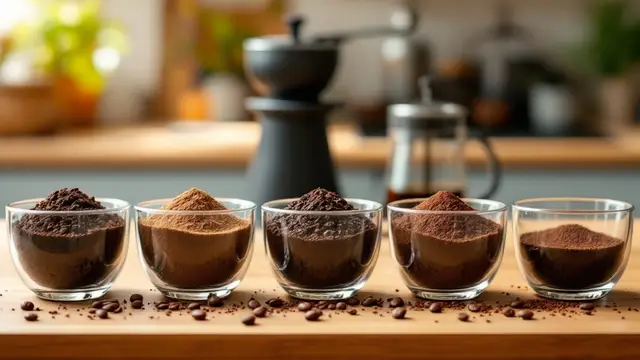 GrindersCoffee Grind Size Chart: Find the Perfect Grind for Every Brew MethodA coffee grind size chart matches grind to contact time: extra fine for Turkish coffee, fine for espresso, medium-fine for pour-over, medium for drip, and coarse for French press and cold brew.
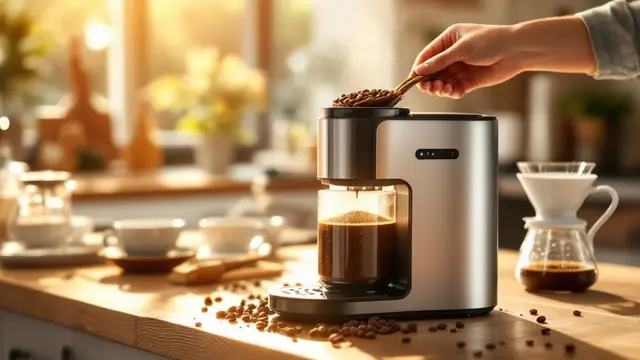 GrindersThe Best Coffee Grinder: The Upgrade That Makes Every Cup Taste BrighterThe best coffee grinder for most homes is the Baratza Encore ESP: a 40 mm conical burr grinder that handles both espresso and filter coffee and is among the most common best-overall picks in 2026 roundups.
 Espresso machinesThe Best Latte Machines for Silky, Café-Style Milk Drinks at HomeThe best latte machine for most people is the De'Longhi Magnifica Evo with LatteCrema, which grinds beans and pours one-touch lattes and cappuccinos from a milk carafe.