The Best French Press: Rich, Cozy Coffee With Less Sludge
We may earn a commission when you buy through links on this page, at no extra cost to you. It never changes what we recommend. How we make money
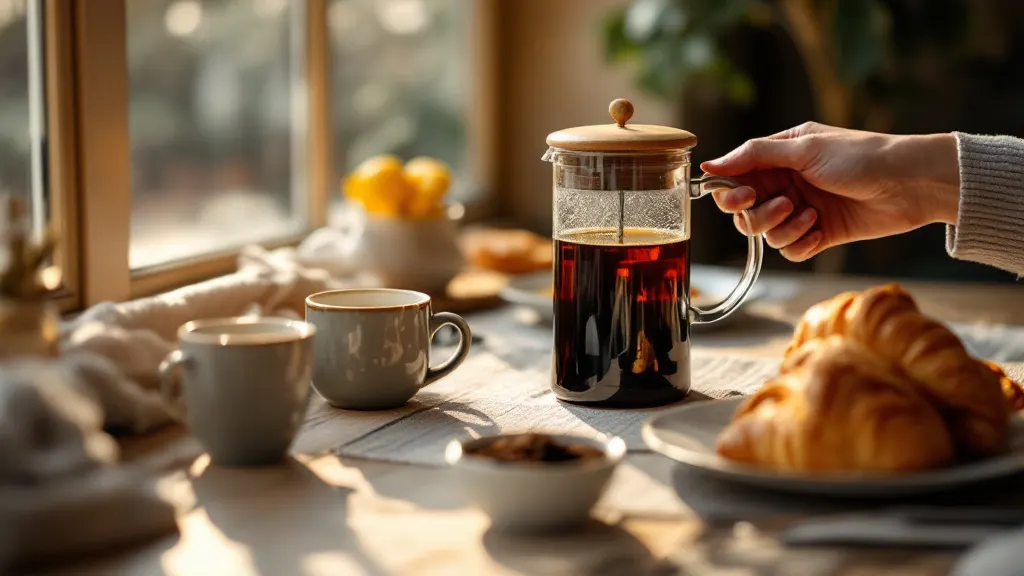
Short answer
The best French press for most coffee lovers is the Espro P7: its double micro-filter catches far more sediment than a standard mesh (brand claim), its insulated steel body keeps coffee hot, and an optional paper filter gives you a cleaner cup. On a budget, the classic Bodum Chambord still brews a rich, full-bodied pot for very little money.
Our top picks
- 1Best French press overallEspro P7 French Press 32 ozA double micro-filter, an insulated steel body and an optional paper filter for a cleaner, hotter cup.See on brand site
- 2Best classic and best valueBodum Chambord French Press 8 cupThe iconic glass press with a stainless frame, sold for decades and easy to find spare parts for.See on brand site
- 3Best single-cup pressAeroPress Original Coffee MakerImmersion plus plunger pressure and a paper filter, brewed in about one to two minutes.See on brand site
- 4Best paper-filtered immersion alternativeClever Coffee Dripper (Large, 18 oz)The same steep-and-wait ease as a French press, released through a standard #4 paper filter.See on brand site
Barista tip
After the four-minute steep, give the crust on top a gentle stir with a spoon and scoop off the foam and floating grounds. Then wait another minute or two before you press. The fine particles sink to the bottom, the plunger glides down easily, and your cup comes out cleaner, rounder and sweeter with almost no sludge at the bottom.
How we chose
We compared French presses on their makers' published specs, our product catalog and what owners commonly report about sediment, heat and cleaning. We did not test these presses hands-on for this guide. We focused on the things that change your daily cup: how well the filter holds back fine grounds, how long the coffee stays hot, how many cups each one makes, and how fragile it is. Because some people want French press ease with a cleaner cup, we also included two paper-filtered immersion brewers.
What makes the best French press
The French press is coffee at its coziest. You stir coarse grounds into hot water, wait a few minutes, press the plunger and pour. The metal mesh lets coffee oils and tiny particles through, so the cup feels round, heavy and velvety. That is its charm, and it also explains its two quirks: a little sludge at the bottom and more of coffee's natural oils in your mug.
Those oils matter if you watch your cholesterol. Unfiltered coffee, including boiled and cafetiere (French press) coffee, raises total and LDL cholesterol through two diterpenes called cafestol and kahweol, and a paper filter holds them back 1, 2. In a lab analysis, boiled and Turkish coffee contained about 5 to 7 mg of cafestol per cup, espresso about 1 mg, and drip-filtered coffee negligible amounts 3. We did not find a reliable per-cup figure for French press coffee specifically, so we won't guess one. The practical takeaway is simple: if your LDL is a concern, use a paper filter or alternate with filtered brews.
When you shop for the best French press, look at three things:
- The filter. A single mesh screen is classic. Double or finer filters cut sediment.
- The body. Glass looks lovely but cools fast and can break. Double-wall steel stays hot and survives knocks.
- The size. Most presses are sold in "cups" of about 4 oz (120 ml), so an 8-cup press makes about four regular mugs.
Not sure a French press is your style at all? Our quiz matches you with a brewer in a minute.
Our picks for the best French press
Espro P7: best French press overall
The P7 is the press for people who love French press body but not the grit. Espro lists a 32 oz (about 950 ml) double-wall stainless steel body and a double micro-filter; the brand claims it traps sediment 9 to 12 times finer than a standard mesh 4. Espro also claims its vacuum-insulated body keeps coffee hot for more than two hours 4.
The happiest detail is the optional Espro paper filter, which fits the plunger and gives you an oil-free, cleaner cup when you want one 4. That makes it the most flexible press here for anyone thinking about cholesterol.
Points to know: it costs much more than a glass press, Espro lists a minimum brew of 24 oz, and replacement filters do not fit pre-2020 Espro models 4.
Espro P7 French Press 32 oz
French press, double micro-filter $$
Best for: low-sediment French press, keeping coffee hot
What we like
- Double micro-filter traps far more sediment than standard mesh (brand claims 9-12x finer)
- Vacuum-insulated steel body; brand claims 2+ hours heat retention
- Optional paper filter for oil-free cup
Keep in mind
- Much pricier than a glass French press
- Replacement filters not compatible with pre-2020 Espro models
- type French press with double micro-filter
- capacity 32 oz (min. 24 oz brew)
- material double-wall stainless steel
- filter stainless double micro-filter; optional Espro paper filter
Bodum Chambord 8 Cup: best classic and best value
The Chambord is the French press most of us picture: a borosilicate glass beaker in a shiny stainless steel frame. Bodum lists it at 1.0 l (34 oz), counted as eight 4 oz cups, with a three-part stainless steel mesh filter 5. It has been sold for decades, so spare beakers and filters are easy to find.
Expect a classic French press cup: full, rich and with some fine sediment at the bottom. The glass beaker can break and does not hold heat for long, so pour everything into mugs or a thermal carafe once it is pressed. For the price, it is a wonderful way to start.
Bodum Chambord French Press 8 cup
French press $
Best for: classic French press, full-bodied coffee for several people
What we like
- Iconic design sold for decades, spare glass beakers easy to find
- No paper filters needed
- Stainless steel frame and plunger
Keep in mind
- Mesh filter lets some fine sediment through
- Glass beaker can break; little heat retention
- type French press (immersion)
- capacity 1.0 l / 34 oz (8 cups of 4 oz)
- material borosilicate glass, stainless steel frame
- filter 3-part stainless steel mesh filter
AeroPress Original: best single-cup press
The AeroPress is a press in spirit with a paper filter at its heart. AeroPress lists a 10 oz (about 300 ml) capacity for one to two cups, immersion plus plunger pressure, and a fast brew of about one to two minutes 6. It is light, nearly unbreakable and very easy to clean.
Because coffee passes through a paper micro-filter, you get a clean cup with very little sediment and far fewer of the oils that raise LDL cholesterol 1. It does not make true espresso and it brews only one or two cups at a time. For a solo coffee drinker who wants French press ease without the sludge, it is a delight.
AeroPress Original Coffee Maker
immersion/pressure press $
Best for: single cups at home or travel, experimenting with recipes
What we like
- Fast brew of about 1-2 minutes
- Nearly unbreakable and easy to clean
- Huge range of recipes, including concentrated espresso-style shots
Keep in mind
- Small batch size, one or two cups at a time
- Does not make true espresso (no 9-bar pressure)
- type immersion + plunger pressure
- capacity 10 oz (1-2 cups)
- material BPA-free plastic (Tritan)
- filter AeroPress micro-filter paper (metal filter optional)
Clever Coffee Dripper: best paper-filtered immersion alternative
The Clever works like a French press with a paper filter and a trap door. You steep the coffee for a few minutes, set the dripper on a mug and a valve releases the coffee through a standard #4 paper filter. Our catalog lists the large model at 18 oz (about 16 oz brewed) in BPA-free plastic.
It gives you the full-flavored, hands-off ease of immersion with a clean, filtered finish. It only releases onto cups or carafes about 1.5 to 3.75 in (4 to 9.5 cm) across, so check your favorite mug. Read more about it in our best pour over coffee maker guide.
Clever Coffee Dripper (Large, 18 oz)
immersion dripper with valve $
Best for: easy hands-off pour-over, beginners
What we like
- Immersion brewing needs no pouring technique
- Uses cheap, standard #4 filters
- Valve releases only when set on a cup
Keep in mind
- Fits only cups/carafes 1.5-3.75 in. across
- Plastic body
- type steep-and-release immersion with shut-off valve
- capacity 18 oz (about 16 oz brewed)
- material BPA-free plastic
- filter #4 cone paper filters
French presses compared
| Model | Espro P7 French Press 32 oz | Bodum Chambord French Press 8 cup | AeroPress Original Coffee Maker | Clever Coffee Dripper (Large, 18 oz) |
|---|---|---|---|---|
| Price | $$ | $ | $ | $ |
| Type | French press, double micro-filter | French press | immersion/pressure press | immersion dripper with valve |
| type | French press with double micro-filter | French press (immersion) | immersion + plunger pressure | steep-and-release immersion with shut-off valve |
| capacity | 32 oz (min. 24 oz brew) | 1.0 l / 34 oz (8 cups of 4 oz) | 10 oz (1-2 cups) | 18 oz (about 16 oz brewed) |
| material | double-wall stainless steel | borosilicate glass, stainless steel frame | BPA-free plastic (Tritan) | BPA-free plastic |
| filter | stainless double micro-filter; optional Espro paper filter | 3-part stainless steel mesh filter | AeroPress micro-filter paper (metal filter optional) | #4 cone paper filters |
| See on brand site | See on brand site | See on brand site | See on brand site |
How to use a French press
This simple method makes a smooth, rich pot every time. It assumes an 8-cup (1 l) press like the Chambord; scale it to your size.
- Weigh 60 g (about 2.1 oz) of coffee and grind it coarse, like breadcrumbs or sea salt. Too fine and the plunger sticks and the cup turns muddy. Our coffee grind size chart shows the target.
- Preheat the press with hot water, then pour it out.
- Add the coffee and pour in about 900 g (30 fl oz) of water just off the boil. A ratio near 1:15 is a common start; our coffee to water ratio guide explains how to tweak it.
- Set a timer for 4 minutes. Put the lid on to hold heat, plunger up.
- Break the crust with a spoon, stir gently and scoop off the foam.
- Wait another few minutes if you can, so fines settle. Then press slowly and gently, stopping just above the grounds.
- Pour everything out right away into mugs or a thermal carafe. Coffee left on the grounds keeps extracting and turns bitter.
Too weak or sour? Steep a bit longer or grind a little finer. Too bitter or harsh? Grind a little coarser or shorten the steep.
Buying guide: what really matters
Filtration. This is the big one. A standard mesh gives the classic heavy body with some silt. A finer double filter, like Espro's, gives a cleaner cup 4. A paper filter (Espro accessory, AeroPress, Clever) gives the cleanest cup and holds back cafestol 1.
Heat retention. Glass presses cool quickly. Double-wall steel keeps coffee hot for longer, which matters if you sip slowly or serve a second round.
Capacity. Check the real volume in ml or oz, not just "cups". Brewing far below a press's size can make the plunger seal less evenly; Espro, for example, lists a 24 oz minimum for the P7 4.
Durability and spare parts. Glass breaks eventually. A press with easy-to-find replacement beakers and filters will last you years.
Your grinder. A burr grinder makes a big difference here because even, coarse grounds mean less sludge and a sweeter cup. Blade grinders make lots of dust that slips through the mesh. Our best coffee grinder guide and burr vs blade grinder explainer cover this.
Caring for your French press
A clean press makes a sweeter cup, and it only takes a minute.
- Empty the grounds into a sieve or the compost, not down the sink, where they can clog drains.
- Take the filter apart now and then. Most plungers unscrew into a mesh, a plate and a spring. Old coffee oils hide between the layers and slowly turn rancid, which makes coffee taste stale.
- Wash with warm, soapy water and rinse well. Check the maker's care guide before using a dishwasher.
- Replace a bent or frayed mesh. If grounds start slipping around the edge, a new filter screen brings back a clean pour.
- Store it dry with the plunger up so the mesh can air out.
A French press also makes lovely cold brew overnight in the fridge: coarse coffee, cold water, a slow steep and a gentle press in the morning. Our best cold brew coffee maker guide explains the method.
Who should skip a French press
If your doctor has flagged high LDL cholesterol, a daily unfiltered French press is worth rethinking; a paper-filtered brewer like the AeroPress or Clever, or a drip machine, gives you a similar ritual with far fewer of the oils 1, 2. If you dislike any sediment at all, choose pour over. And if you need coffee for a crowd at the push of a button, our best drip coffee maker guide is the better fit. For everyone else who loves a warm, velvety cup, a French press is one of the simplest pleasures in coffee.
Not sure yet? Try the free tool
Machine MatchmakerAnswer 6 quick questions and get the machine type and models that fit your drinks, budget and patience, with a 3-year cost-per-cup comparison.Price bands: $ under $100 · $$ $100–299 · $$$ $300–799 · $$$$ $800–1,999 · $$$$$ $2,000+. Prices change, so check the retailer.
When to talk to a doctor
Unfiltered coffee such as French press can raise LDL cholesterol; if you have high cholesterol or heart disease, ask your doctor whether a paper-filtered brew suits you better.
Frequently asked questions
Is French press coffee bad for cholesterol?
Unfiltered coffee, including French press, contains cafestol and kahweol, natural oils that raise total and LDL cholesterol when you drink it regularly. Paper filters hold most of them back, and filtered coffee shows very little effect in trials. If your LDL is a concern, use a paper filter in your press, choose a filtered brewer, or enjoy French press as an occasional treat. Your doctor can advise what suits you.
How long should you steep a French press?
About 4 minutes is the classic starting point for coarse-ground coffee. After that, break the crust, stir gently and, if you have time, let the fines settle for a few more minutes before pressing slowly. Pour all the coffee out right after pressing so it stops extracting. Adjust steep time and grind together until the cup tastes sweet and balanced to you.
What grind size is best for a French press?
Use a coarse grind, roughly like breadcrumbs or coarse sea salt. Coarse, even particles extract evenly over a 4-minute steep and are less likely to slip through the mesh. If the plunger is hard to push or the cup tastes muddy, go coarser. A burr grinder gives much more even grounds than a blade grinder, which means less sludge in your mug.
Glass or stainless steel French press: which is better?
Glass lets you watch the coffee bloom and is easy to keep neutral in taste, but it cools quickly and can break. Double-wall stainless steel stays hot much longer and survives drops, which suits slow sippers and households with kids. Taste differences come mostly from the filter, grind and recipe, so choose the body that fits your habits.
How much coffee do I put in a French press?
A ratio around 1:15 to 1:16 by weight is a good starting point. For an 8-cup (1 liter) press, that is about 60 g of coarse coffee to 900 g of water. For one large mug, try 20 g of coffee to 300 g of water. Weigh both with a kitchen scale, then adjust a little stronger or lighter to your taste.
Sources
We link to the original studies and official pages so you can check every claim.
- Urgert R, Katan MB (1997). The cholesterol-raising factor from coffee beans. Annu Rev Nutr.
- Jee SH, He J, Appel LJ et al. (2001). Coffee consumption and serum lipids: a meta-analysis of randomized controlled clinical trials. Am J Epidemiol.
- Gross G, Jaccaud E, Huggett AC (1997). Analysis of the content of the diterpenes cafestol and kahweol in coffee brews. Food Chem Toxicol.
- Espro (2026). Coffee French Press P7 (32 oz). Official product page.
- Bodum (2026). Chambord French Press, 8 cup, 1.0 l, 34 oz. Official product page.
- AeroPress (2026). AeroPress Original Coffee Maker. Official product page.

About the author
Petr Hess, Founder, chemical engineer. Petr Hess studied chemical engineering and loves exploring how substances act on the human body. Coffee is his favorite of them: he reads the studies on caffeine, enzymes and digestion, compares the spec sheets of machines and grinders, and brews more coffee than is strictly reasonable, so you can choose well and enjoy every cup. How we choose.
Keep reading
 Coffee makersThe Best Moka Pot: Strong, Happy Stovetop Coffee the Italian WayThe best moka pot for most kitchens is the Bialetti Moka Express: a simple, durable aluminum stovetop brewer made since 1933 that turns out strong, rich coffee with no paper filters or electricity.
 Coffee makersThe Best Cold Brew Coffee Maker: Smooth, Chilled Coffee Waiting in Your FridgeThe best cold brew coffee maker for most people is the Hario Mizudashi: an inexpensive glass pitcher with a built-in filter that fits in a fridge door and makes 1 liter of ready-to-drink cold brew.
 Coffee makersThe Best Drip Coffee Makers for Bright, Easy MorningsThe best drip coffee maker for most people is the Technivorm Moccamaster KBGV Select, a fast, simple brewer with a 5-year warranty.
 GrindersThe Best Coffee Grinder: The Upgrade That Makes Every Cup Taste BrighterThe best coffee grinder for most homes is the Baratza Encore ESP: a 40 mm conical burr grinder that handles both espresso and filter coffee and is among the most common best-overall picks in 2026 roundups.