How to Make Espresso at Home: A Calm, Step-by-Step Guide
Short answer
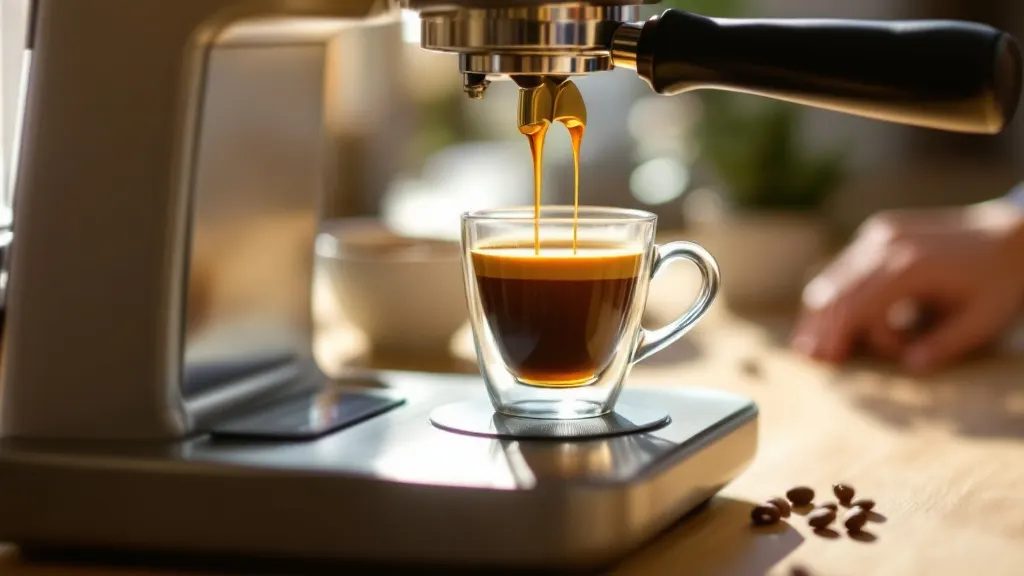
To make espresso, grind fresh coffee fine (like table salt), tamp it evenly in the portafilter and brew with hot water under about 9 bar of pressure. A good starting point is a 1:2 ratio, for example 14 g of coffee to 28 g of espresso, in 20 to 30 seconds. Then grind finer if it tastes sour and coarser if it tastes bitter.
Barista tip
Make your first dial-in session a tasting party. Pull three shots with the same beans and dose: one stopped at 1:1.5, one at 1:2 and one at 1:2.5. Taste them side by side from small glasses. You will hear the beans speak: sweet and thick, balanced, then lighter and longer. Pick your favorite and that is your house recipe.
Learning how to make espresso is one of the most rewarding kitchen skills you can pick up. The idea is simple: hot water is pushed under pressure through a tightly packed puck of finely ground coffee, and in 20 to 30 seconds you get a small, syrupy shot crowned with crema 1, 2. The magic is in a few numbers you can control: dose, ratio, grind and time. Here is a calm, step-by-step routine and a dial-in cheat sheet for when a shot tastes off.
What you need to make espresso
- An espresso machine that can build real brewing pressure. The certified Italian espresso standard uses about 9 bar 2.
- A burr grinder that can grind fine and in small steps. Pre-ground coffee is usually too coarse or goes stale fast. See our best espresso grinder guide.
- A scale with 0.1 g resolution that fits on your drip tray.
- Fresh beans, ideally roasted for espresso a few weeks ago. Browse the best espresso beans.
- A tamper, usually included with the machine.
The espresso recipe in numbers
Start here and adjust to taste.
- Dose (coffee in): use the dose your filter basket is designed for. The Italian standard single is about 7 g, and a double about 14 g 2.
- Espresso ratio: 1 g of coffee to 2 g of espresso, which the National Coffee Association recommends as a starting point 1. So 14 g in gives 28 g out.
- Time: 20 to 30 seconds of contact between coffee and water 1.
- Grind: fine, like table salt 1.
- Temperature: the Italian standard specifies about 88 °C (190 °F) water at the group, give or take 2 °C 2.
- Pressure: about 9 bar 2.
Why weigh the shot instead of measuring volume? Crema is foamy, so the same shot can look bigger or smaller in the cup. Weight does not lie.
How to make espresso, step by step
1. Warm everything up
Turn the machine on with the portafilter locked in, so the metal heats too. Run a little water through the group head and warm your cup. A cold portafilter steals heat from the shot and can make it taste sour.
2. Weigh and grind
Weigh your beans, then grind them straight into the portafilter or a dosing cup. Grind just before brewing; ground coffee loses aroma fast.
3. Distribute
Gently tap or level the grounds so they sit evenly in the basket. Clumps and empty corners create easy paths for water, which is called channeling, and that leads to a shot that tastes both sour and bitter.
4. Tamp
Place the portafilter on a flat surface and press the tamper straight down until the coffee bed feels solid. Keep it level. You do not need superhero force; consistency matters more than strength.
5. Brew and weigh
Lock in the portafilter, put the cup on your scale, tare it and start the shot and a timer together. Watch for the first drops, then a steady, honey-like stream. Stop at your target weight, for example 28 g for a 14 g dose.
6. Taste and adjust
Stir the shot (crema on top tastes more bitter than the body below), sip and ask one question: too sour, too bitter or just right? Then use the dial-in table below.
How to dial in espresso
Dialing in means adjusting one variable at a time until the shot tastes balanced. Grind is your main tool. Change it in small steps and keep the dose the same.
| What you notice | What is probably happening | Try this |
|---|---|---|
| Shot runs fast (well under 20 s), thin, sour | Under-extracted: water flows through too easily | Grind finer |
| Shot runs slow (well over 30 s), harsh, bitter, dry finish | Over-extracted: water flows too slowly | Grind coarser |
| Time looks right but it tastes sour and bitter at once | Uneven extraction (channeling) | Improve distribution, tamp level, check for spurts |
| Tastes sharp or weak at a normal time | Ratio too short or beans very light | Let the shot run longer, for example 1:2.5 |
| Tastes heavy and too intense | Beverage may be too concentrated | Keep the dose fixed and try a slightly longer yield, then taste again |
| Good shot yesterday, fast today | Beans aging or humidity changed | Grind a touch finer |
A happy rule: sour means "more extraction" (finer, longer, hotter), bitter means "less extraction" (coarser, shorter, cooler). Write down each shot's dose, yield, time and taste in a notebook or on your phone. After five or six shots, you will see the pattern.
Common espresso mistakes (and happy fixes)
- Changing three things at once. If you change grind, dose and yield together, you will never know what helped. Change one thing per shot.
- Stale or pre-ground coffee. Ground coffee loses aroma quickly, and old beans make thin, fast shots no matter what you do. Grind fresh, right before brewing.
- Skipping the warm-up. A cold group head or portafilter often gives sour shots. Give the machine time and run a blank shot first.
- Uneven tamping. A tilted puck lets water rush down one side. Tamp level and gently twist only after pressing, if at all.
- Guessing instead of weighing. Scoops and volume marks vary a lot. A scale turns guessing into a recipe you can repeat every morning.
- Forgetting to clean. Old coffee oils in the basket and group head taste rancid. Rinse the portafilter after each session and backflush as your manual recommends.
Espresso ratio: ristretto, normale and lungo
The same coffee can taste very different with a different ratio:
- Ristretto: about half the water of a normal shot, sweeter and thicker 2.
- Normale: the classic shot, around 1:2 by weight 1.
- Lungo: two to three times the water of a normale, lighter body with more bitter edges 2.
Try all three with the same beans one morning. It is the fastest way to learn what you like.
Espresso drinks you can make next
Once you can pull a good shot, the whole menu opens up. Add hot water for an americano, a spot of milk for a macchiato, equal warm milk for a cortado, or steam milk for a cappuccino or latte. Our types of coffee drinks guide has friendly ratios for each, and latte vs cappuccino teaches you the milk texture.
Gear that makes learning easier
You do not need expensive gear to make great espresso, but a few tools make the learning curve gentler. We have not tested these hands-on; the details come from manufacturer specs.
Breville the Bambino Plus
Breville the Bambino Plus
semi-automatic $$$
Best for: beginners wanting fast heat-up, small kitchens
What we like
- ThermoJet heating, fast start-up
- automatic milk texturing steam wand
- compact footprint
Keep in mind
- 54 mm portafilter limits accessory choice
- no built-in grinder
- boiler thermojet
- pump 15 bar Italian pump
- portafilter mm 54
- dimensions cm 30.2 x 18.8 x 36.3
A compact, beginner-friendly machine with fast ThermoJet heat-up and an automatic milk texturing wand, according to Breville 3. It has a 54 mm portafilter and no built-in grinder, so pair it with a capable grinder.
Gaggia Classic Pro E24
Gaggia Classic Pro E24
semi-automatic $$$
Best for: learning espresso on a budget, modders
What we like
- 58 mm commercial-size portafilter
- OPV calibrated to 9 bar
- commercial-style steam wand
Keep in mind
- no PID
- small single boiler, cannot brew and steam at once
- boiler single (brass, 3.5 oz / ~0.1 L, 1370 W)
- pump 15 bar Ulka vibratory, OPV set to 9 bar
- portafilter mm 58
- water tank l 2.1
- dimensions cm 20.3 x 24.1 x 36.1
A classic learner's machine with a commercial-size 58 mm portafilter and an over-pressure valve that Gaggia sets to 9 bar 4. PID temperature control is not verified in our catalog; follow the machine's warm-up instructions.
Baratza Encore ESP
Baratza Encore ESP
conical burr, espresso + filter $$
Best for: budget espresso setup, espresso plus filter on one grinder
What we like
- M2 burr set with espresso-focused fine range
- quick-release burr mount for cleaning
- includes dosing cup
Keep in mind
- no timer or weight-based dosing
- 40 stepped settings, coarse jumps in filter range
- burr type conical
- burr mm 40
- burr material steel (M2)
- grind settings 40
- espresso capable ✓
An affordable grinder built for espresso and filter. Baratza lists 40 mm steel (M2) conical burrs, 40 grind settings with an espresso-focused fine range and a quick-release burr mount for cleaning 5. The settings are stepped, so fine-tuning is coarser than on stepless grinders.
Hario V60 Drip Scale
Hario V60 Drip Scale
pour-over scale with timer $
Best for: first scale for V60 brewers
What we like
- Integrated timer
- Slim footprint
Keep in mind
- Uses AAA batteries
- Resolution coarser at higher weights
- max g 2000
- resolution g 0.1 to 200 g; coarser above (retailer)
- timer ✓
- battery 2x AAA
- dimensions cm 12 x 19 x 2.9
A slim scale with a built-in timer, so you can weigh the shot and time it on one device 6. Check that it fits your machine's drip tray before you buy.
Not sure which machine type suits your mornings? Our Machine Matchmaker asks a few quick questions and points you in the right direction.
For specific recommendations, browse the best espresso machine for beginners and our espresso machine with grinder picks.
How to make espresso without a machine
True espresso needs about 9 bar of pressure 2, which simple stovetop and press brewers cannot reach. You can still make a strong, espresso-style coffee:
- Moka pot: pushes water up through the coffee with steam pressure. Strong, rich and very Italian. Use a medium-fine grind, low to medium heat and take it off as soon as it starts to gurgle.
- AeroPress: use a fine grind, a small amount of water and press firmly for a concentrated shot.
- Manual lever espresso makers: hand-powered devices that can reach espresso pressure, a fun middle ground.
Bialetti Moka Express 6 Cup
stovetop moka pot $
Best for: strong stovetop coffee, Italian-style coffee without an espresso machine
What we like
- Simple, durable design made since 1933
- No paper filters or electricity needed
- Spare gaskets and filters widely available
Keep in mind
- Aluminum version needs Bialetti induction plate on induction hobs
- Not dishwasher safe; rinse with water only
- type stovetop moka pot
- capacity 6 espresso cups (about 9.1 oz)
- material aluminum
- filter built-in metal funnel filter
Bialetti's Moka Express has been made since 1933, and the 6-cup size makes about 9 fl oz 7. The aluminum version needs an induction adapter plate on induction hobs. See more in our best moka pot guide.
A few words on caffeine
A single 1 fl oz (about 30 ml) espresso has roughly 63 mg of caffeine based on USDA data 8. EFSA considers up to 400 mg a day, spread over the day, safe for healthy adults (not pregnant women), and single doses up to 200 mg 9. That leaves room for a few happy shots. Espresso also contains far less cafestol, a cholesterol-raising coffee oil, than boiled or Turkish coffee: about 1 mg per cup versus about 5 to 7 mg 10.
When to talk to a doctor
Caffeine sensitivity varies; if you are pregnant, have a heart condition or take medication, ask your doctor how much coffee is right for you.
Frequently asked questions
What is the best ratio for espresso?
A 1:2 ratio by weight is the classic starting point: 1 g of ground coffee for 2 g of espresso in the cup, brewed in 20 to 30 seconds [1]. With a 14 g double dose, that is about 28 g of espresso. Shorter ratios like 1:1.5 taste thicker and sweeter, and longer ones like 1:2.5 taste lighter. Adjust by taste.
How long should an espresso shot take?
Most shots take about 20 to 30 seconds from when you start the pump [1]. The Italian espresso standard uses 25 seconds, give or take 5 [2]. Time is a guide, not a goal. If the shot tastes great at 32 seconds, enjoy it. If it runs much faster and tastes sour, grind finer; if it runs much slower and tastes bitter, grind coarser.
Why does my espresso taste sour?
Sour espresso is usually under-extracted: the water ran through too quickly or not enough of the coffee dissolved. Try a finer grind first, then a slightly longer ratio, and make sure your machine and portafilter are fully warmed up. Very fresh or very light roasts can also taste sharp, so give them a few more days or a longer ratio.
Can you make espresso with regular coffee beans?
Yes. Espresso is a brewing method, not a type of bean. Any coffee can be brewed as espresso if it is ground fine enough [1]. Medium and darker roasts are often easier for beginners because they extract readily and taste sweet. Light roasts can be wonderful too, but usually need a finer grind and some patience.
How do I make espresso without an espresso machine?
Real espresso needs about 9 bar of pressure [2], so without a machine you make espresso-style coffee instead. A moka pot gives a strong, rich brew on the stovetop, and an AeroPress with a fine grind and little water makes a concentrated shot. Manual lever espresso makers are the hand-powered option that can reach true espresso pressure.
Sources
We link to the original studies and official pages so you can check every claim.
- National Coffee Association USA (2026). Espresso - About Coffee. About Coffee (NCA).
- Wikipedia contributors (2026). Espresso (incl. Istituto Nazionale Espresso Italiano parameters). Wikipedia.
- Breville (2026). the Bambino Plus (BES500) product page. Breville USA.
- Gaggia North America (2026). Gaggia Classic Pro product page. Gaggia.
- Baratza (2026). Encore ESP product page. Baratza.
- Hario (2026). V60 Drip Scale (VSTN-2000B). Hario.
- Bialetti (2026). Moka Express 6-cup product page. Bialetti.
- USDA Agricultural Research Service. Beverages, coffee, brewed, espresso, restaurant-prepared (FDC ID 171891, SR Legacy). USDA FoodData Central.
- European Food Safety Authority. Caffeine (EFSA topic page: safe intakes and caffeine content of common drinks). EFSA.
- Gross G, Jaccaud E, Huggett AC (1997). Analysis of the content of the diterpenes cafestol and kahweol in coffee brews. Food Chem Toxicol.
About the author
Petr Hess, Founder, chemical engineer. Petr Hess studied chemical engineering and loves exploring how substances act on the human body. Coffee is his favorite of them: he reads the studies on caffeine, enzymes and digestion, compares the spec sheets of machines and grinders, and brews more coffee than is strictly reasonable, so you can choose well and enjoy every cup. How we choose.
Keep reading
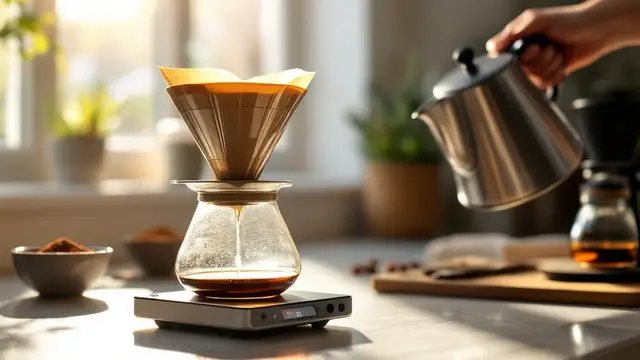 Coffee worldCoffee to Water Ratio: The Simple Secret to a Better CupA good coffee to water ratio for most brewing methods is 1:13 to 1:16 by weight, for example 15 g of coffee for 240 ml (8 fl oz) of water.
 Coffee worldWhich Country Drinks the Most Coffee? A Cheerful World Tour of the NumbersFinland drinks the most coffee per person, about 12 kg a year in StoneX's 2023 ranking, followed by Norway, Iceland and Denmark.
 Coffee makersThe Best Coffee Makers With a Built-In Grinder for Fresh-Ground MorningsThe best coffee maker with grinder for most people is the Breville Grind Control, which pairs an adjustable burr grinder with a programmable brewer and thermal carafe.
 Coffee makersThe Best French Press: Rich, Cozy Coffee With Less SludgeThe best French press for most coffee lovers is the Espro P7: its double micro-filter catches far more sediment than a standard mesh (brand claim), its insulated steel body keeps coffee hot, and an optional paper filter gives you a cleaner cup.