Latte vs Cappuccino: What's the Difference, and Which Will You Love?
We may earn a commission when you buy through links on this page, at no extra cost to you. It never changes what we recommend. How we make money
Short answer
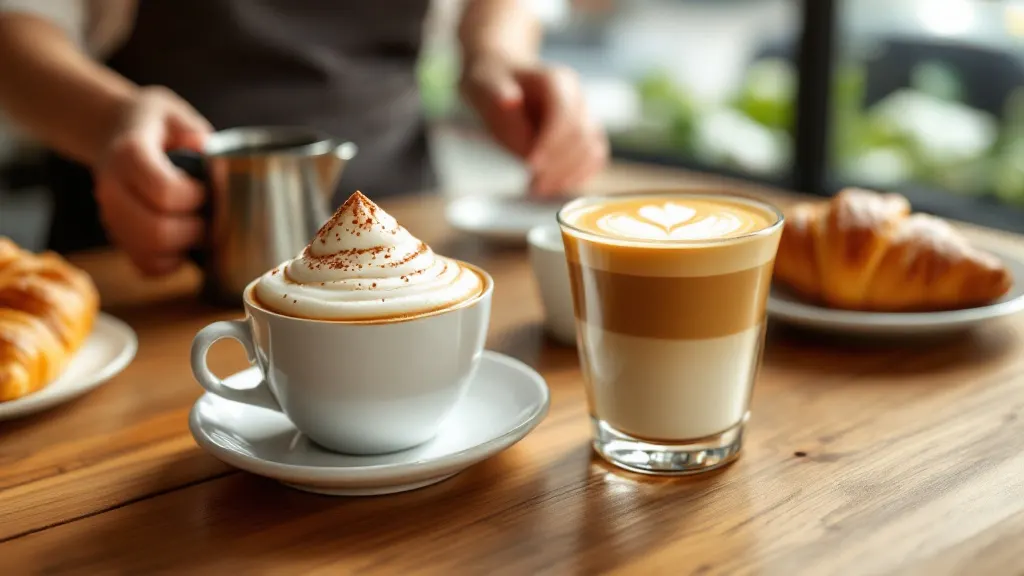
A cappuccino is a small drink of roughly equal parts espresso, steamed milk and thick foam, so it tastes stronger and airier. A latte is larger, with much more steamed milk and only a thin layer of microfoam, so it is milder and creamier. With the same number of shots, both have about the same caffeine.
Our top picks
- 1Best for latte art at homeBreville the Bambino PlusBreville lists an automatic milk texturing steam wand and fast ThermoJet heat-up in a compact body.See on brand site
- 2Best one-touch for both drinksDe'Longhi Magnifica Evo with LatteCrema (ECAM29084SB)The LatteCrema carafe makes one-touch cappuccino and latte, and a 13-setting burr grinder is built in.See on brand site
- 3Easiest milk cleanupPhilips 3200 Series LatteGo (EP3241/54)The two-part, tubeless LatteGo carafe is dishwasher safe according to Philips.See on brand site
- 4Best pod optionNespresso Lattissima OneOne-touch milk recipes from Original capsules with a 25-second heat-up.See on brand site
- 5Best budget frotherSubminimal NanoFoamer V2A low-cost handheld frother designed for pourable microfoam without a steam wand.See on brand site
Barista tip
Try the one-pitcher trick: steam enough milk for two drinks, pour a latte first while the milk is silky, then let the pitcher rest for 20 seconds. The foam rises and thickens, so the second pour gives you a cappuccino. One pitcher, two drinks, and a perfect excuse to share a coffee with someone you like.
Latte vs cappuccino comes down to milk and foam. Both start with espresso. A cappuccino is small and airy, with roughly equal parts espresso, steamed milk and foam, so it tastes stronger. A latte is bigger and creamier, with lots of steamed milk and only a thin layer of microfoam, so it tastes milder 1, 2. Below you will find the friendly ratios, the cousins (flat white, cortado, macchiato) and the home gear that makes both drinks easy.
How we chose the gear in this guide: we looked for machines and frothers that can make both silky latte milk and airy cappuccino foam, compared them on manufacturer specs and documented features, and leaned on brands with strong sales and support. We have not tested these products hands-on; every spec below comes from the maker's spec sheet.
Latte vs cappuccino: the quick comparison
| Cappuccino | Latte | Flat white | |
|---|---|---|---|
| Espresso : steamed milk : foam | about 1 : 1 : 1 1 | about 1 : 4 or more : thin layer 2, 3 | 1 double : about 2.5 : thin microfoam 4 |
| Typical size | 150 to 180 ml (5 to 6 fl oz) 1 | 230 to 280 ml (8 to 9.5 fl oz) 2, 3 | 175 to 200 ml (6 to 7 fl oz) 4 |
| Foam | thick, airy cap | fine microfoam, thin layer | glossy, very thin microfoam |
| Taste | stronger coffee, light and foamy | mild, creamy, smooth | strong coffee, velvety |
| Served in | small cup | large cup or glass | ceramic cup |
The ratios are friendly approximations. Every café pours a little differently, and that is part of the fun.
What is a cappuccino?
A cappuccino is espresso topped with steamed milk and a generous layer of milk foam, traditionally about one third each 1. In Italy, that means about 25 ml of espresso with the rest of the cup split evenly between milk and foam 1. The foam is what makes it feel light and cloud-like on your lips.
The name has a lovely backstory: it refers to the brown color of the Capuchin friars' robes 1. In Italy, cappuccino is a morning drink, often enjoyed with a pastry, and most people switch to espresso after lunch 1.
What is a latte?
A caffè latte is one or more shots of espresso with plenty of hot steamed milk and a thin layer of microfoam, very fine bubbles that make the milk glossy and pourable 2. It is much milkier than a cappuccino, so the coffee flavor is softer 2. Microfoam is also what baristas use to pour latte art hearts and tulips. A latte macchiato flips the order: milk first, then the espresso poured through it, often in a tall glass 2.
The real difference: milk texture
If both drinks use the same espresso, why do they taste so different? Texture. When you steam milk, you first let air in (stretching), then you swirl it (texturing).
- For a latte: stretch only briefly, then spin the milk into a smooth whirlpool. You want silky milk that looks like wet paint.
- For a cappuccino: stretch longer, so the milk grows more in volume and gets a thicker, drier foam on top.
Milk does not need to be scalding. One classic recipe heats milk for a macchiato to 60 to 66 °C (140 to 150 °F) 5, and that warm, sweet zone works beautifully for both drinks.
Caffeine: latte vs cappuccino
Here is a surprise for many people: a latte and a cappuccino usually contain the same caffeine, because they use the same espresso. Milk adds volume, not caffeine. Based on USDA data, a single 1 fl oz (about 30 ml) shot has roughly 63 mg of caffeine 6. So a one-shot cappuccino and a one-shot latte are about equal, and a double-shot latte has about twice that. For the bigger picture, see how much caffeine is too much.
Flat white vs latte
A flat white has more coffee relative to milk than a latte and only a thin, glossy layer of microfoam, which is where the "flat" comes from 4. It is also smaller, usually 175 to 200 ml, compared with a latte of about 225 ml or more 4. One account describes a double espresso (about 50 ml) with about 130 ml of steamed milk 4. Australia and New Zealand both claim to have invented it 4.
Choose a flat white if you love the velvet of a latte but want to taste more coffee. Choose a latte if you want something gentle and long to sip.
Cortado vs macchiato
These two are the small, bold members of the family.
- Macchiato means "stained" in Italian: a single espresso with just a spot of milk, usually foamed, about 5 to 10 g in the classic recipe 5.
- Cortado comes from Spain and means "cut": espresso with a roughly equal amount of warm milk that is not frothy 7.
So a cortado is smoother and milkier, while a macchiato stays almost pure espresso with a soft edge. For the whole menu in one place, visit our guide to types of coffee drinks.
How to make a latte and a cappuccino at home
- Pull a shot of espresso (or a double for a bigger drink). New to this? Our guide on how to make espresso has the full routine.
- Pour cold milk into a pitcher, about 150 ml for a cappuccino or 200 to 250 ml for a latte.
- Steam or froth: short stretch for a latte, longer stretch for a cappuccino.
- Tap and swirl the pitcher to pop big bubbles and keep the milk glossy.
- Pour: start with a thin stream from a little above the cup to blend the milk into the espresso, then lower the spout close to the surface to place foam. For a cappuccino, spoon or pour more foam on top.
Whole milk is the easiest to foam. Many plant milks labeled "barista" are designed to foam well too.
Best machines and frothers for lattes and cappuccinos
Breville the Bambino Plus
Breville the Bambino Plus
semi-automatic $$$
Best for: beginners wanting fast heat-up, small kitchens
What we like
- ThermoJet heating, fast start-up
- automatic milk texturing steam wand
- compact footprint
Keep in mind
- 54 mm portafilter limits accessory choice
- no built-in grinder
- boiler thermojet
- pump 15 bar Italian pump
- portafilter mm 54
- dimensions cm 30.2 x 18.8 x 36.3
On paper, this compact machine is made for milk lovers. Breville lists an automatic milk texturing steam wand, ThermoJet heating with fast start-up and a 15 bar pump 8. That means you can choose milk temperature and texture without learning manual steaming first. It has no grinder, so pair it with a good espresso grinder, and note the 54 mm portafilter limits accessory choice.
De'Longhi Magnifica Evo with LatteCrema
De'Longhi Magnifica Evo with LatteCrema (ECAM29084SB)
entry super-automatic with milk carafe $$$
Best for: first super-automatic, budget one-touch lattes
What we like
- LatteCrema carafe makes one-touch cappuccino/latte
- 13-setting conical burr grinder
- often discounted well below list (seen at $549.95)
Keep in mind
- only 7 one-touch drinks
- no Wi-Fi app control
- grinder conical burr, 13 settings
- milk system LatteCrema milk carafe (dairy and plant milks)
- drinks count 7
- bean hopper g 250
- water tank l 1.8
A bean-to-cup machine for people who want both drinks at the touch of a button. According to De'Longhi, the LatteCrema milk carafe makes one-touch cappuccino and latte with dairy or plant milks, and the built-in conical burr grinder has 13 settings 9. It offers 7 one-touch drinks and no app.
Philips 3200 Series LatteGo
Philips 3200 Series LatteGo (EP3241/54)
entry super-automatic with tubeless milk carafe $$$
Best for: easy milk-system cleaning, first super-automatic
What we like
- LatteGo has 2 parts and no tubes, dishwasher safe
- removable brew group
- AquaClean filter: up to 5,000 cups without descaling when 8 filters are replaced as prompted
Keep in mind
- only 5 beverages
- small 0.26 l milk carafe
- grinder 100% ceramic, 12 settings
- milk system LatteGo 2-part carafe, no tubes (0.26 l)
- drinks count 5
- bean hopper g 275
- water tank l 1.8
If cleaning milk tubes sounds like a chore, the LatteGo system is the selling point. Philips describes a two-part milk carafe with no tubes that is dishwasher safe, a ceramic grinder with 12 settings and a removable brew group 10. The milk carafe is small at 0.26 liters, so it suits one or two drinks at a time.
Nespresso Lattissima One
Nespresso Lattissima One
Original with one-touch milk (made by De'Longhi) $$$
Best for: one-touch cappuccino from pods
What we like
- one-touch milk drinks
- fast 25 s heat-up
Keep in mind
- milk jug is single-serve, refill each drink
- only 3 milk recipes
- system Original
- milk integrated single-serve milk jug, 3 one-touch recipes
- water tank l 1
- heat up s 25
- dimensions cm 15.4 x 32.4 x 25.6
The easiest route if you like pods. The Lattissima One uses Original capsules and an integrated single-serve milk jug with three one-touch milk recipes, and it heats up in about 25 seconds according to Nespresso 11. You refill the milk jug for each drink.
Subminimal NanoFoamer V2
Subminimal NanoFoamer V2
handheld microfoam frother $
Best for: latte art at home without a steam wand, small kitchens
What we like
- Microfoam screen aimed at pourable latte-art milk
- IPX4 splash resistant, about 104 g
- Cheap compared with jug frothers
Keep in mind
- Does not heat milk
- Performance depends on battery voltage; brand recommends lithium or Eneloop AA
- type handheld battery frother (2x AA)
- hot cold hot and cold (needs pre-heated milk for hot)
The budget hero for anyone with a moka pot, AeroPress or pod machine. This battery-powered handheld frother uses a fine screen designed for pourable microfoam, so you can practice latte art without a steam wand 12. It does not heat milk, so warm the milk first.
Side-by-side comparison
| Model | Breville the Bambino Plus | De'Longhi Magnifica Evo with LatteCrema (ECAM29084SB) | Philips 3200 Series LatteGo (EP3241/54) | Nespresso Lattissima One |
|---|---|---|---|---|
| Price | $$$ | $$$ | $$$ | $$$ |
| Type | semi-automatic | entry super-automatic with milk carafe | entry super-automatic with tubeless milk carafe | Original with one-touch milk (made by De'Longhi) |
| boiler | thermojet | – | – | – |
| pump | 15 bar Italian pump | – | – | – |
| portafilter mm | 54 | – | – | – |
| dimensions cm | 30.2 x 18.8 x 36.3 | 23.9 x 43.9 x 36.1 | 24.6 x 43.3 x 37.1 | 15.4 x 32.4 x 25.6 |
| grinder | – | conical burr, 13 settings | 100% ceramic, 12 settings | – |
| milk system | – | LatteCrema milk carafe (dairy and plant milks) | LatteGo 2-part carafe, no tubes (0.26 l) | – |
| drinks count | – | 7 | 5 | – |
| See on brand site | See on brand site | See on brand site | See on brand site |
Buying guide: what matters for milk drinks
- Milk system type. A manual steam wand gives the most control over texture, and an automatic wand like the Bambino Plus's takes the guesswork out 8. Milk carafes on super-automatics are push-button easy 9, 10.
- Cleaning. Milk systems need daily rinsing. Tubeless carafes and dishwasher-safe parts make that painless 10.
- Grinder. Fresh espresso needs fresh grounds. Bean-to-cup machines include one; standalone espresso machines need a separate espresso grinder.
- Drink volume. Small carafes and single-serve jugs suit one or two drinks; a household of latte lovers may want more capacity.
Want more options? Our full guide to the best latte machine goes deeper, and our best milk frother roundup covers budget add-ons.
Who should skip these machines
- If you only drink black coffee, a milk system is money you will not use. A drip coffee maker or espresso-only setup is better value.
- If you hate daily cleaning, avoid manual steam wands and look at tubeless or dishwasher-safe milk systems.
- If you drink one latte a week, a handheld frother plus a moka pot or pod machine is a cheaper, happy start.
Not sure yet? Try the free tool
Bean MatchPick the flavors you enjoy, your brewer and how your stomach handles coffee. Get your roast, origins and processing, plus beans and subscriptions to try.Price bands: $ under $100 · $$ $100–299 · $$$ $300–799 · $$$$ $800–1,999 · $$$$$ $2,000+. Prices change, so check the retailer.
Frequently asked questions
Which is stronger, a latte or a cappuccino?
A cappuccino tastes stronger because it has less milk: roughly equal parts espresso, steamed milk and foam in a 150 to 180 ml cup [1]. A latte dilutes the same espresso in much more milk, often 250 ml or more [2][3]. The caffeine is usually the same, though, since both use the same number of shots [6].
Does a latte or a cappuccino have more caffeine?
Neither, if they use the same number of espresso shots. Caffeine comes from the espresso, and milk only adds volume. Based on USDA data, a single 1 fl oz shot has roughly 63 mg of caffeine [6]. A double-shot latte has about twice the caffeine of a single-shot cappuccino, so ask how many shots your drink contains.
What is the difference between a flat white and a latte?
A flat white is smaller, around 175 to 200 ml, and has more coffee relative to milk, usually a double espresso with a thin, glossy layer of microfoam [4]. A latte is larger and milkier, around 225 ml or more [4]. If a latte tastes too milky to you, a flat white is the perfect next step.
What is the difference between a cortado and a macchiato?
A macchiato is a single espresso marked with just a spot of milk, usually foamed, about 5 to 10 g in the classic recipe [5]. A cortado, from Spain, is espresso with a roughly equal amount of warm milk that is not frothy [7]. The cortado is smoother and milkier; the macchiato is almost pure espresso.
Can you make a latte or cappuccino without an espresso machine?
Yes, with small compromises. Brew strong coffee in a moka pot or AeroPress, warm your milk, then froth it with a handheld or jug frother. Froth briefly for latte-style milk and longer for cappuccino foam. It will not be identical to café espresso, but it can be delicious and cheap to start.
Sources
We link to the original studies and official pages so you can check every claim.
- Wikipedia contributors (2026). Cappuccino. Wikipedia.
- Wikipedia contributors (2026). Latte. Wikipedia.
- Wikipedia contributors (2026). Espresso. Wikipedia.
- Wikipedia contributors (2026). Flat white. Wikipedia.
- Wikipedia contributors (2026). Caffè macchiato. Wikipedia.
- USDA Agricultural Research Service. Beverages, coffee, brewed, espresso, restaurant-prepared (FDC ID 171891, SR Legacy). USDA FoodData Central.
- Wikipedia contributors (2026). Cortado. Wikipedia.
- Breville (2026). the Bambino Plus (BES500) product page. Breville USA.
- De'Longhi (2026). Magnifica Evo with LatteCrema (ECAM29084SB) product page. De'Longhi USA.
- Philips (2026). Series 3200 fully automatic espresso machine EP3241/54. Philips USA.
- Nespresso (2026). Nespresso machine comparison (Lattissima One). Nespresso.
- Subminimal (2026). NanoFoamer V2 product page. Subminimal.

About the author
Petr Hess, Founder, chemical engineer. Petr Hess studied chemical engineering and loves exploring how substances act on the human body. Coffee is his favorite of them: he reads the studies on caffeine, enzymes and digestion, compares the spec sheets of machines and grinders, and brews more coffee than is strictly reasonable, so you can choose well and enjoy every cup. How we choose.
Keep reading
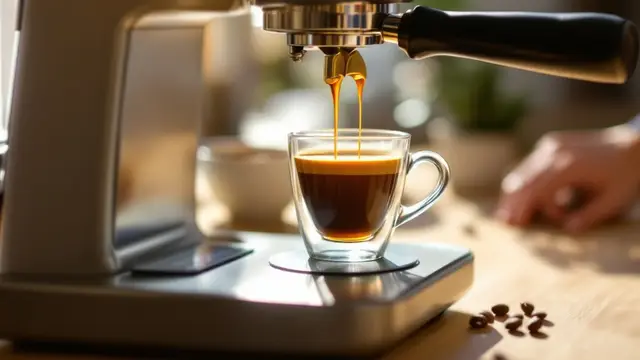 Coffee worldHow to Make Espresso at Home: A Calm, Step-by-Step GuideTo make espresso, grind fresh coffee fine (like table salt), tamp it evenly in the portafilter and brew with hot water under about 9 bar of pressure.
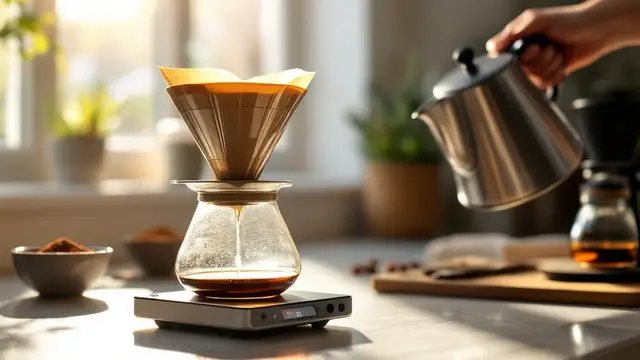 Coffee worldCoffee to Water Ratio: The Simple Secret to a Better CupA good coffee to water ratio for most brewing methods is 1:13 to 1:16 by weight, for example 15 g of coffee for 240 ml (8 fl oz) of water.
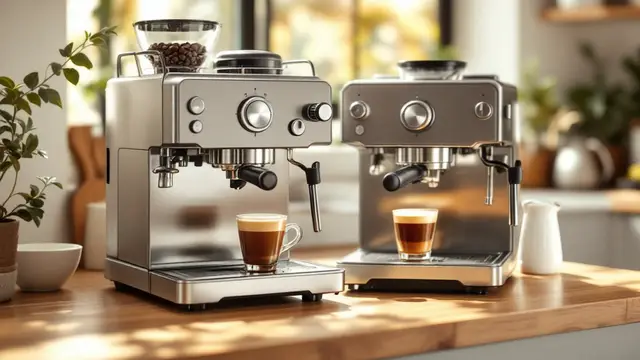 Espresso machinesBreville Barista Express vs Pro: The Friendly Classic or the Faster Upgrade?In the Breville Barista Express vs Pro choice, the Express is the better value: a 16-setting grinder, PID and thermocoil heating at a $699.95 list price that is often discounted.
 Coffee makersThe Best Single Serve Coffee Makers for One Perfect Cup at a TimeThe best single serve coffee maker for most people is the Nespresso Vertuo Pop+, which brews espresso and mug sizes in one touch with a 1.1 L tank.