Types of Coffee Drinks: A Friendly Guide to Every Cup on the Menu

Short answer
Most types of coffee drinks are espresso combined with water, milk or foam in different ratios: macchiato, cortado, flat white, cappuccino and latte go from strongest to milkiest. The other big families are brewed coffee (drip, pour-over, French press) and cold coffee such as cold brew and iced lattes.
Barista tip
Next time you make a milk drink at home, make two small versions side by side: one cortado (equal parts espresso and warm milk) and one cappuccino-style cup with more foam. Taste them back to back. You will discover in two sips whether you are a coffee-forward or a milk-forward person, and every café menu will make sense after that.
There are dozens of types of coffee drinks, but almost all of them grow from just a few roots: espresso, brewed coffee, cold brew, plus milk, water, foam or ice in different amounts. Once you see the pattern, any café menu becomes easy and fun to read, and you can make most of these drinks at home. Here is the friendly field guide, with simple ratios you can actually use.
Types of coffee drinks at a glance
Think of coffee drinks as a family tree:
- Espresso family: small, concentrated shots made by pushing hot water through finely ground coffee under pressure 1, 2. Everything from macchiato to latte starts here.
- Espresso plus water: americano and long black 3.
- Espresso plus milk: macchiato, cortado, flat white, cappuccino, latte and friends 4, 5, 6, 78.
- Brewed coffee family: drip, pour-over and French press, where coffee steeps or flows through water for minutes rather than seconds 9.
- Cold family: cold brew and iced espresso drinks 10.
Espresso drinks: the friendly ratio table
Café recipes vary from city to city, so read these as happy starting points, not laws. "Espresso" means one shot unless we say double.
| Drink | Espresso : steamed milk : foam | Typical size | How it tastes |
|---|---|---|---|
| Espresso | 1 : 0 : 0 (crema on top) | 25 to 30 ml 1 | Intense, syrupy, short |
| Ristretto | shorter shot, about half the water | about 20 ml 1 | Sweeter, thicker, even more concentrated |
| Lungo | longer shot, 2 to 3 times the water | about 60 ml 1 | Lighter body, more bitter edges |
| Macchiato | 1 : a splash : a spot of foam | 30 to 40 ml 1 | Espresso softened by a dab of milk |
| Cortado | 1 : 1 : little or none | small glass | Smooth, balanced, coffee-forward |
| Flat white | 1 double : about 2.5 : thin microfoam | 175 to 200 ml 6 | Velvety, strong coffee taste |
| Cappuccino | 1 : 1 : 1 (thirds) | 150 to 180 ml 1, 4 | Airy, foamy, medium strength |
| Latte | 1 : 4 or more : thin layer | 250 to 280 ml 1 | Creamy, mild, milky |
| Latte macchiato | milk first, shot poured in | about 250 ml 1 | Layered, mild, pretty in a glass |
| Americano | 1 : 3 to 4 parts hot water, no milk | 150 to 180 ml 1, 3 | Like strong black coffee |
The ratios for cortado, flat white and latte are our friendly approximations of the sources. The flat white figure comes from one account of a double espresso (about 50 ml) with about 130 ml of milk 6, and the latte ratio from a shot or two in a 250 to 280 ml drink 1, 5.
The espresso family
Espresso
The heart of it all. A classic certified Italian espresso uses about 7 g of ground coffee, water at about 88 °C (190 °F) and about 9 bar of pressure for roughly 25 seconds, giving about 25 ml in the cup 1. The golden-brown foam on top is the crema, an emulsion of coffee oils and gas released under pressure 1. Many modern baristas think in weight ratios instead: the National Coffee Association suggests 1 g of coffee to 2 g of espresso, in 20 to 30 seconds 2. Our step-by-step guide on how to make espresso walks you through it.
Doppio, ristretto and lungo
A doppio is simply a double shot, made with about 14 g of coffee 1. A ristretto uses about half the water of a normal shot, and a lungo two to three times as much 1. Same beans, three moods: ristretto is sweet and dense, lungo is longer and lighter.
Americano and long black
An americano is espresso topped up with hot water, usually 1 part espresso to 3 or 4 parts water 3. A long black uses the same ingredients in reverse order: the shot goes on top of the hot water, which helps keep the crema 3. A popular story says the americano was named after American soldiers in Italy who diluted espresso to taste more like home, although the Oxford English Dictionary traces the word to Central American Spanish instead 3.
Espresso drinks with milk
Macchiato
Macchiato means "stained" or "marked" in Italian. It is a single espresso with just a small amount of milk, usually foamed 8. One classic recipe uses only 5 to 10 g of milk, roughly 1 to 2 teaspoons 8. It has the highest coffee-to-milk ratio of the milk drinks, so the milk rounds off the edges without hiding the coffee.
Cortado and gibraltar
A cortado comes from Spain, and the name comes from cortar, "to cut." It is espresso with a roughly equal amount of warm milk that is not frothy 7. The gibraltar is a San Francisco cousin defined by its 135 ml glass: about 60 ml of double espresso with about 75 ml of steamed milk 7.
Flat white
Australia and New Zealand both claim this one 6. A flat white has more coffee relative to milk than a latte and only a thin, glossy layer of microfoam, which is where the "flat" comes from 6. It is usually served in a ceramic cup of about 175 to 200 ml 6.
Cappuccino
The classic thirds: espresso, steamed milk and milk foam in roughly equal parts 4. In Italy that means about 25 ml of espresso with the rest of the cup split between milk and foam, and a total of around 150 to 180 ml in Europe and the US 4. Fun fact: the name refers to the brown color of the Capuchin friars' robes 4. Italians traditionally drink cappuccino in the morning, often with a pastry, and switch to espresso after meals 4.
Latte
A caffè latte is one or more shots of espresso with plenty of steamed milk and a thin layer of microfoam, often served in a glass 5. It is much milkier than a cappuccino, so it tastes milder and creamier 5. Lattes are also the canvas for latte art. Still deciding between the two classics? Our latte vs cappuccino guide breaks it down.
Latte macchiato
The milk goes in first and the espresso is poured through it, leaving pretty layers in a tall glass 5. It is a latte "stained" by coffee rather than a coffee stained by milk 8.
Mocha
A caffè mocha adds chocolate to the espresso-and-milk family 1. Recipes range from a spoon of cocoa to rich chocolate sauce, often crowned with whipped cream. Think of it as dessert and coffee holding hands.
Affogato and con panna
Espresso con panna is a shot topped with whipped cream 1, and an affogato is a scoop of vanilla ice cream "drowned" in a hot shot of espresso. Both are small, joyful treats.
Types of coffee beyond espresso
Drip coffee
The everyday hero in many homes. A drip machine showers hot water over medium-ground coffee and lets it flow through a filter, with about five minutes of contact 9. The National Coffee Association's "golden ratio" is 1 to 2 tablespoons of ground coffee per 6 ounces (about 180 ml) of water 9. Our best drip coffee maker guide helps you choose one.
Pour-over
Pour-over is drip coffee made by hand: you pour hot water in slow circles over coffee in a cone. It rewards a bit of attention with a clean, bright cup. Find ratios and timings in our coffee to water ratio guide.
French press
Coarse coffee steeps in hot water for a few minutes, then a metal mesh plunger separates the grounds. The result is full-bodied and rich, with a little sediment at the bottom.
Moka pot
The stovetop classic from Italy pushes steam-pressured water up through the coffee. It makes a strong, espresso-like coffee without an espresso machine, though at far lower pressure than real espresso. See our best moka pot picks.
Cold brew and iced coffee
Cold brew steeps coarse coffee in cold water for a long time, usually around 12 hours, at a strong ratio of about 1 part coffee to 4 or 5 parts water, then gets diluted with water or poured over ice 10. Iced coffee and iced lattes, by contrast, are hot-brewed and then chilled or poured over ice.
Instant coffee
Brewed coffee that has been dried into granules or powder. Just add hot water. It is quick, practical and hugely popular in many countries.
How much caffeine is in each drink?
Caffeine depends on beans, dose and size, so treat these as ballpark figures. Based on USDA data, a single 1 fl oz (about 30 ml) espresso shot contains roughly 63 mg of caffeine, and an 8 fl oz (about 240 ml) cup of brewed coffee roughly 95 mg 11, 12. That means a latte or cappuccino has about the caffeine of the shots inside it: one shot, about one small espresso's worth; a double, about twice that. Milk adds creaminess, not caffeine. For daily limits, see how much caffeine is too much.
Which coffee drink should you try next?
- You love bold coffee flavor: espresso, ristretto, macchiato or cortado.
- You like coffee and milk in balance: flat white or cappuccino.
- You want creamy and gentle: latte or latte macchiato.
- You want a big black mug: americano, drip or pour-over.
- It is a hot day: cold brew or an iced latte.
If you want to make espresso drinks at home, the machine matters more than anything else. Our Machine Matchmaker asks a few quick questions about the drinks you love and your budget, then suggests the best type of machine.
And because every drink starts with the beans, find a coffee that matches your taste in a minute.
Frequently asked questions
What are the main types of coffee drinks?
Most café drinks fall into a few families. Espresso drinks (espresso, ristretto, lungo, doppio), espresso with water (americano, long black), espresso with milk (macchiato, cortado, flat white, cappuccino, latte, mocha), brewed coffee (drip, pour-over, French press, moka pot) and cold coffee (cold brew and iced drinks) [1][3][9][10]. Instant coffee is its own handy category.
What is the strongest coffee drink?
In flavor, a ristretto or espresso is the most concentrated, because there is so little water and no milk [1]. In total caffeine, size matters more: an 8 fl oz cup of brewed coffee has roughly 95 mg, while a single 1 fl oz espresso has roughly 63 mg, based on USDA data [11][12]. A double shot or a big mug of drip coffee wins on caffeine.
What is the difference between a macchiato and a cortado?
A macchiato is espresso with just a spot of milk, usually foamed, around 5 to 10 g of milk in the classic version [8]. A cortado is espresso with a roughly equal amount of warm milk that is not frothy [7]. So a cortado is milkier and smoother, while a macchiato stays almost pure espresso.
Which coffee drink has the most milk?
The latte and latte macchiato. A café latte is typically 250 to 280 ml, mostly steamed milk with one or two shots of espresso and a thin layer of microfoam [1][5]. A cappuccino is smaller, at about 150 to 180 ml, with roughly equal parts espresso, milk and foam [4].
What coffee drink is best for beginners?
A latte is the gentlest start, because plenty of steamed milk softens the coffee's bitterness [5]. If you prefer black coffee, an americano or a cup of drip coffee is mild and familiar [3][9]. From there, try a flat white or cappuccino to taste more coffee, and a cortado or macchiato when you want it bolder.
Sources
We link to the original studies and official pages so you can check every claim.
- Wikipedia contributors (2026). Espresso. Wikipedia.
- National Coffee Association USA (2026). Espresso - About Coffee. About Coffee (NCA).
- Wikipedia contributors (2026). Caffè Americano. Wikipedia.
- Wikipedia contributors (2026). Cappuccino. Wikipedia.
- Wikipedia contributors (2026). Latte. Wikipedia.
- Wikipedia contributors (2026). Flat white. Wikipedia.
- Wikipedia contributors (2026). Cortado. Wikipedia.
- Wikipedia contributors (2026). Caffè macchiato. Wikipedia.
- National Coffee Association USA (2026). Drip coffee - About Coffee. About Coffee (NCA).
- National Coffee Association USA (2026). Cold brew coffee - About Coffee. About Coffee (NCA).
- USDA Agricultural Research Service. Beverages, coffee, brewed, espresso, restaurant-prepared (FDC ID 171891, SR Legacy). USDA FoodData Central.
- USDA Agricultural Research Service. Beverages, coffee, brewed, prepared with tap water (FDC ID 171890, SR Legacy). USDA FoodData Central.
About the author
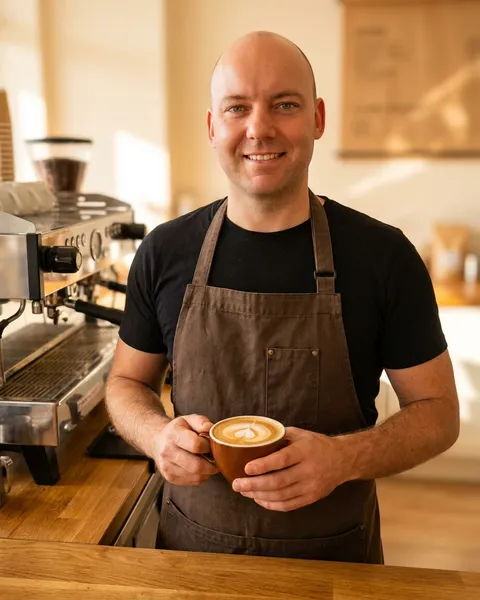
Petr Hess, Founder, chemical engineer. Petr Hess studied chemical engineering and loves exploring how substances act on the human body. Coffee is his favorite of them: he reads the studies on caffeine, enzymes and digestion, compares the spec sheets of machines and grinders, and brews more coffee than is strictly reasonable, so you can choose well and enjoy every cup. How we choose.
Keep reading
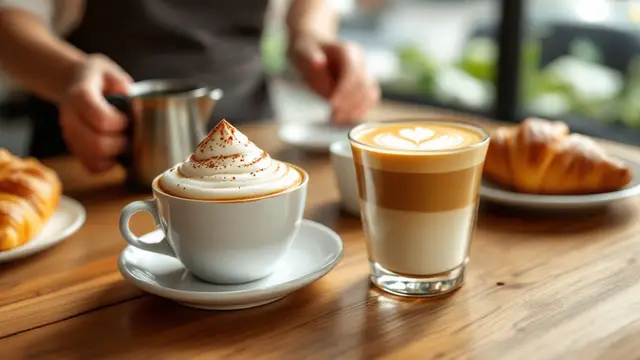 Coffee worldLatte vs Cappuccino: What's the Difference, and Which Will You Love?A cappuccino is a small drink of roughly equal parts espresso, steamed milk and thick foam, so it tastes stronger and airier.
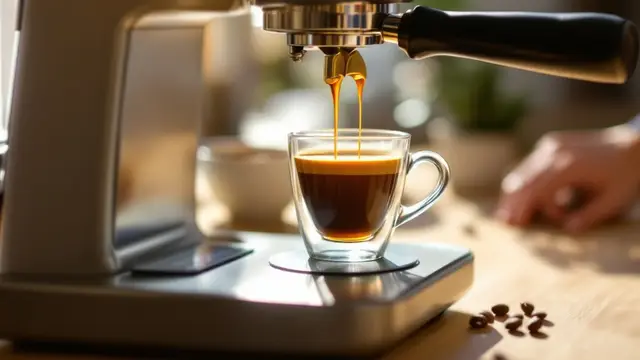 Coffee worldHow to Make Espresso at Home: A Calm, Step-by-Step GuideTo make espresso, grind fresh coffee fine (like table salt), tamp it evenly in the portafilter and brew with hot water under about 9 bar of pressure.
 Espresso machinesThe Best Latte Machines for Silky, Café-Style Milk Drinks at HomeThe best latte machine for most people is the De'Longhi Magnifica Evo with LatteCrema, which grinds beans and pours one-touch lattes and cappuccinos from a milk carafe.
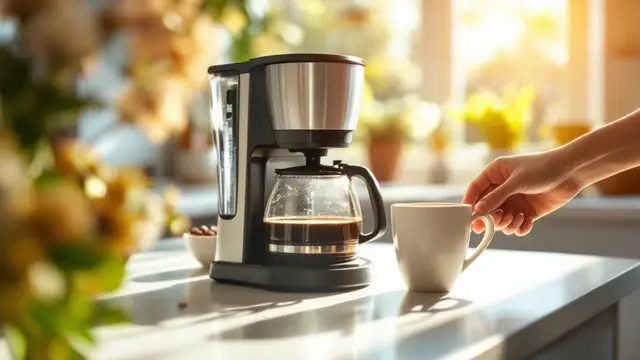 Coffee makersThe Best Drip Coffee Makers for Bright, Easy MorningsThe best drip coffee maker for most people is the Technivorm Moccamaster KBGV Select, a fast, simple brewer with a 5-year warranty.