The Best Coffee Scale: Small Grams, Big Flavor, Happier Mornings
We may earn a commission when you buy through links on this page, at no extra cost to you. It never changes what we recommend. How we make money
Short answer
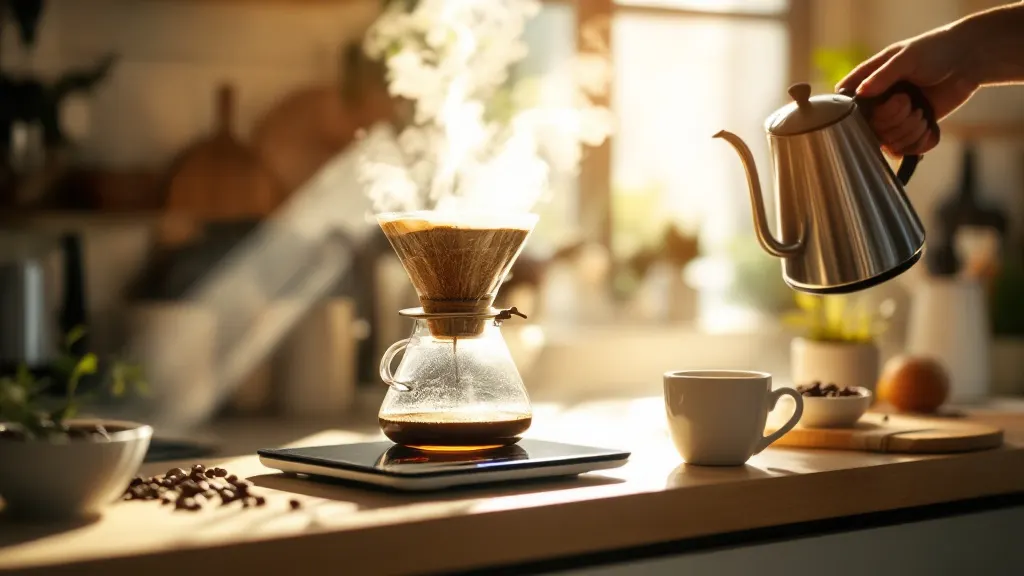
The best coffee scale for most pour over brewers is the Acaia Pearl: it reads to 0.1 g up to 2 kg, has a built-in timer, five modes including auto-start, and charges by USB-C. Espresso fans should look at the compact Acaia Lunar, which fits on a drip tray, while the Hario V60 Drip Scale and Greater Goods Premium Coffee Scale are affordable first scales with timers.
Our top picks
- 1Best coffee scale overallAcaia PearlFive brewing modes, a built-in timer, 0.1 g resolution and USB-C charging make pour over almost effortless to repeat.See on brand site
- 2Best coffee scale for espressoAcaia LunarA compact, water-resistant aluminum scale made to sit on a drip tray and time your shots.See on brand site
- 3Best first scale for pour overHario V60 Drip ScaleA slim timer scale from the makers of the V60 that covers everything a beginner needs.See on brand site
- 4Best budget coffee scaleGreater Goods Premium Coffee ScaleA 3 kg capacity with 0.1 g resolution and both count-up and countdown timers for very little money.See on brand site
Barista tip
Put your mug or carafe on the scale, press tare, then add coffee and write down the number. Tare again and pour your water while the timer runs. Once you find a cup you love, note the coffee weight, water weight and time on a sticky note inside a cupboard door. Tomorrow you can make that exact cup again, half asleep, with a smile.
How we chose
We compared coffee scales on their makers' published specs and manuals, the details in our product catalog and the features coffee brewers rely on: capacity, resolution, timer, battery and size. We did not test these scales hands-on for this guide, and we list only specs that the makers or our catalog document. Where a spec is unconfirmed, we say so.
Why a coffee scale is the cheapest big upgrade
A coffee scale sounds fussy until you use one. Then it feels like magic. Coffee scoops vary a lot, because beans differ in size and density and a light roast takes up less space than a dark roast of the same weight. Weighing your coffee and water takes that guesswork away, so a cup you loved on Monday tastes the same on Friday.
Most coffee is made at home: in a 2026 US survey, 82% of past-day coffee drinkers made coffee at home 1. That is a lot of cups to make a little more delicious. A scale also helps you understand strength. Lab tests of specialty coffees found that caffeine per cup varied widely, from 58 to 259 mg, and even the same drink varied from day to day 2. A scale will not measure caffeine, but brewing the same dose every day takes one big variable out of your routine.
A good place to start is a ratio of about 1 g of coffee to 16 g of water for pour over and drip, and about 1:2 for espresso (for example, 18 g of coffee in, 36 g of espresso out). Our coffee to water ratio guide has a full chart and calculator.
Our picks for the best coffee scale
Acaia Pearl: best coffee scale overall
The Pearl is a favorite on pour over bars for good reason. According to Acaia's manual, it weighs up to 2,000 g (about 4.4 lb) in 0.1 g steps, has a built-in timer and offers five modes: Weighing, Dual Display, Pour Over Auto-Start, Portafilter and Beverage 3, 4. Auto-start begins the timer when you start pouring, which is wonderful when you are juggling a kettle in one hand.
The Pearl has a rechargeable lithium-ion battery that Acaia rates at 30 to 40 hours, charges over USB-C, and connects to Acaia's app over Bluetooth if you like logging recipes 4. Its footprint is 16 x 16 x 3.2 cm (about 6.3 x 6.3 x 1.3 in), roomy enough for a Chemex or a big carafe.
The downsides: it is too large for most espresso drip trays, and it costs a lot more than a basic scale. If you mostly brew pour over, the extra joy is easy to justify.
Acaia Pearl
pour-over smart scale $$
Best for: pour-over, app logging
What we like
- Five modes incl. auto-start
- Rechargeable via USB-C
- Bluetooth app support
Keep in mind
- Too large for most drip trays
- Pricey vs basic scales
- max g 2000
- resolution g 0.1
- timer ✓
- battery Li-ion 1100 mAh, USB-C, 30-40 h
- dimensions cm 16 x 16 x 3.2
Acaia Lunar: best coffee scale for espresso
The Lunar is built for the espresso machine. It is compact enough to sit on many drip trays, made of water-resistant anodized aluminum, and, like the Pearl, weighs up to 2,000 g in 0.1 g steps with a built-in timer 5, 6. Acaia lists a 0.01 g high-resolution option for very fine dosing and rates the lithium-ion battery at 30 to 40 hours 6. Acaia states that its warranty covers water damage, which is a comforting detail for a scale that lives under dripping portafilters 5.
We could not confirm an IP rating or the current US list price, so check both before you buy. The 2 kg limit also rules it out for large carafes. If you pull shots every morning and want to weigh the output while the timer runs, the Lunar is the dream tool. Pair it with one of the machines in our best espresso machine for home guide.
Acaia Lunar
espresso smart scale $$
Best for: espresso on the drip tray
What we like
- Compact for drip trays
- 0.01 g high-resolution option
- Warranty covers water damage (maker claim)
Keep in mind
- Expensive for a scale
- 2 kg max limits large carafes
- max g 2000
- resolution g 0.1
- timer ✓
- battery Li-ion 1100 mAh, 30-40 h
- water resistance water-resistant anodized aluminum (no IP rating found)
Hario V60 Drip Scale: best first scale for pour over
Hario makes the V60 dripper, so it is no surprise its drip scale is designed for the same ritual. Hario lists the model as VSTN-2000B with an integrated timer and a slim body of about 12 x 19 x 2.9 cm (4.7 x 7.5 x 1.1 in) 7. The slim shape fits neatly beside a kettle and slides into a drawer.
Some specs are not confirmed on Hario's official page. Retailer listings describe 2 kg capacity, 0.1 g readings up to 200 g with coarser steps above that, and two AAA batteries, so treat those as unverified and check the listing you buy from. For a first coffee scale that makes your V60 mornings more consistent, it is a friendly, low-cost start. See our best pour over coffee maker guide for drippers to pair it with.
Hario V60 Drip Scale
pour-over scale with timer $
Best for: first scale for V60 brewers
What we like
- Integrated timer
- Slim footprint
Keep in mind
- Uses AAA batteries
- Resolution coarser at higher weights
- max g 2000
- resolution g 0.1 to 200 g; coarser above (retailer)
- timer ✓
- battery 2x AAA
- dimensions cm 12 x 19 x 2.9
Greater Goods Premium Coffee Scale: best budget coffee scale
Greater Goods lists its Premium Coffee Scale with a 3,000 g (about 6.6 lb) capacity, 0.1 g resolution and a timer that counts both up and down 8. That higher capacity is useful if you brew big batches in a large carafe, or if you also want a kitchen scale for baking.
There is no app and no flow-rate display, and we could not confirm the battery type, so check before ordering. For a simple, low-cost scale that does the essential job, it is a cheerful choice.
You may also see the Timemore Black Mirror Basic 2 recommended in many roundups. We could not verify its specs from the maker for this guide, so we left it out of our picks for now.
Coffee scale comparison
| Model | Acaia Pearl | Acaia Lunar | Hario V60 Drip Scale | Greater Goods Premium Coffee Scale |
|---|---|---|---|---|
| Price | $$ | $$ | $ | $ |
| Type | pour-over smart scale | espresso smart scale | pour-over scale with timer | budget coffee scale with timer |
| max g | 2000 | 2000 | 2000 | 3000 |
| resolution g | 0.1 | 0.1 | 0.1 to 200 g; coarser above (retailer) | 0.1 |
| timer | ✓ | ✓ | ✓ | count-up and countdown |
| battery | Li-ion 1100 mAh, USB-C, 30-40 h | Li-ion 1100 mAh, 30-40 h | 2x AAA | – |
| dimensions cm | 16 x 16 x 3.2 | – | 12 x 19 x 2.9 | – |
| bluetooth | ✓ | ✓ | – | – |
| water resistance | – | water-resistant anodized aluminum (no IP rating found) | – | – |
| See on brand site | See on brand site | See on brand site | See on brand site |
Coffee scale buying guide: what specs matter
Resolution: 0.1 g is the sweet spot
A coffee scale should read in 0.1 g steps. For pour over, the difference between 15.0 and 15.4 g of coffee is noticeable over time. For espresso, it matters even more because the doses are small. Kitchen scales that read in 1 g steps are fine for water but too coarse for beans.
Capacity
Most coffee scales top out at 2 kg (4.4 lb). That covers a pour over dripper, a mug and the water. A heavy glass carafe plus a big batch can get close to the limit, so pick a 3 kg scale if you brew for a crowd.
Built-in timer
A timer on the display is the second most useful feature after the weight. It lets you track bloom time, total brew time and espresso shot time without a phone. Auto-start timers, like the Pearl's, begin when you start pouring.
Size and drip-tray fit
For espresso, measure your drip tray before buying. A large pour over scale will not fit under most home espresso machines. Compact scales like the Lunar are made for that tight space.
Power and battery
Rechargeable scales (USB-C) save you from hunting for batteries. Battery-powered scales are cheaper and easy to replace. Either is fine, as long as the scale does not switch itself off mid-brew. Look for an auto-off setting you can extend or disable.
Water resistance
Coffee is wet work. Splash resistance or a sealed design helps, especially for espresso. Few budget scales publish an IP rating, so wipe them dry after use.
App and Bluetooth
Apps can log recipes and show flow rate, which is fun for tinkerers. They are not necessary to make great coffee. Treat them as a bonus.
How to use a coffee scale for pour over
- Place your dripper and mug or carafe on the scale.
- Rinse the paper filter, discard the water, then tare.
- Add 15 g of ground coffee for a mug of about 250 ml (8.5 fl oz).
- Tare again, start the timer and pour about 45 g of water to bloom.
- After 30 to 45 seconds, pour slowly in circles to 250 g.
- Aim to finish draining around 2:30 to 3:30, then adjust grind finer or coarser by taste.
Grind size matters as much as weight. Our coffee grind size chart shows where to start for every brewer, and a good grinder makes the biggest difference of all.
How to use a coffee scale for espresso
- Place the empty portafilter (or dosing cup) on the scale and tare.
- Grind and weigh your dose, for example 18 g.
- Distribute and tamp, lock in the portafilter, then set your cup on the scale and tare.
- Start the shot and the timer together.
- Stop at about double the dose in the cup (36 g for an 18 g dose), usually somewhere around 25 to 35 seconds.
- Taste. Sour and thin means grind finer; bitter and harsh means grind coarser.
Changing one thing at a time is the secret, and the scale is what makes that possible. Our guide on how to make espresso walks through dialing in step by step.
Who should skip a coffee scale
- Pod and capsule users. The dose is fixed inside the capsule, so a scale adds nothing.
- Super-automatic machine owners. The machine grinds and doses for you.
- Anyone happy with a scoop. If your coffee already tastes great and consistency is not a goal, enjoy your routine.
For everyone else, a coffee scale is one of the smallest purchases that makes the biggest difference. It is also a lovely centerpiece for a home coffee bar, alongside a gooseneck kettle.
Not sure yet? Try the free tool
Machine MatchmakerAnswer 6 quick questions and get the machine type and models that fit your drinks, budget and patience, with a 3-year cost-per-cup comparison.Price bands: $ under $100 · $$ $100–299 · $$$ $300–799 · $$$$ $800–1,999 · $$$$$ $2,000+. Prices change, so check the retailer.
Frequently asked questions
Do I really need a coffee scale?
You can make good coffee with a scoop, but a scale makes it repeatable. Scoops hold different weights depending on bean size, roast and grind, so the same scoop can give a weaker or stronger cup from day to day. A scale lets you lock in a ratio you like, change one thing at a time and get the same delicious cup every morning.
Can I use a kitchen scale for coffee?
Yes, for water and large batches. Most kitchen scales read in 1 g steps, which is too coarse for small doses like 15 g of coffee for pour over or 18 g for espresso. They also usually lack a timer. If you already own a kitchen scale, try it first, and upgrade to a 0.1 g coffee scale when you want more precision.
What is the best coffee scale for espresso?
Look for a compact scale that fits on your drip tray, reads in 0.1 g steps, has a fast response and a built-in timer, and can handle a few splashes. The Acaia Lunar is designed for exactly this. Measure your drip tray before you buy, because larger pour over scales will not fit under most home espresso machines.
What ratio of coffee to water should I weigh?
For pour over and drip, about 1:16 is a good start, such as 15 g of coffee to 240 to 250 g of water. Go toward 1:15 for a stronger cup or 1:17 for a lighter one. For espresso, many people start around 1:2, for example 18 g of coffee to 36 g of espresso in the cup.
Why does my coffee scale turn off during brewing?
Many scales switch off automatically after a few minutes without a change in weight, to save battery. During a slow bloom or a cold brew setup, that can happen mid-brew. Check the manual for an option to extend or disable auto-off. Rechargeable scales often let you change this setting more easily.
Sources
We link to the original studies and official pages so you can check every claim.
- National Coffee Association USA (2026). Coffee tops Americans' beverage choices (National Coffee Data Trends, Spring 2026). NCA newsroom.
- McCusker RR, Goldberger BA, Cone EJ (2003). Caffeine content of specialty coffees. J Anal Toxicol.
- Acaia (2026). Pearl. Official product page.
- Acaia (2023). Pearl (2021) user manual. Official manual (PDF).
- Acaia (2026). Lunar. Official product page.
- Acaia (2026). Lunar (2021) user manual. Official manual (PDF).
- Hario (2026). V60 Drip Scale (VSTN). Official product page.
- Greater Goods (2026). Premium Coffee Scale (0592). Official product page.

About the author
Petr Hess, Founder, chemical engineer. Petr Hess studied chemical engineering and loves exploring how substances act on the human body. Coffee is his favorite of them: he reads the studies on caffeine, enzymes and digestion, compares the spec sheets of machines and grinders, and brews more coffee than is strictly reasonable, so you can choose well and enjoy every cup. How we choose.
Keep reading
 Accessories & giftsThe Best Gooseneck Kettle: Slow Pours, Sweet Cups, Calm MorningsThe best gooseneck kettle for most pour over brewers is the Fellow Stagg EKG Pro: it sets temperature from 104 to 212 °F in 0.5 °F steps, holds heat for up to 60 minutes and can schedule your morning water.
 Accessories & giftsHome Coffee Bar Ideas: Build a Little Corner That Makes Every Morning BetterA great home coffee bar starts with the drink you make most, then groups everything for it within one arm's reach: brewer, grinder, scale, kettle or frother, cups and beans.
 Accessories & giftsGifts for Coffee Lovers: Thoughtful Ideas That Brighten Every MorningThe best gifts for coffee lovers are things they will use every morning: a coffee subscription like Atlas Coffee Club for exploring new origins, an AeroPress Go for travelers, a Fellow Stagg EKG Pro kettle for pour over fans, or a burr grinder such as the Baratza Encore for anyone still using pre-ground coffee.
 Espresso machinesThe Best Espresso Machine for Beginners: Friendly Machines for Your First Great ShotThe best espresso machine for beginners is the Breville Bambino Plus: it heats up fast, is compact and has an automatic milk wand that makes silky lattes easy.