The Best Portable Espresso Maker: Great Shots Wherever the Day Takes You
We may earn a commission when you buy through links on this page, at no extra cost to you. It never changes what we recommend. How we make money
Short answer
The best portable espresso maker is the Wacaco Picopresso: it weighs about 350 g, holds an 18 g dose and builds up to 18 bar by hand for real espresso on the go. For simpler, lighter travel coffee choose the AeroPress Go, and for cabins and camper vans the Cafelat Robot lever.
Our top picks
- 1Best portable espresso maker overallWacaco PicopressoUp to 18 bar by hand with an 18 g basket in a 350 g body.See on brand site
- 2Best travel coffee pressAeroPress Go Travel Coffee PressPacks into its own mug, nearly unbreakable and very forgiving.See on brand site
- 3Best manual lever for cabins and vansCafelat RobotReal espresso with 58 mm baskets and a pressure gauge, no electricity needed.See on brand site
- 4Best for camp stovesBialetti Brikka 2 CupA moka pot with a pressure valve that builds crema on gas and camping stoves.See on brand site
- 5Best travel grinder companion1Zpresso Q2 SUnder 500 g with tool-free disassembly that keeps calibration.See on brand site
Barista tip
Pack a small insulated flask and fill it with just-boiled water before you leave. When it is coffee time, pour a splash through your portable brewer first to warm it up, tip that out, then brew. A warm brewer keeps the water hot during extraction, so your travel shot tastes sweet and round instead of thin.
How we chose
We compared portable brewers on their makers' published specs, the data in our product catalog and what owners consistently report about packing, cleaning and using them away from home. We did not test these brewers hands-on for this guide. We weighed four things: real espresso pressure or not, weight and packed size, what else you need to bring (hot water, a grinder) and how much fun it is to use in a hotel room, a campsite or a train.
What makes the best portable espresso maker
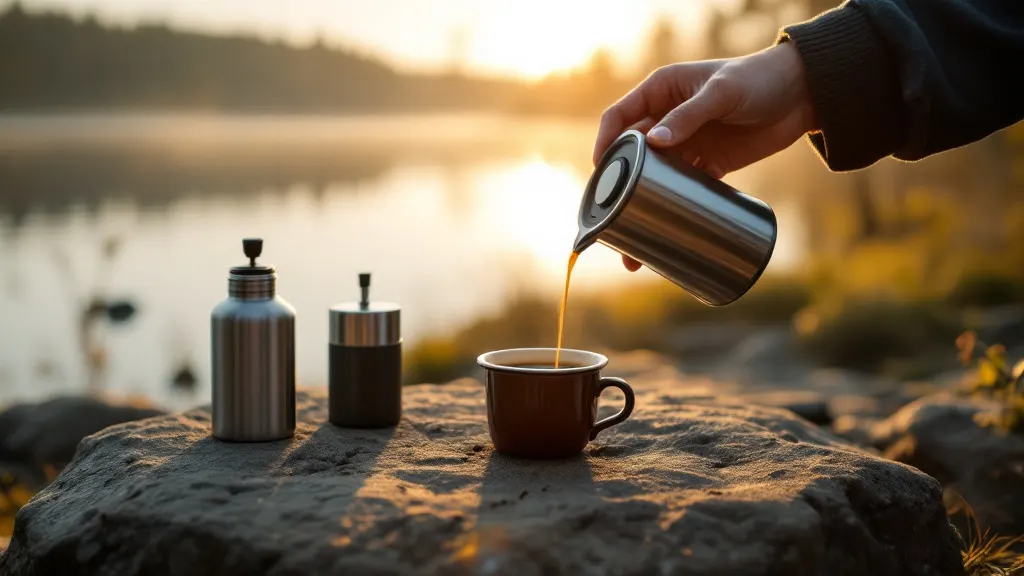
The joy of a portable espresso maker is a proper little coffee wherever the day takes you: a sunrise shot by a lake, a smooth cup before a long meeting in a hotel. But "portable espresso machine" covers very different tools, so it helps to know the three families.
- Hand-pump espresso makers like the Wacaco Picopresso build pressure by hand and can reach true espresso pressure without electricity 1.
- Manual lever presses like the Cafelat Robot use your arms and a lever on a sturdy frame. They are travel-friendly for a cabin or a camper van, less so for a backpack 2.
- Espresso-style brewers like the AeroPress Go and the Bialetti Brikka make strong, concentrated coffee. They are simpler and more forgiving, though they do not reach espresso pressure 3, 4.
The Picopresso and Robot need separately heated water and an espresso grind. The AeroPress works with a medium to medium-fine grind, while the Brikka heats water on a stove and uses a moka grind. That second part is where many travel setups stumble, so we include a compact grinder at the end.
Our picks for a portable espresso machine
Wacaco Picopresso: best portable espresso maker overall
The Picopresso is the one that gets closest to cafe espresso in a pocket-sized package. Wacaco lists a hand pump that reaches up to 18 bar, a 52 mm basket that holds about 18 g of coffee, a weight of about 350 g (12 oz) and a body of roughly 11 x 8 x 7 cm (4.2 x 3.1 x 2.8 in) 1. That 18 g basket matters: it is close to a standard home double shot, so the coffee tastes rich and full.
It asks a little of you. You need hot water from a kettle or flask and a grinder that can go fine enough for espresso, and it makes one shot at a time. For espresso lovers who travel, that is a happy trade.
Wacaco Picopresso
portable $$
Best for: travel, camping
What we like
- 52 mm basket for about 18 g
- 350 g, pocketable
- up to 18 bar hand pump
Keep in mind
- needs hot water and a fine grinder
- single shot at a time
- boiler manual (no heating)
- pump hand pump, up to 18 bar
- portafilter mm 52
- water tank l 0.08
- dimensions cm 10.6 x 7.8 x 7.1
AeroPress Go: best travel coffee press
The AeroPress Go is the cheerful, nearly unbreakable travel brewer. It packs inside its own 15 oz mug with a lid, uses the same immersion-plus-plunger method as the original AeroPress and brews about 8 oz in one go 3. AeroPress lists a fast brew of about one to two minutes for the original, and recipes range from smooth filter-style cups to concentrated, espresso-style shots 5.
It is honest about its limits: it does not reach espresso pressure, so you won't get thick crema. In return it is light, forgiving and easy to clean, and it brews well with a medium grind. Because it uses a paper filter, it also holds back most of the coffee oils (cafestol and kahweol) that raise LDL cholesterol in unfiltered brews 6.
AeroPress Go Travel Coffee Press
immersion/pressure press, travel $
Best for: travel and camping, one-cup brewing
What we like
- Packs inside its own 15 oz mug with lid
- Same brewing method as the Original
- Durable plastic for packing
Keep in mind
- Smaller 8 oz chamber than the Original
- Still needs hot water and ground coffee on the go
- type immersion + plunger pressure
- capacity 8 oz brew (1 cup); 15 oz mug included
- material BPA-free plastic
- filter AeroPress micro-filter paper
Cafelat Robot: best manual lever for cabins and camper vans
The Robot is a joyful piece of design that makes real espresso with nothing but hot water and your hands. Cafelat lists 58 mm baskets, a pressure gauge that reads from inside the basket and a plastic-free aluminum and stainless build weighing about 2.8 kg (6.2 lb) 2. No electricity is needed at all.
It is heavy for a backpack, which is why we call it the best for road trips, cabins and camper vans. There is no steam, so milk drinks need a separate frother.
Cafelat Robot
manual lever $$$
Best for: no-electricity espresso, simple, durable setup
What we like
- 58 mm baskets
- pressure gauge reading from inside the basket
- plastic-free aluminium and stainless build
Keep in mind
- needs a kettle and espresso-capable grinder
- no steam
- boiler manual (no heating)
- pump manual lever
- portafilter mm 58
- weight kg 2.8
Bialetti Brikka 2 Cup: best for camp stoves
The Brikka is a moka pot with a twist. Bialetti lists a patented pressure valve that builds crema, unlike a standard moka pot, and says it works on gas, electric and camping stoves 4. It makes two small, strong cups (about 3.3 oz) in one go and needs no paper filters.
It is not true espresso, and induction hobs need a separate adapter plate. For a camp-stove breakfast with friends, though, it brings proper Italian cheer.
Bialetti Brikka 2 Cup
stovetop moka pot with pressure valve $
Best for: moka coffee with crema, one or two small strong cups
What we like
- Patented pressure valve builds crema, unlike a standard moka pot
- Works on gas, electric and camping stoves
Keep in mind
- Induction needs separate adapter plate
- Not dishwasher safe; small fixed batch size
- type stovetop moka pot with pressure valve
- capacity 2 espresso cups (about 3.3 oz)
- material aluminum
- filter built-in metal funnel filter
1Zpresso Q2 S: best travel grinder to pair with any of them
Fresh grinding makes the biggest difference to portable coffee. The 1Zpresso Q2 S weighs about 465 g (16 oz), holds 15 to 20 g of beans and comes apart without tools while keeping its calibration 7. Its 30 clicks per rotation suit AeroPress and moka brewing best. The steps are on the coarse side for espresso, so if the Picopresso is your main brewer, look at an espresso-tuned hand grinder in our manual grinder guide.
1Zpresso Q2 S
conical burr, compact $
Best for: travel, single cups of filter
What we like
- under 500 g, very portable
- tool-free disassembly keeps calibration
Keep in mind
- 15-20 g capacity limits batch size
- coarse steps for espresso
- burr type conical
- burr material 420 stainless steel
- grind settings 30 clicks per rotation
- espresso capable ✓
- capacity g 15-20
Compare portable espresso makers
| Model | Wacaco Picopresso | AeroPress Go Travel Coffee Press | Cafelat Robot | Bialetti Brikka 2 Cup |
|---|---|---|---|---|
| Price | $$ | $ | $$$ | $ |
| Type | portable | immersion/pressure press, travel | manual lever | stovetop moka pot with pressure valve |
| boiler | manual (no heating) | – | manual (no heating) | – |
| pump | hand pump, up to 18 bar | – | manual lever | – |
| portafilter mm | 52 | – | 58 | – |
| water tank l | 0.08 | – | – | – |
| dimensions cm | 10.6 x 7.8 x 7.1 | – | – | – |
| weight kg | 0.35 | – | 2.8 | – |
| type | – | immersion + plunger pressure | – | stovetop moka pot with pressure valve |
| See on brand site | See on brand site | See on brand site | See on brand site |
A simple travel espresso routine
- Weigh at home. Pack single doses of whole beans in small bags or tubes, about 16 to 18 g each for the Picopresso.
- Grind right before brewing. It takes about a minute by hand and fills the air with a lovely smell.
- Preheat. Run hot water through the brewer and your cup.
- Fill, tamp lightly and pump. For hand-pump makers, a few slow pumps to wet the coffee before full pressure give a more even shot.
- Taste and adjust. Sour means grind finer next time; bitter means a touch coarser.
- Clean as you go. Knock out the puck into a bag or bin and rinse with a little water so the next shot tastes fresh.
With a routine like this, your morning shot in a hotel room can be just as satisfying as the one at home.
Portable espresso maker vs espresso-style brewer
| Brewer | Reaches espresso pressure | Weight (listed) | Needs | Best for |
|---|---|---|---|---|
| Wacaco Picopresso | Yes, up to 18 bar by hand | about 350 g | Hot water, fine grinder | Travel espresso purists |
| Cafelat Robot | Yes, lever with gauge | about 2.8 kg | Hot water, fine grinder | Cabins, vans, home |
| AeroPress Go | No | not listed | Hot water, medium grind | Hiking, flights, hotels |
| Bialetti Brikka 2 | No, but builds crema | not listed | A stove | Camping with a stove |
If you mostly want great coffee on the move rather than strict espresso, the AeroPress Go is the easiest companion. If crema and texture are non-negotiable, the Picopresso or the Robot are your friends.
Buying guide: what matters in a portable espresso machine
Pressure
True espresso is brewed under pressure. Hand pumps and levers reach it; immersion presses and moka pots do not. For reference, a home machine like the Gaggia Classic Pro sets its brewing valve to 9 bar 8, so a hand pump rated up to 18 bar has plenty of headroom.
Dose and basket size
Basket size determines the dose you can use; flavor also depends on grind, brew ratio and extraction. The Picopresso's 52 mm basket holds about 18 g 1. The Robot uses 58 mm baskets 2, the same standard as many cafe machines.
Hot water on the road
None of these brewers heat water, except a moka pot on a stove. Plan for a kettle, a flask of just-boiled water or a camp stove. Preheating the brewer with hot water first keeps your shot from cooling and tasting sour.
Grinder
Pre-ground espresso works in a pinch, but a compact hand grinder makes every cup brighter. Our best manual coffee grinder guide covers lightweight options, and the grind size chart shows the right setting for each brewer.
Cleaning
Simple is best on the road. The AeroPress pops out a near-dry puck; the Picopresso and Robot need a quick rinse. Moka pots should be rinsed with water only, as Bialetti advises for its aluminum pots.
How much caffeine is in a travel espresso?
A single shot of espresso (about 1 fl oz) contains roughly 63 mg of caffeine according to USDA data 9. A double from the Picopresso lands around twice that, depending on dose and beans. If you are crossing time zones, our coffee day planner and best time to drink coffee guide help you time your cups around sleep.
Who should skip a portable espresso maker
- You want espresso with milk drinks at home. A countertop machine from our best espresso machine for beginners list is far easier.
- You hate grinding by hand. Bring pre-ground coffee for an AeroPress, or consider a capsule machine at home from our best Nespresso machine guide.
- You only need strong stovetop coffee. A classic moka pot is cheaper and makes more coffee at once.
Not sure yet? Try the free tool
Machine MatchmakerAnswer 6 quick questions and get the machine type and models that fit your drinks, budget and patience, with a 3-year cost-per-cup comparison.Price bands: $ under $100 · $$ $100–299 · $$$ $300–799 · $$$$ $800–1,999 · $$$$$ $2,000+. Prices change, so check the retailer.
Frequently asked questions
Can a portable espresso maker make real espresso?
Yes, hand-pump and lever models can. The Wacaco Picopresso builds up to 18 bar by hand and the Cafelat Robot uses a lever with a pressure gauge, both enough for true espresso with a fine grind. Brewers like the AeroPress Go and moka pots make strong, concentrated coffee but do not reach espresso pressure.
What is the best portable espresso machine for camping?
For lightweight camping with a kettle or flask, the Wacaco Picopresso makes real espresso in a tiny package. If you cook on a camp stove, the Bialetti Brikka brews two small, crema-topped cups straight on the flame. For car camping or a van, the Cafelat Robot is sturdy, needs no electricity and makes excellent shots.
Do portable espresso makers need electricity?
Most do not. Hand-pump makers, lever presses and the AeroPress all run on your own effort plus hot water. You still need a way to heat water, such as a kettle, a camp stove or a flask filled before you leave. A moka pot needs a stove but no power outlet.
What grind should I use for a portable espresso maker?
Use a fine espresso grind for hand-pump and lever makers like the Picopresso and Cafelat Robot. For the AeroPress Go, a medium to medium-fine grind is easier and more forgiving. Moka pots like the Brikka prefer a grind slightly coarser than espresso. A compact hand grinder lets you adjust for each brewer.
Is the AeroPress Go a good portable espresso maker?
It is an excellent travel coffee maker and can make concentrated, espresso-style shots, but it does not reach espresso pressure, so expect little crema. Its strengths are durability, low weight, quick cleanup and a forgiving brew. If true espresso texture matters most, choose a hand-pump maker such as the Picopresso.
Sources
We link to the original studies and official pages so you can check every claim.
- Wacaco (2026). Picopresso product page. Official product page.
- Cafelat (2026). Robot product page. Official product page.
- AeroPress (2026). AeroPress Go Travel Coffee Press product page. Official product page.
- Bialetti (2026). Brikka 2 cup moka pot product page. Official product page.
- AeroPress (2026). AeroPress Coffee Maker product page. Official product page.
- Urgert R, Katan MB (1997). The cholesterol-raising factor from coffee beans. Annu Rev Nutr.
- 1Zpresso (2026). Q2 product page. Official product page.
- Gaggia North America (2026). Gaggia Classic Pro product page. Official product page.
- USDA Agricultural Research Service. Beverages, coffee, brewed, espresso, restaurant-prepared (FDC ID 171891). USDA FoodData Central.

About the author
Petr Hess, Founder, chemical engineer. Petr Hess studied chemical engineering and loves exploring how substances act on the human body. Coffee is his favorite of them: he reads the studies on caffeine, enzymes and digestion, compares the spec sheets of machines and grinders, and brews more coffee than is strictly reasonable, so you can choose well and enjoy every cup. How we choose.
Keep reading
 Espresso machinesThe Semi Automatic Espresso Machine, Explained: Your Hands, Its Pressure, Great CoffeeA semi automatic espresso machine heats water and supplies pump pressure, while you grind, dose, tamp and start and stop each shot.
 Espresso machinesBreville vs DeLonghi: Which Espresso Machine Brand Is Right for You?In the Breville vs DeLonghi match-up, choose Breville if you want a hands-on semi-automatic with helpful features like fast ThermoJet heating, built-in grinders and automatic milk wands.
 Espresso machinesBreville Barista Express vs Pro: The Friendly Classic or the Faster Upgrade?In the Breville Barista Express vs Pro choice, the Express is the better value: a 16-setting grinder, PID and thermocoil heating at a $699.95 list price that is often discounted.
 GrindersBurr vs Blade Grinder: Why Even Grinds Make Happier CoffeeIn the burr vs blade grinder debate, burr grinders win for flavor because they crush beans between two burrs at a set gap, giving an even, adjustable grind.