The Semi Automatic Espresso Machine, Explained: Your Hands, Its Pressure, Great Coffee
Short answer
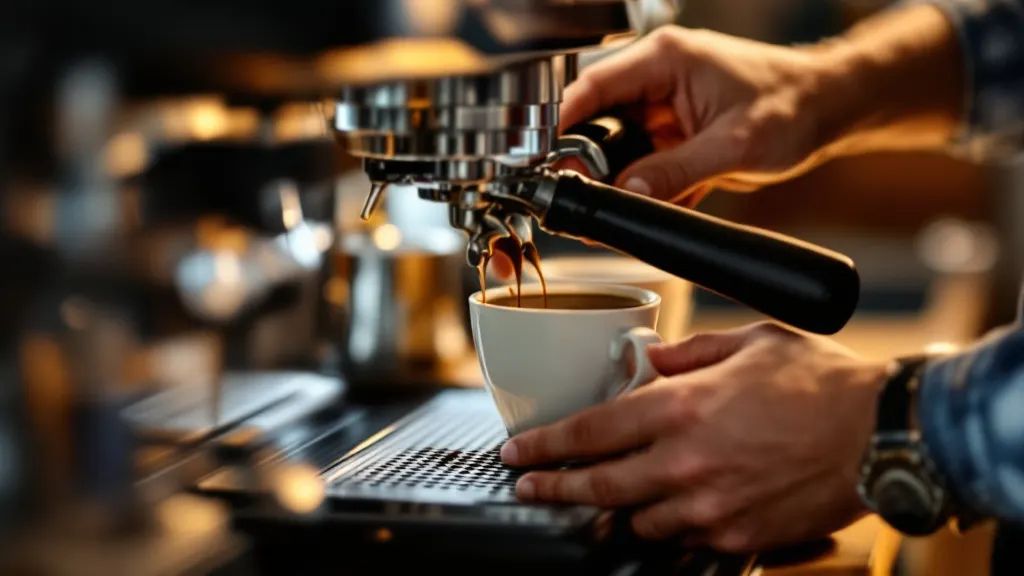
A semi automatic espresso machine heats water and supplies pump pressure, while you grind, dose, tamp and start and stop each shot. It gives you more control over brewing than a super automatic machine, which does everything from beans to cup, and is much easier than a manual lever machine, where you also create the pressure yourself.
Barista tip
Put a small scale under your cup and stop each shot by weight instead of by eye. Start with about twice the weight of the dry coffee, so 18 g of grounds gives about 36 g of espresso. Write it down, taste, and adjust one thing at a time. Within a week you will know your machine like an old friend.
A semi automatic espresso machine is the sweet spot of home espresso: the machine handles water heating and pressure, and you handle the grinding, dosing, tamping and the moment the shot starts and stops. It is the type most cafe baristas learn on, and it is where the real craft (and a lot of the fun) lives. This guide explains how it works, how it compares with manual, automatic and super-automatic machines, and how to choose one that will make you happy every morning.
What is a semi automatic espresso machine?
Every espresso machine does the same basic job: it pushes hot water through a tightly packed puck of finely ground coffee under pressure. What changes between machine types is who controls each step.
On a semi-automatic machine:
- The machine heats the water (with a boiler, thermoblock, thermocoil or ThermoJet) and supplies pressure with an electric pump.
- You grind and dose the coffee, tamp it into the portafilter, lock it in, start the pump and stop it when the shot looks and tastes right.
That last part, starting and stopping, is the "semi" in semi-automatic. A fully "automatic" espresso machine (sometimes called volumetric) stops the shot for you at a programmed volume, while a super-automatic does everything from beans to cup.
Home espresso machines are a growing slice of the coffee world. In a Fall 2025 survey, 11% of US past-day coffee drinkers used an espresso machine at home, compared with 38% using a drip brewer and 23% a pod brewer 1. The cited survey does not distinguish semi-automatic from other espresso machines.
The four types of espresso machine
| Type | You control | The machine controls | Learning curve |
|---|---|---|---|
| Manual (lever) | Pressure, timing, dose, grind | Sometimes heating | Highest |
| Semi-automatic | Dose, grind, tamp, start and stop | Heating, pump pressure | Medium |
| Automatic (volumetric) | Dose, grind, tamp | Heating, pressure, shot volume | Medium-low |
| Super-automatic | Drink choice and strength | Grinding, dosing, tamping, brewing, often milk | Lowest |
Many machines blur the lines. Breville's Barista Express, for example, is a semi-automatic with a built-in grinder and PID temperature control 2. Its Oracle Jet goes further and automates grinding, dosing and tamping while you still work with a real portafilter 3.
Semi automatic vs super automatic
This is the big decision for most people, so let's make it simple.
Choose a semi-automatic if:
- You enjoy rituals and small improvements, like a sourdough baker or a home cook.
- You want to pick your own beans and chase their flavors.
- You like milk drinks with silky, latte-art-ready microfoam from a steam wand.
- You want a machine you can upgrade around (grinder, baskets, tamper).
Choose a super-automatic if:
- You want a good coffee at the press of a button, especially for several people.
- You prefer consistency over control.
- You don't want to learn tamping, grind adjustment or milk steaming.
Super-automatics are hugely popular in Europe; in Germany, Stiftung Warentest runs regular tests of them and named a De'Longhi Magnifica Evo Next its value pick in late 2025 4. A semi-automatic will usually reward you with more flavor per dollar and more control, as long as you enjoy the hands-on part. Our best super automatic espresso machine guide covers the push-button side in detail.
Manual espresso machine: the purist's option
A manual espresso machine replaces the electric pump with a lever. You generate pressure with your arm, which means you can shape the pressure through the shot. The Flair 58 Plus 2, for example, uses a 58 mm portafilter, an electrically preheated brew cylinder with three temperature settings and a hand lever for pressure profiling 5. It is quiet and beautiful to use, though you need a kettle for water and a separate espresso-capable grinder, and there is no steam wand.
Manual machines are wonderful second machines for curious minds. As a first machine, a semi-automatic is usually friendlier.
Flair Espresso Flair 58 Plus 2
manual lever $$$
Best for: full pressure control, quiet home brewing
What we like
- 58 mm portafilter
- electric brew-cylinder preheat with 3 settings
- pressure profiling by hand
Keep in mind
- needs a separate kettle and espresso-capable grinder
- no steam wand
- boiler manual (electric preheat of brew cylinder, 85/90/95 C)
- pump manual lever
- portafilter mm 58
- water tank l 0.09
- weight kg 5.4
How a semi automatic espresso machine works, step by step
- Heat. The machine brings water to brewing temperature. Machines with PID control hold that temperature steadier.
- Grind. You grind fresh beans fine, close to the texture of powdered sugar mixed with table salt. Grind size charts show the full range from espresso to French press.
- Dose and tamp. You put the coffee in the portafilter basket, level it and press it firmly and evenly.
- Brew. You lock the portafilter in and start the pump. Water flows through the puck under pressure. Gaggia, for example, sets its over-pressure valve to 9 bar 6.
- Stop. You stop the shot when it reaches your target weight or volume, usually after 25 to 35 seconds for a classic recipe.
- Steam (optional). You switch to steam and texture milk for a cappuccino or latte.
Our full how to make espresso guide goes deeper into recipes and troubleshooting.
Heating systems explained
The heating system decides how fast your machine warms up and whether you can brew and steam at the same time.
- Thermoblock / ThermoJet: water is heated on demand as it flows. Quick to start, ideal for one or two drinks. Breville's Bambino Plus uses ThermoJet heating for a fast start-up 7.
- Thermocoil: Breville's on-demand system in the Barista Express family; it cannot brew and steam simultaneously 2.
- Single boiler: a small boiler heats brewing water and switches to a higher temperature for steam. Classic and stable, but you wait between brewing and steaming.
- Heat exchanger (HX): one big steam boiler with a tube that heats the brew water. Brew and steam at once.
- Dual boiler: two separate boilers, one for brewing, one for steam. Maximum control and no waiting. See our best dual boiler espresso machine guide.
Three semi-automatics that show the range
A friendly starter: Breville Bambino Plus
Compact, fast-heating and equipped with an automatic milk texturing wand, it is one of the easiest semi-automatics to live with 7. You'll need a separate grinder.
Breville the Bambino Plus
semi-automatic $$$
Best for: beginners wanting fast heat-up, small kitchens
What we like
- ThermoJet heating, fast start-up
- automatic milk texturing steam wand
- compact footprint
Keep in mind
- 54 mm portafilter limits accessory choice
- no built-in grinder
- boiler thermojet
- pump 15 bar Italian pump
- portafilter mm 54
- dimensions cm 30.2 x 18.8 x 36.3
An all-in-one: Breville Barista Express
A built-in conical burr grinder with 16 settings, PID temperature control and a 15 bar Italian pump in one box 2. Review sites describe it as the best-selling semi-automatic on Amazon US 8.
Breville the Barista Express
semi-automatic with grinder $$$
Best for: all-in-one starter setup
What we like
- built-in conical burr grinder
- PID temperature control
- widely sold, frequent discounts (list $699.95, seen at $499.95)
Keep in mind
- only 16 grind settings
- 54 mm portafilter limits accessory choice
- thermocoil cannot brew and steam at the same time
- boiler thermocoil
- pump 15 bar Italian pump
- grinder integrated conical burr, 16 settings
- pid ✓
- portafilter mm 54
A classic to grow with: Gaggia Classic Pro E24
A 58 mm commercial-size portafilter, a 9 bar over-pressure valve and a commercial-style steam wand 6. Simple, durable and endlessly upgradeable.
Gaggia Classic Pro E24
semi-automatic $$$
Best for: learning espresso on a budget, modders
What we like
- 58 mm commercial-size portafilter
- OPV calibrated to 9 bar
- commercial-style steam wand
Keep in mind
- no PID
- small single boiler, cannot brew and steam at once
- boiler single (brass, 3.5 oz / ~0.1 L, 1370 W)
- pump 15 bar Ulka vibratory, OPV set to 9 bar
- portafilter mm 58
- water tank l 2.1
- dimensions cm 20.3 x 24.1 x 36.1
| Model | Breville the Bambino Plus | Breville the Barista Express | Gaggia Classic Pro E24 | Flair Espresso Flair 58 Plus 2 |
|---|---|---|---|---|
| Price | $$$ | $$$ | $$$ | $$$ |
| Type | semi-automatic | semi-automatic with grinder | semi-automatic | manual lever |
| boiler | thermojet | thermocoil | single (brass, 3.5 oz / ~0.1 L, 1370 W) | manual (electric preheat of brew cylinder, 85/90/95 C) |
| pump | 15 bar Italian pump | 15 bar Italian pump | 15 bar Ulka vibratory, OPV set to 9 bar | manual lever |
| portafilter mm | 54 | 54 | 58 | 58 |
| dimensions cm | 30.2 x 18.8 x 36.3 | 40.4 x 33.3 x 31.5 | 20.3 x 24.1 x 36.1 | – |
| grinder | – | integrated conical burr, 16 settings | – | – |
| pid | – | ✓ | – | – |
| water tank l | – | – | 2.1 | 0.09 |
| See on brand site | See on brand site | See on brand site | See on brand site |
For full shortlists, see our best espresso machine for beginners, best espresso machine under 500 and best espresso machine guides.
What to look for when you buy
Grinder plan
A semi-automatic is only as good as its grinder. Either choose a machine with a built-in grinder or budget for a separate espresso grinder. Our best espresso grinder guide helps.
Portafilter size
51 mm and 54 mm are common on compact machines; 58 mm is the commercial standard with the widest accessory choice.
Temperature control
PID control keeps brew temperature steady and is a real help for consistency. Not every maker lists it, so check the spec sheet.
Steam wand
Automatic wands make lattes easy. Manual wands take practice and give you the most control for latte art.
Footprint and water
Measure under your cabinets, and think about how you will fill the tank. Soft, filtered water protects the heating system.
Espresso, caffeine and your health
Espresso is concentrated, but the servings are small. A single shot of about 1 fl oz contains roughly 63 mg of caffeine according to USDA data 9. Actual amounts vary with beans, dose and shot size. EFSA considers up to 400 mg of caffeine a day safe for healthy adults (pregnant women excepted) 10.
Espresso is an unfiltered brew, so it carries some cafestol, a coffee oil linked with higher LDL cholesterol. The amounts are small: one analysis measured about 1 mg per espresso, compared with 5 to 7 mg in a cup of boiled or Turkish coffee 11. If your cholesterol is a concern, that is useful context to discuss with your doctor. Read more in how much caffeine is too much.
Is a semi automatic espresso machine right for you?
If you smile at the idea of tuning a recipe, steaming milk and tasting the difference a fresh bag of beans makes, yes. A semi-automatic turns your morning coffee into a small daily pleasure that keeps getting better. If you just want a good latte with zero effort, a super-automatic or a capsule machine will serve you better, and that is a perfectly happy choice too.
When to talk to a doctor
Coffee is not a medicine; if you have high cholesterol, a heart rhythm condition, are pregnant or take medicines, ask your doctor or pharmacist how much caffeine suits you.
Frequently asked questions
What does semi-automatic mean on an espresso machine?
It means the machine automates heating and pump pressure, while you control the start and stop of each shot, plus grinding, dosing and tamping. Many semi-automatics also offer programmable buttons, but you still prepare the coffee yourself. It sits between manual lever machines, where you create pressure by hand, and super-automatics, which do everything.
Is a semi-automatic or super-automatic espresso machine better?
Neither is better for everyone. A semi-automatic gives you more control, better milk texture through a steam wand and often more flavor per dollar, but it takes practice. A super-automatic makes consistent drinks at the press of a button and suits busy households. Choose based on whether you enjoy the hands-on ritual.
Are semi-automatic espresso machines hard to use?
They take a little practice, mostly in grinding and tamping, but learning time varies with your equipment, beans and practice. Beginner-friendly models with fast heat-up, built-in grinders, assisted tamping or automatic milk wands shorten the learning curve. Weighing your dose and output makes progress much faster.
What is the difference between a manual and a semi-automatic espresso machine?
On a manual (lever) espresso machine you generate brewing pressure yourself by pulling a lever, which lets you shape the pressure through the shot. A semi-automatic uses an electric pump for pressure, so you only start and stop the shot. Manual machines are quieter and more hands-on, while semi-automatics are faster and usually include a steam wand.
Do I need a grinder for a semi-automatic espresso machine?
Yes, unless your machine has one built in. Espresso needs a fine, even grind that you can adjust in small steps, and most blade grinders cannot deliver it. All-in-one machines like the Breville Barista Express include a grinder. Otherwise, plan your budget around an espresso-capable burr grinder.
Sources
We link to the original studies and official pages so you can check every claim.
- National Coffee Association USA (2025). Grounds for celebration: Americans remain committed to coffee (NCDT Fall 2025). NCA Newsroom.
- Breville (2026). the Barista Express (BES870) product page. Official product page.
- Breville (2026). the Oracle Jet (BES985) product page. Official product page.
- Stiftung Warentest (2025). Kaffeevollautomaten im Test. test.de.
- Flair Espresso (2026). Flair 58 Plus 2 product page. Official product page.
- Gaggia North America (2026). Gaggia Classic Pro product page. Official product page.
- Breville (2026). the Bambino Plus (BES500) product page. Official product page.
- EspressoPulse (2026). Breville Barista Express review (best-seller claim, prices). Review site.
- USDA Agricultural Research Service. Beverages, coffee, brewed, espresso, restaurant-prepared (FDC ID 171891). USDA FoodData Central.
- European Food Safety Authority. Caffeine (EFSA topic page). EFSA website.
- Gross G, Jaccaud E, Huggett AC (1997). Analysis of the content of the diterpenes cafestol and kahweol in coffee brews. Food Chem Toxicol.
About the author
Petr Hess, Founder, chemical engineer. Petr Hess studied chemical engineering and loves exploring how substances act on the human body. Coffee is his favorite of them: he reads the studies on caffeine, enzymes and digestion, compares the spec sheets of machines and grinders, and brews more coffee than is strictly reasonable, so you can choose well and enjoy every cup. How we choose.
Keep reading
 Espresso machinesBreville vs DeLonghi: Which Espresso Machine Brand Is Right for You?In the Breville vs DeLonghi match-up, choose Breville if you want a hands-on semi-automatic with helpful features like fast ThermoJet heating, built-in grinders and automatic milk wands.
 Espresso machinesBreville Barista Express vs Pro: The Friendly Classic or the Faster Upgrade?In the Breville Barista Express vs Pro choice, the Express is the better value: a 16-setting grinder, PID and thermocoil heating at a $699.95 list price that is often discounted.
 Espresso machinesJura vs De'Longhi: Finding Your Perfect Bean-to-Cup MatchIn the Jura vs De'Longhi choice, Jura wins on premium build, compact size and self-cleaning milk spouts, while De'Longhi wins on value and range, from the budget Magnifica Evo to the cold-brew-capable Eletta Explore.
 Beans & subscriptionsThe Best Espresso Beans for Sweet, Creamy Shots at HomeThe best espresso beans for most home baristas are Stumptown Hair Bender, a roast-dated specialty blend that pulls sweet, balanced shots.