Home Coffee Bar Ideas: Build a Little Corner That Makes Every Morning Better
Short answer
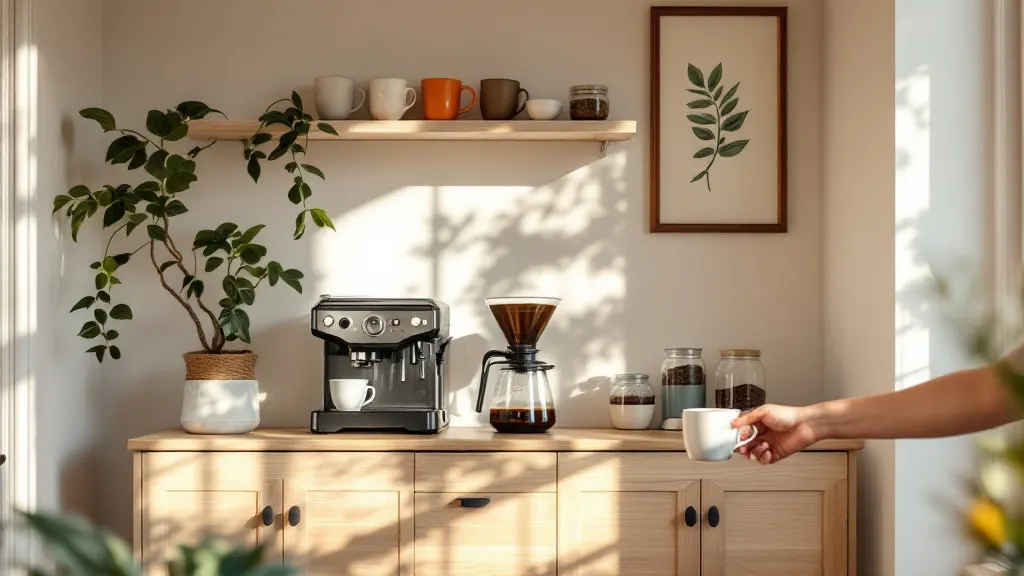
A great home coffee bar starts with the drink you make most, then groups everything for it within one arm's reach: brewer, grinder, scale, kettle or frother, cups and beans. Pick a spot near power and water, keep the counter for daily tools and the shelves for the rest, and add one or two personal touches that make you smile.
Barista tip
Set up your coffee station the night before. Fill the kettle or water tank, put the scale in place, set your favorite mug next to the brewer and weigh tomorrow's beans into a small jar. In the morning you only grind and brew. It feels like someone made you a little gift, and that someone was you, last night.
A home coffee bar is simply a spot in your home where everything for your favorite coffee lives together. It can be a whole cabinet with open shelves or a single tray on the kitchen counter. The goal is the same: fewer steps, less clutter and a small daily ritual that feels like a treat.
You are in good company. In a 2026 US survey, 82% of people who drank coffee the day before had made it at home, and 86% had a cup first thing in the morning 1. If coffee is how your day begins, giving it a happy little home is one of the best small upgrades you can make.
Start your home coffee bar with your favorite drink
The best coffee bar ideas start with a question: what do you actually drink most days? Your answer decides what goes on the counter and what goes in a drawer.
- Drip coffee lover: a drip brewer, a grinder, a scale and a big mug shelf. Drip is still the most common home method in the US, used by 38% of past-day drinkers 2.
- Pod or capsule fan: the machine, a capsule drawer and a milk frother. Pods are the second most common method at 23% 2.
- Espresso and latte maker: the machine, a grinder, a scale, a tamper, a knock box and a milk pitcher.
- Pour over ritualist: a dripper, a gooseneck kettle, a scale, a grinder and filters.
- Cold coffee person: a cold brew maker, a fridge shelf for concentrate and tall glasses. Cold drinks are rising fast: 60% of past-day specialty coffee drinkers drink their coffee cold 3.
Not sure which style fits you yet? Our quiz matches your taste, budget and patience to a type of coffee maker.
Choosing the spot for your coffee station
A coffee station works best when it is easy to reach, easy to clean and close to what it needs.
- Power: most setups need two or three outlets (brewer, grinder, kettle). Use suitable wall outlets for heating appliances, follow each appliance's instructions and check the circuit's capacity before running a brewer and kettle together.
- Water: being near the sink saves trips with the kettle or water tank. If that is not possible, a large water jug works.
- Light and air: keep beans away from direct sun and the oven's heat. Light and warmth make beans go stale faster.
- Flow: put the coffee station where mornings already happen, not at the far end of the kitchen.
- Surface: a heat-safe, wipeable surface makes spills a non-event. A tray or mat defines the zone in seconds.
15 home coffee bar ideas for every space
Small spaces
- The tray bar. One wooden or metal tray holds a brewer, a small grinder and two mugs. Lift it to wipe the counter. Perfect for rentals.
- The corner shelf. A two-tier shelf in a counter corner doubles your space without a renovation.
- The rolling cart. A three-tier cart moves to the window on weekends and tucks away when guests come.
- The cabinet station. Clear one wall cabinet above an outlet. Brew on the counter below, store everything inside, close the doors and the kitchen looks calm again.
- The travel kit. A hand grinder and a compact brewer in a drawer are a full coffee bar for tiny kitchens and dorms.
Medium spaces
- Zones on the counter. Arrange left to right in the order you work: beans, grinder, scale and brewer, then cups and milk. It sounds simple, and it saves steps every single morning.
- Open shelves for cups. Your prettiest mugs become decoration and stay one reach away.
- A pegboard wall. Hang drippers, measuring spoons and milk pitchers. Easy to change, fun to style.
- The drawer organizer. Filters, cleaning tablets, a brush and spare gaskets in one drawer with dividers.
- A little plant. A small herb or trailing plant brings life to the corner, just keep it away from the steam.
Big or dedicated spaces
- The sideboard bar. A sideboard or buffet in the dining room becomes a full café: machine on top, beans and cups inside.
- The pantry nook. Remove a shelf, add an outlet and a light, and you have a hidden coffee bar with a door.
- The espresso corner. An espresso machine, grinder, scale and knock box with a small drip tray mat underneath. See our best espresso machine for beginners if you are starting out.
- The cold brew fridge shelf. Keep a jug of concentrate, milk and glasses together for instant iced coffee. Our best cold brew coffee maker guide helps you choose.
- The evening corner. A separate jar of decaf and a cozy mug for after dinner. More on that below.
The essential gear for a home coffee bar
You do not need everything at once. Build in this order and each step makes a noticeable difference.
1. A good grinder
Freshly ground coffee smells and tastes brighter than pre-ground, and a burr grinder gives an even grind. If you only upgrade one thing, make it this. A versatile burr grinder that handles both filter and espresso, like the Baratza Encore ESP, is a sensible first choice.
Baratza Encore ESP
conical burr, espresso + filter $$
Best for: budget espresso setup, espresso plus filter on one grinder
What we like
- M2 burr set with espresso-focused fine range
- quick-release burr mount for cleaning
- includes dosing cup
Keep in mind
- no timer or weight-based dosing
- 40 stepped settings, coarse jumps in filter range
- burr type conical
- burr mm 40
- burr material steel (M2)
- grind settings 40
- espresso capable ✓
Our best coffee grinder guide compares more options.
2. A scale
A scale lets you repeat the cup you love. It is cheap, small and turns guesswork into a recipe. See our best coffee scale guide for options from budget to smart.
3. Your brewer
Choose the brewer that fits your favorite drink. A simple pour over cone like the Hario V60 is a lovely, low-cost centerpiece for a pour over station, and the paper filter holds back cafestol, the coffee oil that raises LDL cholesterol in unfiltered brews 4.
Hario V60 02 Dripper (Plastic)
pour-over cone $
Best for: learning pour-over, light, travel-friendly dripper
What we like
- Very low cost entry to pour-over
- Plastic body is light (about 200 g) and holds little heat
- Size 02 filters are sold almost everywhere
Keep in mind
- Fast flow rewards a gooseneck kettle and steady technique
- Needs cone-specific V60 paper filters
- type pour-over cone, spiral ribs, single large hole
- capacity 1-4 cups (size 02)
- material plastic (BPA-free)
- filter V60 02 conical paper filters
4. Water and milk tools
A gooseneck kettle for pour over, or a milk frother for lattes. Our guides to the best gooseneck kettle and the best milk frother cover both.
5. Storage
Airtight, opaque containers for beans, kept at room temperature away from light. Buy smaller amounts more often, ideally whole beans with a roast date, and grind just before brewing.
Home coffee bar on any budget
| Budget | What to include | Why it works |
|---|---|---|
| $ | Pour over cone or French press, hand grinder, kitchen scale, two mugs on a tray | Great coffee for very little money; small footprint |
| $$ | Drip brewer or capsule machine, burr grinder or frother, coffee scale, shelf | Convenience with real quality; easy daily routine |
| $$$ | Entry espresso machine, espresso-capable grinder, scale, milk pitcher, knock box | Café drinks at home; room to learn and grow |
| $$$$ | Dual boiler or super-automatic machine, premium grinder, smart scale, dedicated cabinet | Fast, consistent drinks for the whole household |
Styling your coffee station so it sparks joy
- Pick one material palette. Wood and white feel warm, black and brass feel modern, glass and steel feel clean.
- Show off what you love. Display one bag of beans you are excited about and a favorite mug.
- Add a small sign or chalkboard for today's beans or the family's drink orders.
- Use light. A small under-cabinet light makes early mornings feel softer.
- Keep the counter clear. Daily tools out, everything else behind doors. Calm surfaces feel more luxurious than full ones.
A coffee bar for the whole day
A thoughtful home coffee bar also helps you enjoy caffeine at the right times. For most healthy adults, the FDA cites up to 400 mg of caffeine a day, roughly two to three 12 oz cups of coffee 5. A meta-analysis of sleep studies found that a regular coffee of about 107 mg is best finished at least 8.8 hours before bed to avoid losing sleep 6.
That is where the evening corner comes in. Keep a separate, clearly labeled jar of decaf for afternoons and evenings. Decaf is not completely caffeine free, but the FDA puts it at about 2 to 15 mg per 8 oz cup 5. In UK Biobank, decaf drinkers, like drinkers of ground and instant coffee, had lower rates of cardiovascular disease and death than non-drinkers, though this was an observational link rather than proof of cause 7. Our best decaf coffee guide has delicious options, and our free planner helps you time your cups around your sleep.
Keep your coffee bar clean and happy
- Daily: empty the drip tray and knock box, rinse the milk jug or frother, wipe the counter.
- Weekly: wash the bean container, brush out the grinder chute, clean the brewer's basket.
- Monthly: descale kettles and machines (more often with hard water), deep-clean the grinder burrs.
Stale coffee oils taste bitter and rancid, so a clean station really does taste better.
Home coffee bar checklist
- A spot near power and, ideally, water
- Your main brewer
- A burr grinder
- A coffee scale
- Kettle or milk frother, depending on your drink
- Airtight bean storage
- Filters, cleaning brush and descaler
- Mugs you love
- A jar of decaf for the evening
- One personal touch: a plant, a print or a sign
A home coffee bar does not need to be big or expensive. It just needs to make the first minutes of your day a little smoother and a little happier. If you are shopping for someone else, our gifts for coffee lovers guide is full of coffee station ideas.
When to talk to a doctor
If you are pregnant or breastfeeding, take medication, or have a heart rhythm condition, anxiety or trouble sleeping, ask your doctor or pharmacist how much caffeine suits you.
Frequently asked questions
What do you need for a home coffee bar?
At minimum, a brewer, fresh beans and a mug. To make it feel like a real coffee bar, add a burr grinder, a coffee scale, airtight bean storage and either a gooseneck kettle for pour over or a milk frother for lattes. Group everything in one spot near power and water, with daily tools on the counter and spares in a drawer or cabinet.
Where should I put a coffee station in my kitchen?
Choose a spot with at least two outlets, close to the sink if possible, and away from the oven and direct sunlight, which make beans stale faster. It should be on your natural morning path, not tucked into a far corner. If counter space is tight, a cabinet station, a rolling cart or a corner shelf all work well.
How do I make a coffee bar in a small space?
Use a tray to define a small zone on the counter, or a two-tier corner shelf to go vertical. Choose compact gear: a pour over cone or AeroPress, a hand grinder and a slim scale. Store filters and spares in a drawer and hang mugs on hooks. A rolling cart is great for rentals because it moves wherever you need it.
How do I store coffee beans on a coffee bar?
Keep whole beans in an airtight, opaque container at room temperature, away from light, heat and moisture. Buy amounts you will use within a few weeks and grind just before brewing. Avoid the fridge, where beans can absorb odors and moisture. A clear jar looks pretty, but keep it in a cabinet if it gets sunlight.
How much does a home coffee bar cost?
It can cost very little or a lot. A pour over cone, hand grinder and kitchen scale on a tray is a budget setup. A drip or capsule machine with a burr grinder and a frother sits in the middle. Espresso machines with matching grinders, or super-automatic machines, are the premium tier. Start with what you drink most and grow from there.
Sources
We link to the original studies and official pages so you can check every claim.
- National Coffee Association USA (2026). Coffee tops Americans' beverage choices (National Coffee Data Trends, Spring 2026). NCA newsroom.
- National Coffee Association USA (2025). Grounds for celebration: Americans remain committed to coffee (National Coffee Data Trends, Fall 2025). NCA newsroom.
- National Coffee Association USA (2026). Specialty Coffee Consumption Remains at Record High. NCA newsroom.
- Urgert R, Katan MB (1997). The cholesterol-raising factor from coffee beans. Annu Rev Nutr.
- U.S. Food and Drug Administration. Spilling the Beans: How Much Caffeine is Too Much?. FDA Consumer Update.
- Gardiner C, Weakley J, Burke LM et al. (2023). The effect of caffeine on subsequent sleep: A systematic review and meta-analysis. Sleep Med Rev.
- Chieng D, Canovas R, Segan L et al. (2022). The impact of coffee subtypes on incident cardiovascular disease, arrhythmias, and mortality: long-term outcomes from the UK Biobank. Eur J Prev Cardiol.

About the author
Petr Hess, Founder, chemical engineer. Petr Hess studied chemical engineering and loves exploring how substances act on the human body. Coffee is his favorite of them: he reads the studies on caffeine, enzymes and digestion, compares the spec sheets of machines and grinders, and brews more coffee than is strictly reasonable, so you can choose well and enjoy every cup. How we choose.
Keep reading
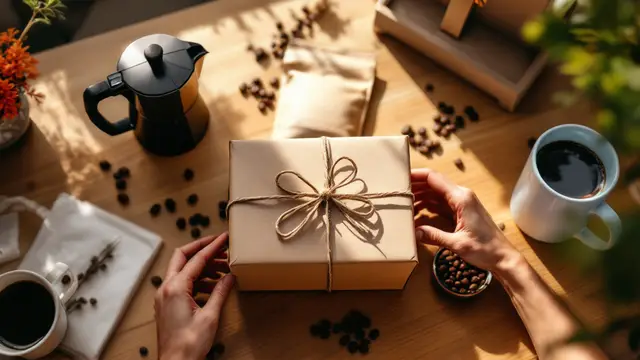 Accessories & giftsGifts for Coffee Lovers: Thoughtful Ideas That Brighten Every MorningThe best gifts for coffee lovers are things they will use every morning: a coffee subscription like Atlas Coffee Club for exploring new origins, an AeroPress Go for travelers, a Fellow Stagg EKG Pro kettle for pour over fans, or a burr grinder such as the Baratza Encore for anyone still using pre-ground coffee.
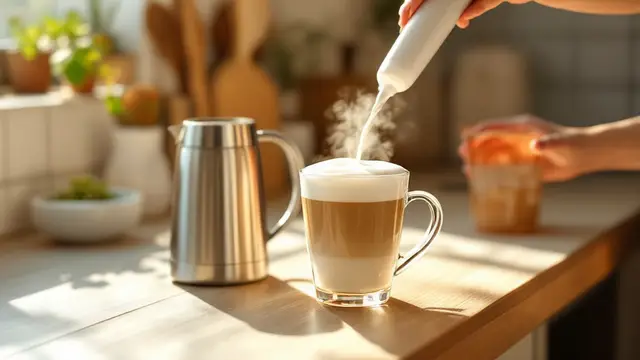 Accessories & giftsThe Best Milk Frother: Silky Foam, Cozy Lattes, Zero Barista StressThe best milk frother for most homes is the Breville Milk Cafe: it heats and froths up to 500 ml of milk in an induction jug, so you can make lattes for several people at once.
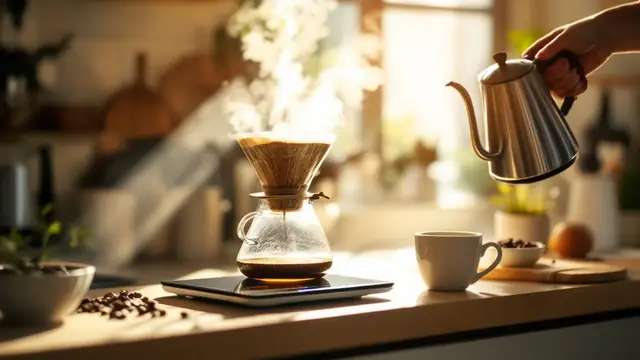 Accessories & giftsThe Best Coffee Scale: Small Grams, Big Flavor, Happier MorningsThe best coffee scale for most pour over brewers is the Acaia Pearl: it reads to 0.1 g up to 2 kg, has a built-in timer, five modes including auto-start, and charges by USB-C.
 Espresso machinesBreville Barista Express vs Pro: The Friendly Classic or the Faster Upgrade?In the Breville Barista Express vs Pro choice, the Express is the better value: a 16-setting grinder, PID and thermocoil heating at a $699.95 list price that is often discounted.