Coffee Culture Around the World: Inside the 5 Coffee Superpowers
Short answer
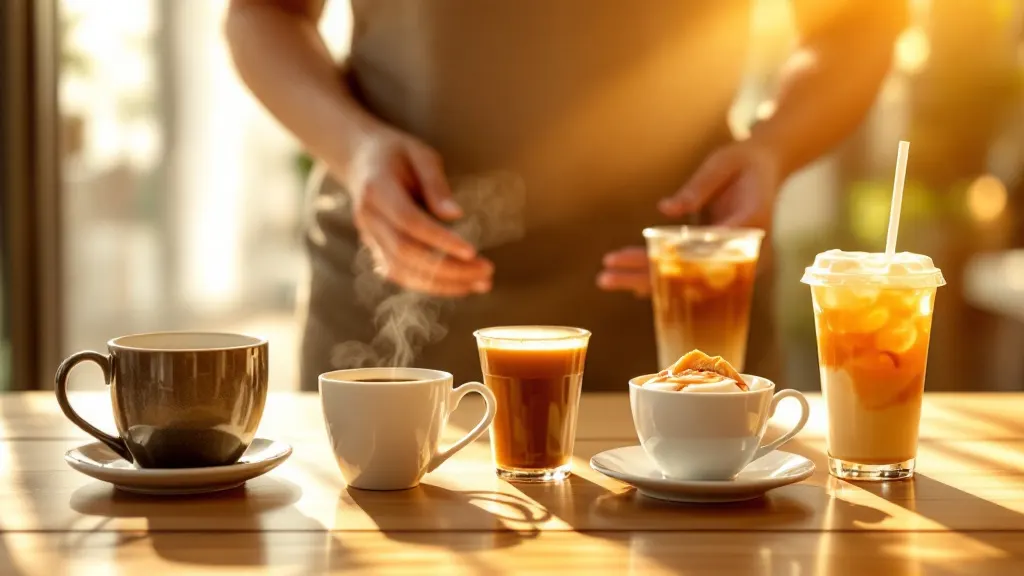
Coffee culture differs hugely among these five major coffee nations. The United States brews drip coffee at home in the morning, Brazil shares small sweet cafezinhos all day, Germany loves filter coffee and afternoon coffee and cake, Japan leans on instant and bottled coffee, and China is booming with app-ordered café lattes.
Barista tip
Try a five-country coffee week at home. Monday, a big American mug of drip coffee. Tuesday, a tiny Brazilian-style cup offered to a friend. Wednesday, a German afternoon coffee with a slice of cake. Thursday, a chilled Japanese-style bottled coffee for your commute. Friday, a Chinese-café-inspired latte with a flavor you have never tried. Same beans, five moods, lots of smiles.
Coffee culture looks different in every country, and that is the best part. Americans brew a pot at home before work, Brazilians share tiny sweet cafezinhos all day long, Germans pause for coffee and cake, Japanese drinkers grab a bottle from a convenience store, and young Chinese city dwellers tap a latte order into an app. Below we visit five major coffee markets selected for their size and available cultural data, with real survey numbers, the times of day they reach for a cup, and what is changing right now.
How we picked the five coffee superpowers
We selected five major markets using consumption figures and the cultural research available for this guide. Combining USDA data for 2025/26 with ECF data for Europe, the United States, Brazil, Germany and Japan lead, followed by the Philippines at 6.53 million bags and China at 6.42 million 1, 2. We profile China here because our research includes more detail on its coffee habits. France is another major market, at 5.9 million bags in 2023 2.
One honest caveat: the European figures are from 2023 and the others from 2025/26, so the gap between China (6.42 million bags) and France (5.9 million) mixes years 1, 2.
| Country | Total consumption | Per person | Signature cup | Peak coffee time |
|---|---|---|---|---|
| United States | 25.55 million bags (2025/26) 1 | 4.9 kg (cited 2026) 3 | Drip coffee at home | First thing in the morning |
| Brazil | 22.28 million bags (2025/26) 1 | 6.02 kg green (2025) 3 | Cafezinho | On waking, then all day |
| Germany | 8.67 million bags (2023) 2 | about 161 liters (2025) 4 | Filter coffee, Caffè Crema | Morning, plus afternoon coffee and cake |
| Japan | 6.65 million bags (2025/26) 1 | 10.05 cups a week (2024) 5 | Instant and bottled coffee | At home (no time split published) |
| China | 6.42 million bags (2025/26) 1 | about 22 cups a year (2024) 6 | App-ordered café lattes | No sourced survey |
A 60-kg bag is the trade's standard unit, so 25.55 million bags means roughly 1.5 million tonnes of coffee.
United States: the home brewing giant
How much. The United States is the largest coffee market on the planet, at 25.55 million bags in 2025/26, with USDA forecasting 26.95 million for 2026/27 1. In the National Coffee Association's Spring 2026 survey, 66% of adults drank coffee in the past day and 73% in the past week, which the NCA describes as nearly 195 million weekly drinkers 7. Coffee is the most consumed beverage among US adults, ahead of bottled water 8.
Favorite drinks. The drip brewer is still king: 38% of past-day drinkers used one, and 23% used a single-cup or pod brewer (Fall 2025) 8. Cold brew was prepared by 17%, espresso machines by 11% and instant by 11%, while ready-to-drink coffee climbed to 19%, up from 9% in 2021 8. Espresso-based drinks are big too: 45% had one in the past week, with lattes at 21% 7.
What time. Mornings rule. Among past-day drinkers, 86% had coffee first thing in the morning, 38% at another time in the morning, 22% in the afternoon and only 11% in the evening 7. In Fall 2025, 85% had coffee at breakfast 8. Americans average nearly three cups a day (2.8 in Spring 2025) 8.
Why. Coffee in America is a home ritual: 82% of past-day drinkers made coffee at home, while 28% had it away from home 7. Big mugs, programmable brewers and a pot shared across the morning fit busy households perfectly. If that sounds like you, our best drip coffee maker guide is your friend.
Trends. Specialty coffee is at a record: 47% of adults drank it in the past day (June 2026), and 69% of 25 to 39-year-olds had it in the past week 9. Cold coffee is booming, with 60% of past-day specialty drinkers taking it cold 9. If you are joining the iced crowd, see our cold brew coffee maker picks.
Brazil: where coffee is hospitality
How much. Brazil is the world's second largest consumer, at 22.28 million bags in 2025/26 according to USDA 1. The Brazilian coffee industry association ABIC counts 21.41 million bags from November 2024 to October 2025, or 6.02 kg of green coffee per person 3. Coffee is present in 98% of households (2025) 3, and 97% of people surveyed in 2023 said they drink it 10.
Favorite drinks. The cafezinho is the heart of it: a small cup of strong, usually sweetened filter coffee offered after meals and to visitors. ABIC's survey even measures cups at 50 ml 10. Capsules are a small but growing segment, and certified specialty coffee is still only about 1% of retail volume, even though certified products grew more than 300% 3.
What time. Pretty much all day. In ABIC's 2023 survey of 4,072 coffee drinkers (multiple answers allowed), 97% drink coffee on waking, 88% in the morning, 77% after lunch, 62% in the afternoon and 34% in the evening 10. Evening was the only time slot that fell between 2019 and 2023 10. Almost half (46%) drink three to five small cups a day, and 29% drink more than six 10.
Why. Brazil grows more coffee than anyone else: 63.0 million bags in 2025/26, with a record 71.9 million forecast for 2026/27, nearly 40% of world output 1. The domestic market absorbed 37.9% of the 2025 harvest 3. Local, familiar and shared, coffee is how Brazilians say welcome.
Trends. Prices have bitten. Retail coffee prices rose 116% in five years and consumption fell 2.31% in 2025, while industry revenue still rose 25.6% 3. Gourmet and specialty lines keep growing from a small base 3.
Germany: filter coffee, bean-to-cup machines and Kaffee und Kuchen
How much. Germany is Europe's largest coffee market, at 8.67 million bags in 2023 2. The German Coffee Association reports about 456,000 tonnes of roasted coffee sold in 2025, down 1.5%, or about 161 liters per person 4. Tchibo's 2026 coffee report counts 3.2 cups a day per coffee drinker, slightly down from 3.4 in 2024 11.
Favorite drinks. Filter coffee is still number one, followed by Caffè Crema and cappuccino 11. Every third German household has a bean-to-cup machine (Kaffeevollautomat), and whole bean sales hit a record 193,800 tonnes in 2025, up 130% in ten years, while ground coffee fell about 38% 4. Instant has its place too: every tenth cup is soluble coffee 4. If you dream of German-style one-touch coffee, look at our super automatic espresso machine guide.
What time. For many Germans, the first cup of the morning is the real start of the day, and some stop drinking coffee in the afternoon to protect their sleep 11. Then there is Kaffee und Kuchen, the traditional afternoon gathering over coffee and cake, especially on weekends.
Why. A long café tradition, a strong home-brewing habit and the fast spread of bean-to-cup machines all feed the market 4, 11. Out-of-home coffee reached an all-time high of 125,500 tonnes in 2025 4.
Trends. Whole beans and bean-to-cup machines keep rising, and specialty instant coffee and liquid coffee concentrates for cold drinks are the new growth impulses 4. Prices matter: nearly half of drinkers now see coffee as a luxury good 11.
Japan: instant, bottled and quietly enormous
How much. Japan drank 6.65 million bags in 2025/26 according to USDA 1. The All Japan Coffee Association (AJCA) measures it in cups: 10.05 cups per person per week in 2024 for ages 12 to 79, which works out to roughly 1.4 cups a day by our own math 5.
Favorite drinks. Japan's mix is unique. Per person per week in 2024: 3.83 cups of instant, 3.55 of regular brewed coffee, 1.76 of bottled liquid coffee and 0.91 of canned coffee 5. Canned coffee is fading: it was 2.05 cups a week in 2008 5. Traditional kissaten coffee houses and cafés account for only 0.22 cups a week, a small but much-loved slice of the culture 5.
What time and where. AJCA does not publish a time-of-day split, so we will not invent one. It does show where people drink: 7.28 of the 10.05 weekly cups are at home, 1.57 at work or school and 0.22 in cafés 5. Workplace coffee has dropped sharply from 2.86 cups a week in 2010 5.
Why. Convenience is everything. Instant, bottled and canned formats fit a fast, practical daily rhythm 5. Coffee drinking also rises with age: people aged 60 and over drink about 12.2 cups a week, compared with 7.38 for young men and 3.36 for young women aged 18 to 24 5.
Trends. Total cups dipped slightly from 10.60 a week in 2022 to 10.05 in 2024, and drinkers are shifting from cans to bottled coffee 5.
China: the fastest growing coffee culture
How much. China drank 6.42 million bags in 2025/26, and USDA forecasts 6.75 million for 2026/27 1. That is about 30% more than in 2021/22 1. Per person it is still tiny: StoneX estimates about 22 cups a year in 2024, compared with 207 in Japan and 405 in South Korea 6.
Favorite drinks. China's café chains sell app-ordered drinks, including lattes and flavored milk coffees. Luckin Coffee alone had 22,340 stores at the end of 2024 after opening 6,092 net new stores that year 12. Instant still matters: China imported 1.9 million bags of soluble coffee in 2025/26 1.
What time. We could not find a reliable public survey of when Chinese drinkers have their coffee, so we leave this one honestly blank.
Why. Fast urbanization and the café chain boom drive growth 12, and China grows its own coffee too, about 1.9 million bags of Arabica a year, mainly in Yunnan 1.
Trends. Imports of beans are set to double, from 1.97 million bags in 2022/23 to a forecast 4.0 million in 2026/27 1. Watch this space.
Another major market: France
France consumed 5.9 million bags in 2023 according to ECF data 2. Italy follows at 5.45 million 2. Both are espresso-loving cultures, and you can learn their classic drinks in our types of coffee drinks guide.
Coffee culture around the world: what you can borrow
Every coffee superpower teaches a small, happy lesson:
- From the US: make great coffee at home, it is the most loved place to drink it 7.
- From Brazil: offer a small cup to whoever walks in.
- From Germany: treat the afternoon cup as an event, with cake.
- From Japan: keep it simple and convenient when life is busy.
- From China: have fun with milk drinks and new flavors.
Notice that the morning cup is the shared language almost everywhere, while evening coffee is the first habit to fade 7, 10, 11. There is good sense in that. Caffeine can linger for hours, so read how long caffeine lasts and our guide to the best time to drink coffee, then map out your own day.
Want to bring one of these coffee cultures home? Tell our Machine Matchmaker how you like your cup and it will point you to the right type of brewer.
For the full ranking of every country, including the Nordic per-capita champions, visit coffee consumption by country.
Frequently asked questions
Which country has the biggest coffee culture?
By volume, the United States: USDA estimates 25.55 million 60-kg bags in 2025/26, more than any other country [1]. Per person, the Nordic countries drink far more. Culture is not only volume, though. Brazil, the world's largest producer, has coffee in 98% of households and serves cafezinho all day [3][10], and Germany has the afternoon coffee-and-cake tradition.
What time of day do people drink coffee around the world?
Mornings dominate. In the US, 86% of past-day drinkers have coffee first thing in the morning and only 11% in the evening [7]. In Brazil, 97% drink coffee on waking but many also drink after lunch and in the afternoon [10]. Germans start the day with a cup and often take an afternoon coffee [11]. Japan and China lack published time-of-day surveys.
What is cafezinho?
Cafezinho means little coffee in Portuguese. It is a small cup of strong, usually sweetened filter coffee that Brazilians drink throughout the day and offer to guests and visitors. ABIC's consumer survey measures these cups at 50 ml, and almost half of Brazilian drinkers have three to five of them a day [10].
Why is coffee consumption in China growing so fast?
Urbanization and a café chain boom. USDA data show consumption rising about 30% between 2021/22 and 2025/26 [1], and Luckin Coffee alone opened 6,092 net new stores in 2024, reaching 22,340 [12]. Per person, China still drinks only about 22 cups a year, so there is plenty of room to grow [6].
What kind of coffee do Japanese people drink most?
Instant coffee, closely followed by regular brewed coffee. In 2024 the All Japan Coffee Association counted 3.83 cups of instant and 3.55 cups of brewed coffee per person per week, plus 1.76 cups of bottled and 0.91 of canned coffee [5]. Most of it, 7.28 cups a week, is drunk at home [5].
Sources
We link to the original studies and official pages so you can check every claim.
- USDA Foreign Agricultural Service (2026). Coffee: World Markets and Trade (July 2026). USDA FAS.
- Comunicaffe International (2025). ECF European Coffee Report 2024/25: Germany, France and Italy consumption (2023 data). Comunicaffe (reporting European Coffee Federation data).
- ABIC - Associação Brasileira da Indústria de Café (2026). Indicadores da Indústria de Café 2025. ABIC.
- Deutscher Kaffeeverband e.V. (2026). Deutscher Kaffeemarkt 2025 stabil (press release, 2 April 2026). Deutscher Kaffeeverband.
- All Japan Coffee Association (2025). Coffee drinking in Japan: basic demand survey 2024 (日本のコーヒーの飲用状況). AJCA.
- StoneX (2025). China's coffee market and emerging opportunities for US exporters. StoneX Insights.
- National Coffee Association USA (2026). Coffee tops Americans' beverage choices (National Coffee Data Trends, Spring 2026). NCA Newsroom.
- National Coffee Association USA (2025). Grounds for celebration: Americans remain committed to coffee (National Coffee Data Trends, Fall 2025). NCA Newsroom.
- National Coffee Association USA (2026). Specialty Coffee Consumption Remains at Record High. NCA Newsroom.
- Super Rádio Tupi (2023). Evolução dos hábitos e preferências dos consumidores de café no Brasil 2019-2023 (ABIC/Instituto Axxus). Super Rádio Tupi (reporting ABIC survey).
- Retail-News (2026). Tchibo Kaffeereport 2026: Kaffeekonsum in Deutschland. Retail-News (reporting Tchibo / brand eins / Statista survey).
- Luckin Coffee Inc. (2025). Luckin Coffee Inc. Form 20-F, fiscal year 2024. US Securities and Exchange Commission.
About the author
Petr Hess, Founder, chemical engineer. Petr Hess studied chemical engineering and loves exploring how substances act on the human body. Coffee is his favorite of them: he reads the studies on caffeine, enzymes and digestion, compares the spec sheets of machines and grinders, and brews more coffee than is strictly reasonable, so you can choose well and enjoy every cup. How we choose.
Keep reading
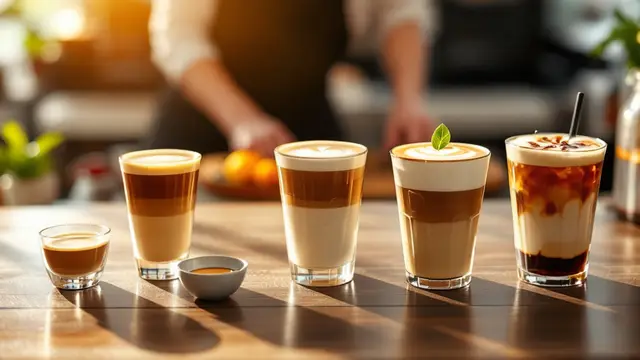 Coffee worldTypes of Coffee Drinks: A Friendly Guide to Every Cup on the MenuMost types of coffee drinks are espresso combined with water, milk or foam in different ratios: macchiato, cortado, flat white, cappuccino and latte go from strongest to milkiest.
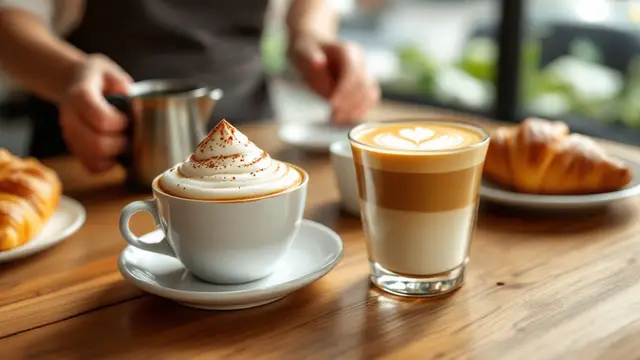 Coffee worldLatte vs Cappuccino: What's the Difference, and Which Will You Love?A cappuccino is a small drink of roughly equal parts espresso, steamed milk and thick foam, so it tastes stronger and airier.
 Espresso machinesThe Best Espresso Machine for Beginners: Friendly Machines for Your First Great ShotThe best espresso machine for beginners is the Breville Bambino Plus: it heats up fast, is compact and has an automatic milk wand that makes silky lattes easy.
 Espresso machinesBreville vs DeLonghi: Which Espresso Machine Brand Is Right for You?In the Breville vs DeLonghi match-up, choose Breville if you want a hands-on semi-automatic with helpful features like fast ThermoJet heating, built-in grinders and automatic milk wands.