Coffee and Acid Reflux: Keep Your Cup and Calm the Burn
Short answer
Coffee and acid reflux are linked mostly at the level of symptoms: coffee stimulates stomach acid and can trigger heartburn in sensitive people. Yet a meta-analysis of 15 case-control studies found no significant association between coffee and GERD, and darker roasts stimulated less stomach acid than medium roasts in one study.
Barista tip
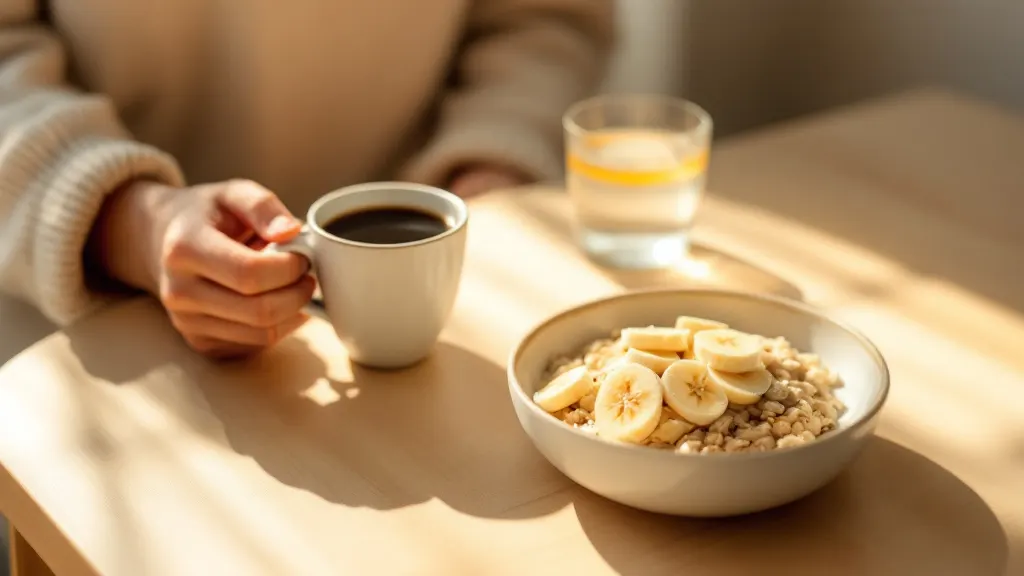
Make your test cup a treat, not a punishment. Brew a darker roast in a smaller cup, about 6 fl oz (180 ml), let it cool for a few minutes until it feels comfortably warm, and sip it slowly with a little breakfast. You still get the aroma and the ritual, and your stomach gets a softer start to the day.
You love the first cup of the day, but sometimes it comes with a warm, burning echo behind your breastbone. Coffee and acid reflux have a complicated relationship, and the good news is that the science is kinder to coffee than its reputation. A meta-analysis of 15 case-control studies found no significant link between coffee intake and GERD 1, even though coffee can trigger heartburn in some people 2.
This guide explains what coffee actually does to your stomach and esophagus, why the evidence looks mixed, and which small changes (roast, cup size, timing, decaf) are worth testing so you can keep enjoying your coffee.
Coffee and acid reflux: what the research says
Let's separate two things that often get blended together:
- GERD (gastroesophageal reflux disease) is a long-term condition with frequent reflux symptoms or damage to the esophagus.
- Heartburn is the burning feeling itself, which can happen now and then to almost anyone.
For GERD, the largest pooled analysis we found combined 15 case-control studies and found that coffee drinkers were not significantly more likely to have GERD (odds ratio 1.06, with a confidence interval from 0.94 to 1.19) 1. In plain words: no clear association.
For heartburn, a review of coffee and gut function concluded that coffee does promote gastro-esophageal reflux and heartburn, while it was not associated with dyspepsia (general indigestion) 2.
Both can be true at once. Coffee may cause a flare of heartburn in sensitive people on a given morning, without being a cause of the chronic disease across whole populations. Case-control studies also have limits: they look back in time and cannot prove cause and effect, so "no association" is reassuring, not a guarantee.
How coffee affects your stomach and esophagus
Two body systems matter for reflux: how much acid your stomach makes, and how well the valve at the top of your stomach stays closed.
1. Coffee stimulates stomach acid, even decaf
Coffee is a strong signal for the stomach. In a study of decaffeinated coffee, the brew stimulated more stomach acid and more gastrin (the hormone that drives acid production) than a protein meal did, reaching about 70% of maximal acid output 3. Another study found that both regular and decaf coffee stimulated more acid than caffeine alone on a cup-for-cup basis 4.
So caffeine is not the main villain here. Other compounds in the brew do much of the work.
2. The lower esophageal sphincter (LES)
The LES is a ring of muscle between your esophagus and stomach. When it relaxes at the wrong moment, acid can splash upward. Here the studies disagree:
- One study found that coffee lowered LES pressure in healthy people and in people with reflux, with pressure falling 30 to 60 minutes after coffee with a meal 5.
- An earlier study found that coffee raised LES pressure 4.
These were small studies from the 1970s and 1980s with different methods. The honest summary: coffee's effect on the sphincter is uncertain, which is part of why people react so differently.
3. Which coffee compounds matter
Lab work on human stomach cells helped untangle the chemistry. Caffeine stimulated acid secretion, while two other coffee compounds, N-methylpyridinium (N-MP) and chlorogenic acids, reduced it in those cells 6. N-MP forms during roasting and is higher in dark roasts 6, 7.
That leads to the most practical finding for coffee lovers.
Is dark roast better for acid reflux?
In a study with healthy volunteers, a dark roast blend with more N-MP (87 vs 29 mg/L) and fewer chlorogenic acids stimulated less stomach acid than a medium roast market blend 7. The dark roast brew contained 323 mg/L of chlorogenic acids, compared with 1,126 mg/L in the market blend 7.
A few important notes:
- The volunteers were healthy, not people with GERD, and stomach acid is not the same as heartburn symptoms.
- It is one study. Promising, but not proof.
- "Low acid" on a coffee bag usually refers to a brand's own process or claim, which is not the same as being tested in people.
Still, if you get heartburn, a darker roast is an easy, tasty experiment. Our light roast vs dark roast guide explains the flavor trade-off (more chocolate and toast, less bright fruit).
Coffee heartburn: 7 gentle experiments
These are not medical treatments. They are low-risk tweaks to test, one at a time, for about a week each:
- Switch to a darker roast for a week and see if mornings feel calmer 7.
- Drink a smaller cup. A 6 to 8 fl oz (180 to 240 ml) cup instead of a big mug lowers the total dose of everything in the brew.
- Try decaf, with realistic expectations. Decaf still stimulated acid in studies 3, 4, so it is not a guaranteed fix, but some people still find it easier, and it helps with sleep and jitters.
- Notice food timing. Some people feel better with coffee alongside food, others feel worse. The LES study measured coffee taken with a meal 5, so track how you feel both ways.
- Let it cool a little. Drinking very hot beverages is classified by the WHO cancer agency as "probably carcinogenic" for the esophagus, separately from coffee itself, which was moved to "not classifiable" 8. A sip at a comfortable warm temperature is kinder anyway.
- Keep a mini diary. Roast, cup size, time, food, symptoms. Patterns usually appear within two weeks.
- Talk to your doctor if heartburn happens twice a week or more, wakes you at night, or comes with trouble swallowing. That deserves a proper check, not just a coffee swap.
Want help picking beans to test? Our free quiz suggests roasts based on your taste and what your stomach tolerates.
Coffees worth trying if you get heartburn
We have not tested these coffees on stomachs, and no bag of coffee is a treatment. Here are two options that line up with the experiments above: a dark roast decaf, and a brand-labeled low-acid coffee. For more choices, see our full best low acid coffee guide.
A dark roast decaf for gentle afternoons
Kicking Horse Decaf is a dark roast decaffeinated with the Swiss Water Process, and it is organic and Fairtrade certified, according to the brand. It combines two of the experiments in one bag: darker roast and much less caffeine.
Kicking Horse Decaf Dark Roast (Swiss Water)
decaf $$
Best for: evening coffee, decaf drinkers who like dark roast
What we like
- Swiss Water Process, no solvents; brand states 99.9% caffeine removed
- Organic and Fairtrade
Keep in mind
- Dark roast only
- 10 oz bag is small
- roast dark
- origin Central & South America
- form whole
- bag g/oz 10 oz / 2.2 lb
- decaf process Swiss Water Process (chemical-free)
A brand-labeled low-acid coffee
Puroast sells its House Blend as a low-acid coffee, and the brand credits its roasting process. That claim comes from the brand and has not been independently verified, so treat it as a candidate to test against your usual coffee rather than a sure thing.
Puroast Low Acid House Blend Whole Bean
low-acid (brand claim) $$
Best for: shoppers seeking brand-claimed low-acid coffee, bulk buyers
What we like
- Large 2.5 lb bag
- Brand claims lower acidity from its roasting process
Keep in mind
- Low-acid claim is the brand's own, not independently verified
- Only large bags for standard line
- form whole or drip grind
- bag g/oz 2.5 lb
If you prefer the most decaf options in one place, browse our best decaf coffee picks.
Coffee and GERD: who should be extra careful
The population data are reassuring 1, but individual bodies are what count. Be more cautious if you:
- Have diagnosed GERD, Barrett's esophagus or an ulcer.
- Notice clear, repeatable symptoms after coffee, even after trying the tweaks above.
- Take medicines for reflux and notice they work less well on coffee days.
In these cases your doctor or gastroenterologist can help you decide whether to cut back, switch, or keep your cup with some changes. Many people with reflux keep a smaller, gentler coffee habit rather than giving it up completely.
What about cold brew and other brew methods?
Cold brew is often marketed as "less acidic", but we could not find human studies showing that cold brew causes less heartburn. Lab research shows that roast level and brew time change how much caffeine and chlorogenic acid end up in cold brew 9, so cold brew made from a darker roast may be worth a try for the same reasons as hot dark roast. Our best cold brew coffee maker guide covers the gear if you want to experiment.
The bottom line
Coffee clearly stimulates stomach acid, even as decaf 3, 4, and it can trigger heartburn in some people 2. Yet across 15 case-control studies, coffee was not significantly linked with GERD 1. Darker roasts, with more N-MP and fewer chlorogenic acids, stimulated less acid in one well-designed study 7, which makes them a delicious first experiment.
Start small, change one thing at a time, and listen to your body. For the full picture of what coffee does in your gut, from stomach to colon, read our guide to coffee and digestion, and if caffeine itself makes you jittery, check how much caffeine is too much.
When to talk to a doctor
This article is general information, not medical advice; frequent heartburn, night-time symptoms or trouble swallowing should be checked by a doctor.
Frequently asked questions
Does coffee cause acid reflux?
Coffee can trigger heartburn in some people, and a review concluded it promotes reflux and heartburn. But a meta-analysis of 15 case-control studies found no significant link between coffee and GERD itself (odds ratio 1.06). So coffee may cause a flare in sensitive people without being a cause of chronic reflux disease across the population.
Is decaf better for acid reflux?
Not necessarily. Decaf still stimulated stomach acid and gastrin in studies, and both regular and decaf stimulated more acid than caffeine alone. Some people still find decaf easier, and it helps with sleep and jitters, so it is worth a try. Just do not expect it to be a guaranteed fix for heartburn.
What coffee is easiest on the stomach?
In one study, a dark roast blend with more N-methylpyridinium and fewer chlorogenic acids stimulated less stomach acid than a medium roast. That makes darker roasts a reasonable first experiment. Bags labeled low acid rely mostly on brand claims, so test them against your usual coffee and see how you feel.
Can I drink coffee if I have GERD?
Many people with GERD drink some coffee, and population studies do not show a clear link between coffee and GERD. But individual reactions differ. If coffee reliably triggers your symptoms, or your heartburn is frequent or severe, talk to your doctor about whether to cut back, switch roasts or pause coffee for a while.
Is cold brew less acidic for heartburn?
Cold brew is often marketed as gentler, but we could not find human studies showing it causes less heartburn. Roast level and brew time change how much caffeine and chlorogenic acid end up in cold brew. If you want to try it, start with a darker roast, since dark roast was linked with less acid stimulation in one study.
Sources
We link to the original studies and official pages so you can check every claim.
- Kim J, Oh SW, Myung SK et al. (2014). Association between coffee intake and gastroesophageal reflux disease: a meta-analysis. Dis Esophagus.
- Boekema PJ et al. (1999). Coffee and gastrointestinal function: facts and fiction. A review. Scand J Gastroenterol Suppl.
- Feldman EJ, Isenberg JI, Grossman MI (1981). Gastric acid and gastrin response to decaffeinated coffee and a peptone meal. JAMA.
- Cohen S, Booth GH (1975). Gastric acid secretion and lower-esophageal-sphincter pressure in response to coffee and caffeine. N Engl J Med.
- Thomas FB et al. (1980). Inhibitory effect of coffee on lower esophageal sphincter pressure. Gastroenterology.
- Rubach M, Lang R, Seebach E et al. (2012). Multi-parametric approach to identify coffee components that regulate mechanisms of gastric acid secretion. Mol Nutr Food Res.
- Rubach M, Lang R, Bytof G et al. (2014). A dark brown roast coffee blend is less effective at stimulating gastric acid secretion in healthy volunteers compared to a medium roast market blend. Mol Nutr Food Res.
- International Agency for Research on Cancer (2016). IARC Monographs evaluate drinking coffee, mate, and very hot beverages (Press Release No. 244). IARC press release.
- Fuller M, Rao NZ (2017). The Effect of Time, Roasting Temperature, and Grind Size on Caffeine and Chlorogenic Acid Concentrations in Cold Brew Coffee. Sci Rep.

About the author
Petr Hess, Founder, chemical engineer. Petr Hess studied chemical engineering and loves exploring how substances act on the human body. Coffee is his favorite of them: he reads the studies on caffeine, enzymes and digestion, compares the spec sheets of machines and grinders, and brews more coffee than is strictly reasonable, so you can choose well and enjoy every cup. How we choose.
Keep reading
 Coffee & your bodyWhat Coffee Does to Your Body: A Joyful Minute-by-Minute TourCaffeine is absorbed almost completely and peaks in your blood within about 30 to 60 minutes.
 Coffee & your bodyHow Caffeine Works: The Friendly Science of Your Morning LiftCaffeine works mainly by blocking adenosine receptors in the brain.
 Beans & subscriptionsThe Best Espresso Beans for Sweet, Creamy Shots at HomeThe best espresso beans for most home baristas are Stumptown Hair Bender, a roast-dated specialty blend that pulls sweet, balanced shots.
 Espresso machinesThe Best Espresso Machines with a Built-In Grinder for Fresh, Easy ShotsThe best espresso machine with grinder for most people is the Breville Barista Express, with a 16-setting conical burr grinder and PID temperature control in one body.